Welcome back, friends. Forget Chromebooks… a Virginia high school is getting its own quantum computer.
Starting in January, students at Skyview High School will get hands-on experience with a four-qubit XeedQ quantum computer, according to New Scientist. The refrigerator-sized system operates at room temperature and will let students explore quantum concepts, solve problems, and see how quantum computing compares with traditional computing.
“We cannot wait for quantum computing to mature and then teach the next generation how to use it,” Dr. Gopalakrishnan Balasubramanian, founder and CEO of XeedQ, said in a press release. And he has a point. While the rest of the world is still figuring out what to do with quantum computers, these students will already be learning how to use one. Not a bad head start. |
📰 Here's what you need to know today: |
|
|
|
Gartner Predicts a Quantum Boom — and a Startup Bust |
Gartner forecasts worldwide quantum computing revenue to reach $1.1 billion in 2027, up from a projected $869.9 million in 2026. That represents about 26% year-over-year growth. On the surface, it looks like a booming market with great potential. But the company's forecast also included a warning. Consider that startup Oratomic recently achieved a $5.4 billion valuation, nearly five times Gartner's projected revenue for the entire quantum computing market in 2027. The disparity illustrates just how heavily investors are betting on quantum computing's long-term potential rather than its current commercial success. |
We’ve all seen similar trends in other emerging markets. Funding flows freely when VCs and other investors see spectacular growth potential and jump on the bandwagon. Inevitably, market leaders emerge, acquisitions are rampant, consolidation occurs, and funding dries up.
For the quantum computing market, Gartner predicts that more than half of quantum computing startups will go out of business by 2030 as companies struggle to generate sufficient revenue. That forecast suggests the industry is moving from research and experimentation to commercial accountability.
Advances in qubit performance, error correction, and system scalability will remain essential, but technical achievements alone will not guarantee survival. Vendors must increasingly demonstrate that their systems can solve meaningful business problems and deliver measurable customer value.
Why this matters: CIOs and enterprise technology leaders should approach quantum computing strategically rather than react to investment hype. Organizations should explore promising use cases, build internal expertise, and carefully evaluate vendors while avoiding premature commitments to technologies or providers whose long-term viability remains uncertain. |
| |
|
With billions pouring into quantum computing, what's your biggest question about its future? |
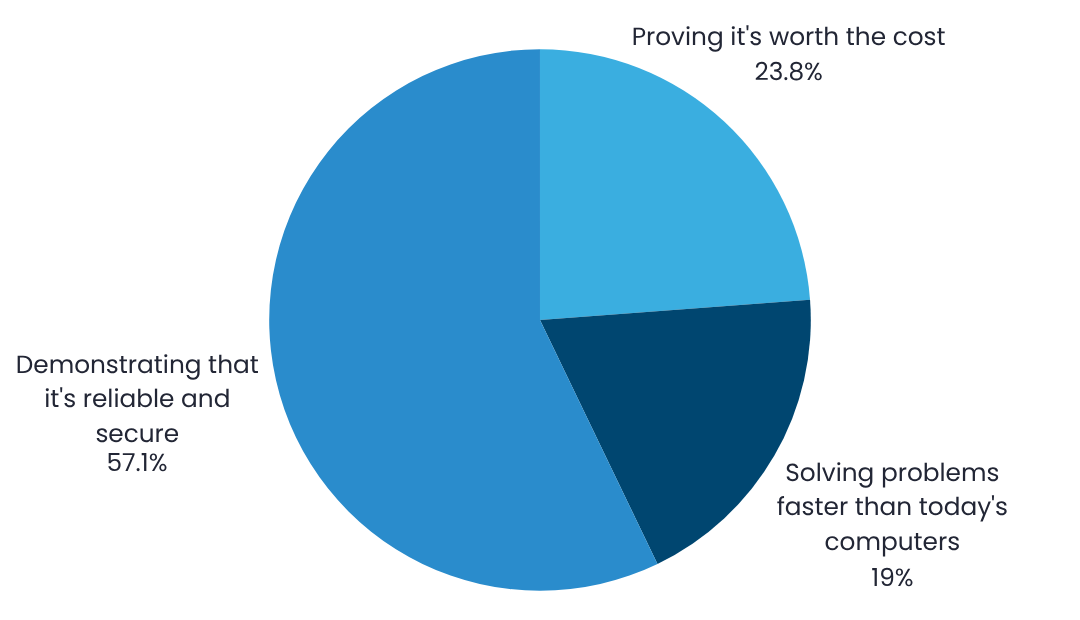
Results from last week's poll |
What would convince you that quantum computing is ready for the real world? |
|
|
|
IonQ Achieves Quantum Link Breakthrough |
One of the biggest challenges in quantum computing is figuring out how to make these powerful machines work together.
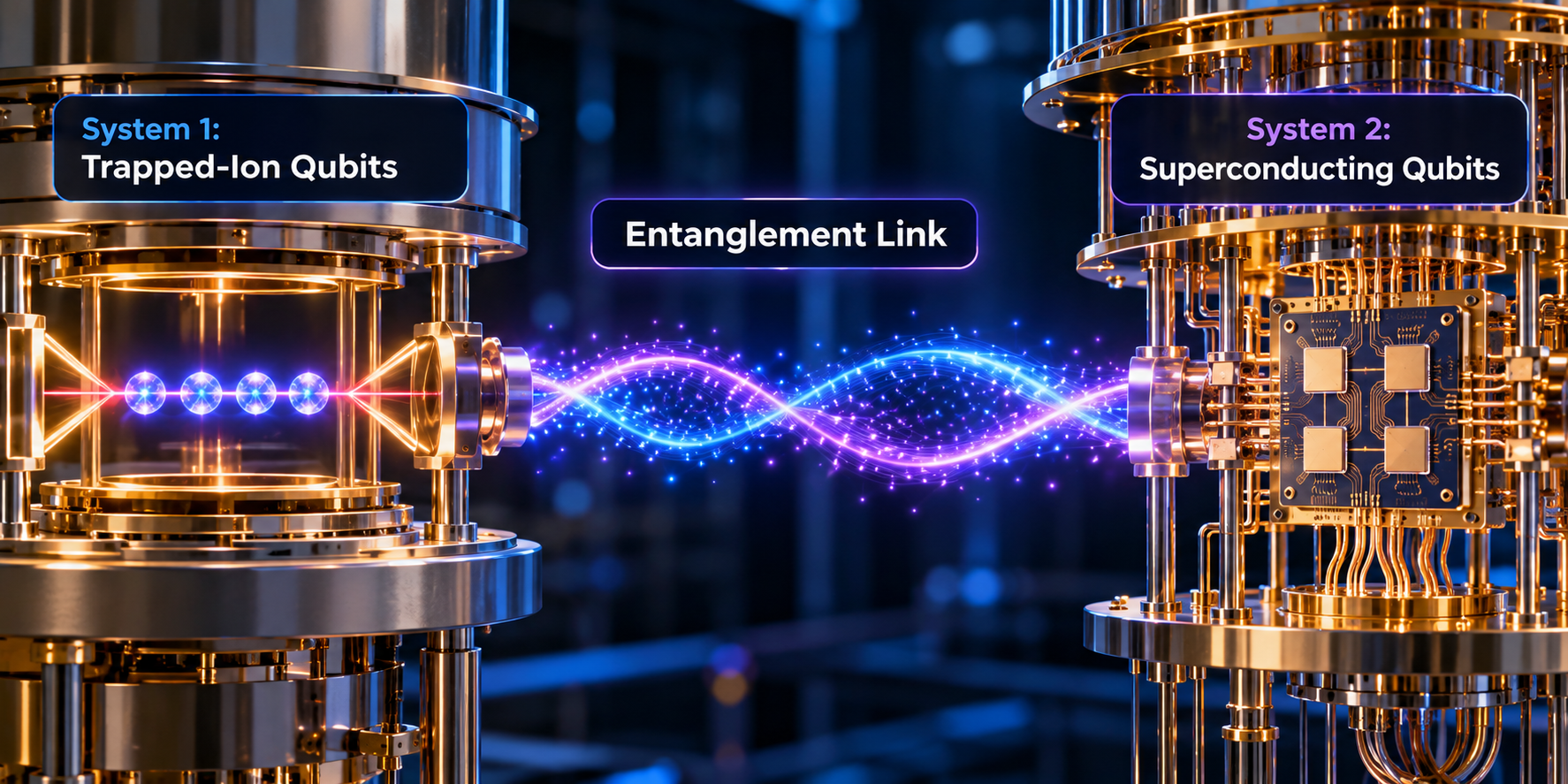
IonQ recently demonstrated a way to connect different types of quantum hardware, potentially paving the way for larger, more powerful systems. In its test, the company generated an average of 1,032 entangled pairs per second, a technical milestone that could help quantum computers share information more efficiently.
Bottom line: Think of it as a step toward getting multiple quantum computers to work as a team rather than relying on one giant machine. It's promising progress, but the technology is still experimental and isn't ready for widespread use. |
Federal Agencies Lag in PQC Preparedness |
Federal agencies are failing to meet deadlines to prepare for emerging cyber threats posed by advances in quantum computing. A GAO report released this month found that none of the 24 major agencies it reviewed have fully met federal preparation standards for transitioning to post-quantum cryptography (PQC).
Key finding: Most agencies fell short due to staffing and skills gaps, vendor readiness, a lack of cost data, and other issues enterprises undertaking similar efforts face today. These delays could leave sensitive data vulnerable to future quantum-powered cyberattacks if organizations don't begin preparing now. |
IonQ Acquisition Pairs Quantum-Safe Encryption with Zero Trust |
Quantum Computing company IonQ announced it will acquire cybersecurity company Elisity in an all-stock deal worth up to $1.3 billion. IonQ plans to combine its quantum-safe encryption and quantum key distribution (QKD) products with Elisity’s Zero Trust least-privilege access technology.
Why is this important? Combining these two types of security products could help enterprises protect their existing infrastructure today while preparing for emerging quantum-era cyber threats. |
WTO Gets Quantum 101 Lecture and a Warning |
The World Trade Organization (WTO) held its first-ever session on quantum computing and international trade. The session provided a “Quantum 101” overview of where the technology stands today, how it could reshape global trade, and how different economies can participate in the emerging quantum economy. But the conversation also came with a warning about cybersecurity. Participants raised concerns about how advances in quantum computing could eventually threaten the encryption protecting sensitive information and financial transactions. Organizations may have less time than they think to prepare for these risks.
The message was simple: Don't wait for quantum computers to become a threat before taking steps to protect your data. |
|
| |
This week’s news puts quantum computing’s progress into perspective.
IonQ’s demonstration linking quantum units using two different qubit types is a critical step toward scaling quantum systems. The results are akin to boosting a traditional computing system's processing power by clustering smaller compute elements. This technology will enable distributed quantum computing.
However, the main takeaway is that this was a demonstration. It was not a product release. The technique is experimental at this stage and will take much more work to be a production-grade solution. |
That sums up where quantum computing stands today: plenty of promise, but still a lot to prove.
Gartner forecasts strong market growth over the next year, but there's a catch. Investors are pouring billions into quantum startups, even as the industry struggles to turn technological breakthroughs into commercial success. Take Oratomic, a company developing fault-tolerant quantum computers. Its $5.4 billion valuation is nearly five times Gartner's projected revenue for the entire quantum computing market in 2027. That's a staggering bet on a technology still finding its commercial footing.
Will companies like this succeed and bring products to market? Gartner is skeptical. It expects most (more than half) of today’s quantum computing startups will go out of business by 2030.
As such, enterprises should hedge their bet on quantum. But they must also take its potential impact seriously, especially on cybersecurity. The GAO report identifies gaps in post-quantum cryptography preparedness across 24 federal agencies. The WTO discussion raises concerns about how much time organizations may have to protect sensitive information. IonQ's planned acquisition of Elisity illustrates how vendors are positioning themselves to address enterprise security requirements. This week’s main takeaway: The threat posed by future quantum computers is no longer just a theoretical discussion for researchers. It is becoming an operational planning issue for CISOs and enterprise security teams. |
| |
|
|
Salvatore Salamone is a physicist by training who writes about science and information technology. During his career, he has been a senior or executive editor at many industry-leading publications including High Technology, Network World, Byte Magazine, Data Communications, LAN Times, InternetWeek, Bio-IT World, and Lightwave, The Journal of Fiber Optics. He also is the author of three business technology books. |
|
|
|
Quantum State is a TechnologyAdvice business TechnologyAdvice, 3343 Perimeter Hill Dr., Suite 215, Nashville, TN 37211, USA. © 2026 TechnologyAdvice, LLC. All rights reserved. |
|
|
|
|