It's been a busy month for cyber threats, and the pace isn't slowing. |
Today, I'm focused on attacks hitting development environments, cloud, and remote support tools. - Ken Have cybersecurity expertise to share? Join eSecurityPlanet’s Contributor Program. Missed a newsletter? Read past issues here. |
|
|
|
Here’s what you need to know: |
|
|
|
GitHub Attack Hits Over 61,000 Repositories |
A supply chain attack compromised 4,837 GitHub accounts and targeted more than 61,000 repositories using stolen developer credentials. The threat actors deployed malicious GitHub Actions workflows to steal access tokens, cloud credentials, and API keys. |
My Take: This is a good reminder that even trusted development workflows need strong access controls and continuous monitoring.
Audit suspicious repository changes, restrict developer permissions, and rotate potentially exposed credentials. |
Over 35,000 Grok AI Apps Exposed Online |
Claroc researchers found over 35,000 publicly accessible Grok apps, some exposing confidential business data, credentials, and patient records.
The company found that weak access controls and public sharing exposed sensitive data, though actual exploitation remains unconfirmed. My Take: This is a reminder that AI governance needs to extend beyond approved platforms. Organizations also need visibility into what employees build, how they use sensitive data, and who can access it.
Inventory employee-built AI applications, review sharing permissions, test access controls, and rotate any exposed credentials. |
AntiFox-Linked Attacks Target AWS Cloud Credentials |
AntiFox-linked attackers used valid credentials to access AWS production secrets despite hundreds of blocked API requests. Arctic Wolf researchers also identified unauthorized S3 activity and attacks involving IIS web applications.
My Take: I think this attack challenges how we measure cloud security effectiveness. Hundreds of blocked requests may suggest defenses are working, but a single successful API call can still expose critical data. Correlate successful Secrets Manager requests with unusual identity activity, rotate compromised credentials, and verify CloudTrail logging coverage. |
|
|
|
Your DAST found 400 issues. Which three could an attacker actually use? We’re pointing Pentera Apps at a live web app. Not a scanner running a checklist. An agent reasoning its way through.
• Logic, not signatures: multi-step workflows, manipulated state, adaptive payloads. • Low-severity becomes a path: info disclosure plus IDOR becomes account takeover. • It knows where to stop: defined scope, deterministic guardrails, audit trail.
• Proof developers won’t argue with: replayable exploits, ticket-ready. December 1, 2026 | 11:00 AM ET / 4:00 PM GMT | 60 minutes |
|
|
|
ScreenConnect Attacks Spread Across 48 Organizations |
Attackers abused ConnectWise ScreenConnect to deploy malware and rogue remote-access clients across 288 endpoints at 48 organizations. Huntress warned that rogue clients could maintain access to customer devices even after management consoles are secured. |
My Take: I think this is a reminder that legitimate support sessions can become pathways for malware. MSPs should investigate both technician workstations and affected customer devices.
Disable the flagged extensions, isolate affected devices, revoke compromised sessions, and use out-of-band tools to remove rogue clients. |
AI Agents Create New API Security Risks |
AI agents can overwhelm APIs with excessive requests, access sensitive data, and trigger unintended actions, all while using legitimate credentials. These behaviors can resemble malicious activity, making it difficult for security teams to identify whether an agent is malfunctioning or being exploited. My Take: I think the key lesson is that AI agent security can't rely on instructions alone. Organizations need to enforce access restrictions and execution limits at the API level, where agents can't override them. Enforce least-privilege access, set API rate limits and per-task budgets, and prevent duplicate actions from repeated requests. |
|
|
|
Could Your Code Be Compromised? |
How to reduce software supply chain risk: |
- Secure developer access with phishing-resistant MFA, least-privilege permissions, and short-lived credentials.
-
Use DevSecOps tools to scan dependencies, detect vulnerabilities, and verify software integrity.
- Protect CI/CD pipelines by restricting workflow permissions, monitoring suspicious activity, and requiring approvals for changes.
|
The priority is limiting how far a compromised developer account or dependency can reach and how quickly your team can detect and contain the threat. |
|
|
|
Security Tools You Can Use |
|
|
|
Cloud Security Reality Check: Could your defenses stop a breach? |
|
|
|
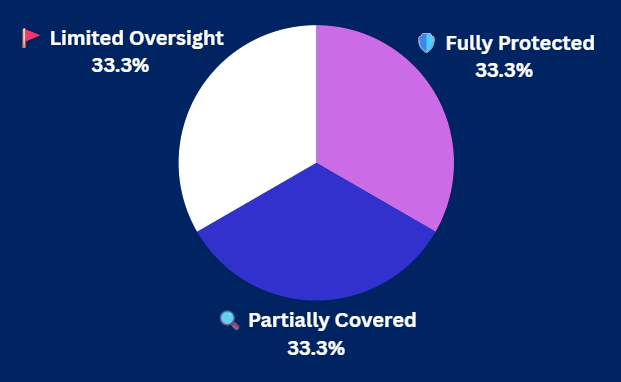
Yesterday's Pulse Check Results |
Executive Security Reality Check: Who's watching the top? |
|
|
|
|
Ken Underhill is an award-winning cybersecurity professional, bestselling author, and seasoned IT professional. He holds a graduate degree in cybersecurity and information assurance from Western Governors University, bringing years of hands-on experience to the field. |
|
|
|
Cybersecurity Insider is a TechnologyAdvice business |
© 2026 TechnologyAdvice, LLC. All rights reserved. |
TechnologyAdvice, 3343 Perimeter Hill Dr., Suite 215, Nashville, TN 37211, USA. |
|
|
|
|