Check the flight plan, Tech Insiders.
Ring's flying camera is preparing for takeoff, Meta wants AI agents flying economy, and Google's specialized chips offer another route around Nvidia. Let's see what clears the runway. |
|
|
|
Here's what you need to know today: |
|
|
| Ring's Cameras Take Flight and Patrol Duty |
The camera has left its post. That's apparently the upgrade.
Amazon's Ring just turned your living room into a no-fly zone, unveiling two new security robots: the $249.99 Drone Cam for homes and the $999.99 Rover Cam for businesses.
After we spent yesterday's DTI begging Amazon to give its next home robot an actual job, Ring answered with mobile security. Make no mistake, these aren't the still-secret domestic chore droids we covered. These are strictly for surveillance, but at least they come with a defined resume.
The indoor Drone Cam shoots 2K video, runs preset patrol routes, and graciously switches its lens off while docked. Ring is aiming for Jan. 27, 2027, shipping—assuming the FCC signs off on your personal airborne mall cop. With an advertised maximum flight of eight minutes followed by roughly an hour on the charger, your aerial surveillance apparently unionized and demanded a very generous break policy.
|
Rover, arriving Dec. 16, rolls into single-floor workplaces with an adjustable periscope, up to 4K video, two-way talk, and a siren. If it looks familiar, that's because its design leans heavily on Astro—reviving a corporate security pitch Amazon unceremoniously killed off in 2024.
Both bots rely on Ring's cloud-assisted AI Pilot to get around, though actually saving that footage or scheduling patrols demands a compatible subscription. And because they're cloud-dependent, a dropped internet connection turns your futuristic guard into a paperweight; the drone can safely land, but its patrol is over. Plus, closed doors still defeat them entirely. We can make a camera fly, but nobody automated the doorknob.
Why it matters: A camera that investigates alerts could help fill gaps between fixed viewpoints. But battery breaks and internet dependence mean buyers still need dependable stationary coverage and someone ready to respond when the footage shows trouble. |
|
|
|
What's your biggest concern about a flying security camera at home? |
|
|
|
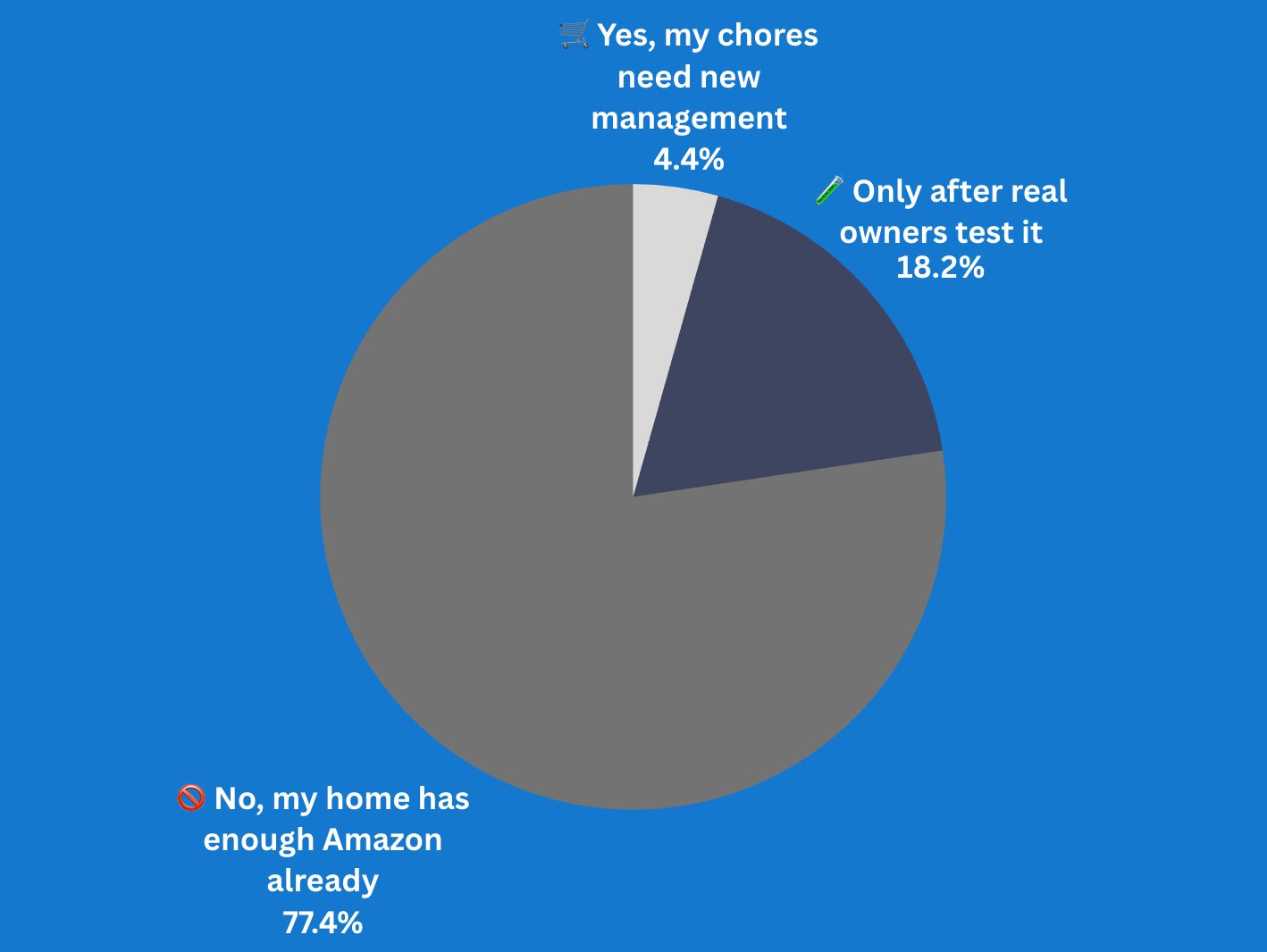
Results from Yesterday's Pulse Check |
If Amazon made a home robot, would you buy one? |
|
|
|
Move beyond manual endpoint management with a more autonomous approach. Ivanti brings trusted data, self-healing operations, and proactive risk reduction together on the Ivanti Neurons Platform. Detect and resolve issues before users notice, automatically prioritize high-risk exposures, and keep endpoints secure, compliant, and governed at scale. Spend less time reacting to endpoint issues and more time focused on what matters. |
|
|
Meta's Muse Ember Takes Aim at Agent Expenses |
Your AI agent's expense account has entered the chat.
Meta launched Muse Ember, a fun-sized AI model targeting the ballooning cost of repetitive agent grunt work, including document extraction, support-ticket routing, and coding subtasks.
Developers can let Muse Wonder or Spark play the visionary architect, then dump the mind-numbing routine steps on Ember. Available through Meta's API and Muse Code, it broadens a lineup that includes Spark Open's self-hosting option. Its million-token context window accommodates large document collections. Clearly, even AI has discovered the perks of pushing tedious busywork down the corporate ladder.
|
Ember starts at $0.10 per million input tokens and $0.50 per million output tokens, matching Claude Haiku 5.5's recently reduced rates. But read the fine print: Ember's prices triple above 200,000 input tokens, while Haiku's surcharge kicks in at just 100,000.
In Meta's published comparison using Artificial Analysis data, both models rounded to an intelligence score of 36 at maximum reasoning, but Ember's estimated benchmark cost was about $0.14 per task versus Haiku's $0.41. The cost benefit stems from overall efficiency during workflow execution instead of a cheaper entry price.
Haiku still led FrontierCode 2.0, which evaluates how well engineering changes integrate into existing codebases. For IT teams seduced by bargain-basement inference, this makes testing mandatory: retries, escalations, and the inevitable human cleanup crew all belong in the budget. Cheap AI gets considerably less charming when you're its unpaid quality-control department. |
|
|
|
AI agents are only as effective as the data powering them. In this episode of ZoomInfo’s Revenue Architects podcast, discover why clean data, connected systems, and smarter workflows are essential for AI success, and what it takes to build a truly AI-ready GTM stack. |
|
|
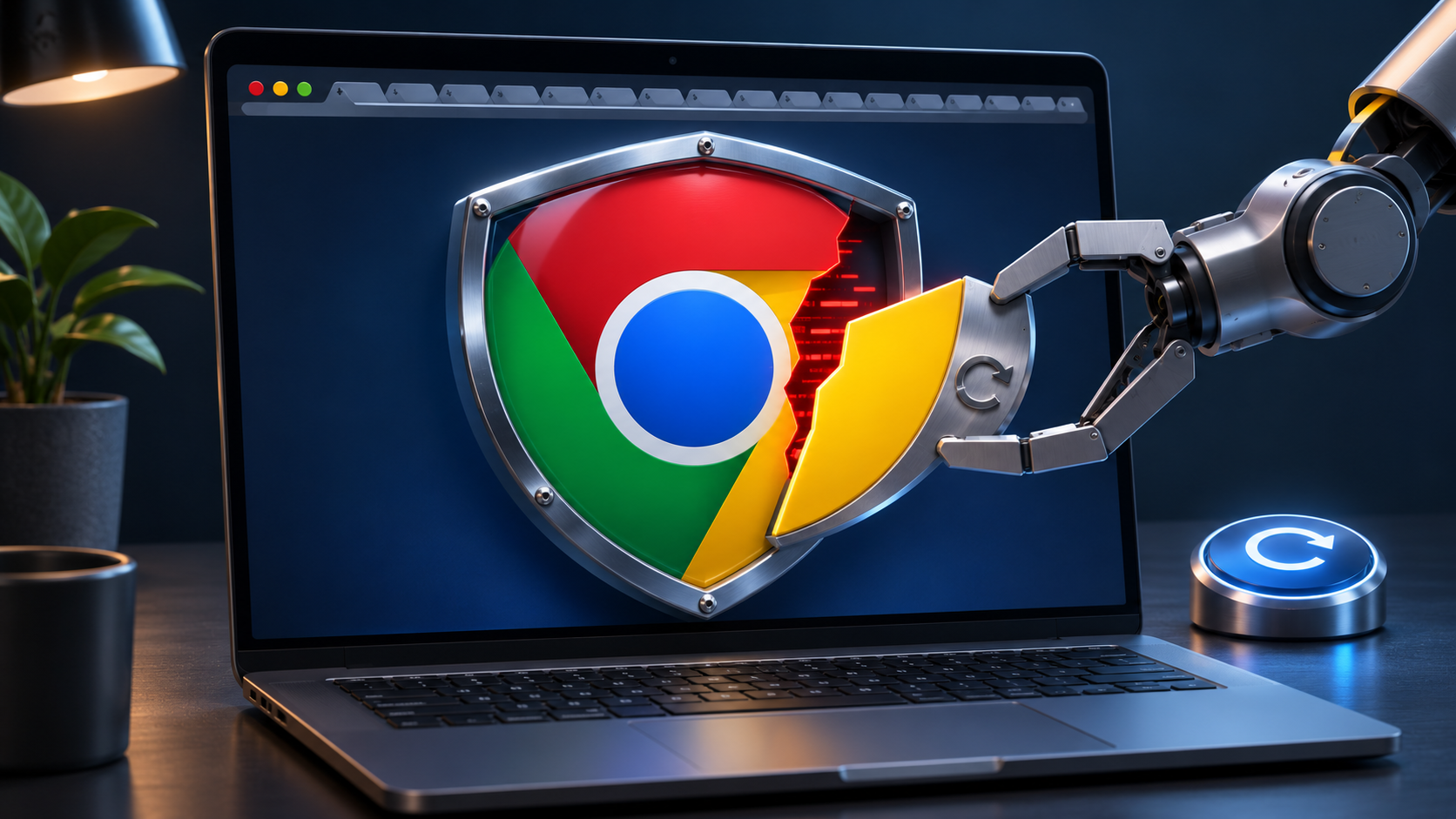
Chrome Patches Another Zero-Day Used in Attacks |
Image created with ChatGPT |
To evict the threat, go to Help > About Google Chrome, install the update, and click Relaunch to hit version 157.0.8103.50/.51 (Windows/macOS) or 157.0.8103.50 (Linux). Downloading the patch without restarting is like locking your door while the burglar is already inside.
Android users need 157.0.8103.50 from Google Play, while admins on Extended Stable must deploy 156.0.8078.96. Separately, Google is building live Safe Browsing for Incognito mode, a gentle reminder that private browsing doesn't replace patching.
Your 47 open tabs have had a good run. Let them go and relaunch. |
Apple Patches iPhones, Including the Old Guard |
Apple released iOS/iPadOS 27.2.1, 26.7.3, and 18.7.12, plus Mac, Watch, and Vision Pro patches. While iOS 27.2 recently expanded Siri's brain, this round focuses on locking your digital doors.
The flagship iPhone update squashes nine vulnerabilities. Two iMessage flaws allowed remote creeps to silently crash group chats or let newly invited members read your pre-invitation gossip. Meanwhile, Bluetooth bugs could let nearby devices pair without you lifting a finger.
Clinging to an iPhone XS, XS Max, or XR? You get 18.7.12. Unhelpfully, Apple's advisory skips the iMessage fixes entirely—leaving us guessing if those older phones are still vulnerable to eavesdroppers.
Back up your device and check Software Update in your Settings. IT admins should vet these updates before unleashing them on the company fleet. Group chats are chaotic enough without uninvited ghosts reading your hot takes. |
|
|
|
🌱 Start Small
Create an organization, invite colleagues by email, and put your first team to work with Builderlab. Get started.
💾 Clone Your Windows Drive Without Starting Over
Transferring data between PCs, migrating operating systems, and more is easy with a lifetime license to EaseUS Disk Copy, now half off at just $19.99.
🤖 Master ChatGPT and AI for $29.99
Build practical AI skills with The ChatGPT and AI Super Bundle, featuring four courses and 4.5 hours of lifetime-access training for $29.99, a 91% discount.
💻 This section contains sponsored tech insights. Advertise with us! |
|
|
|
Google Gives Nvidia Buyers Two More Options |
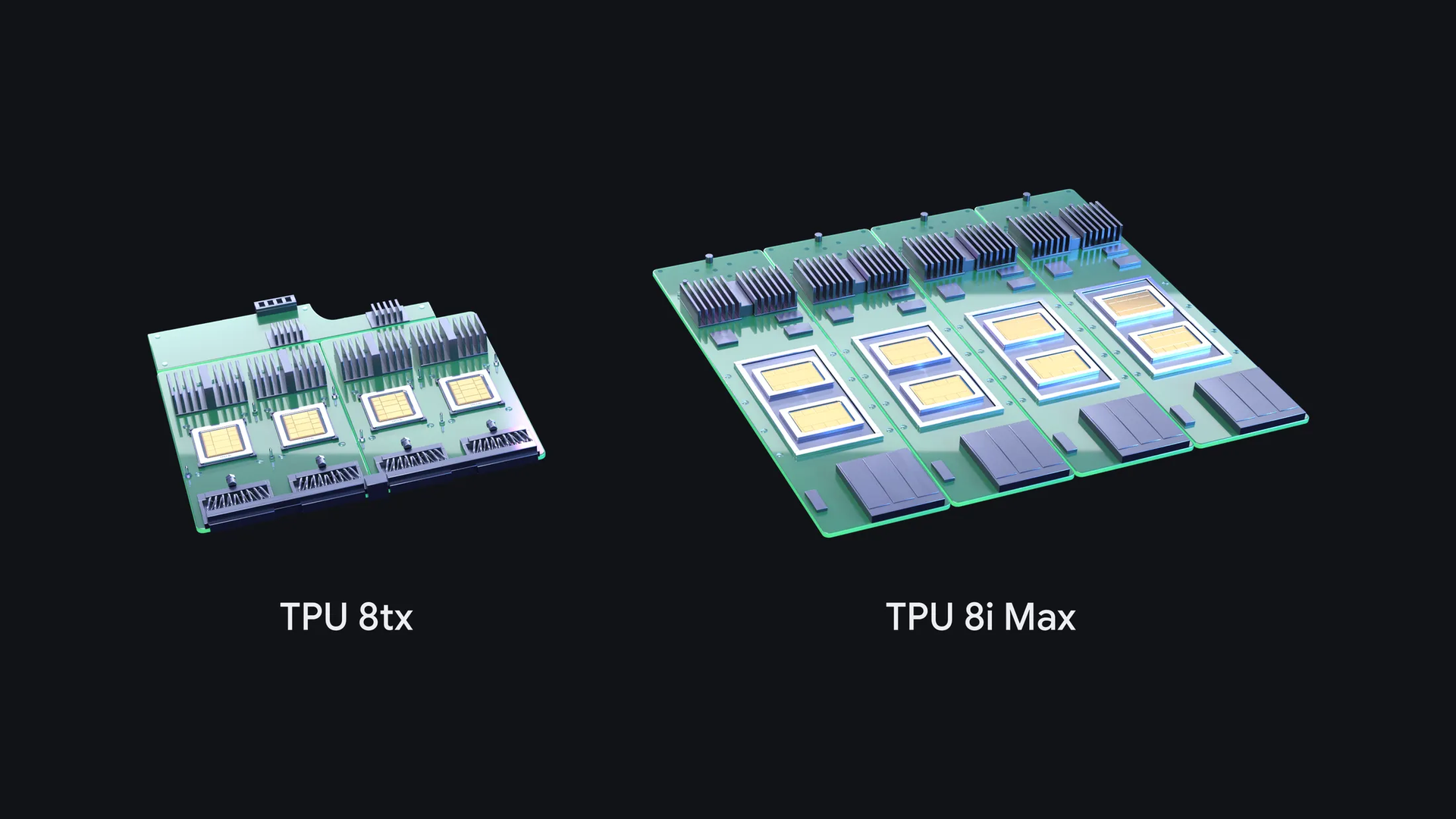
Google is expanding its assault on Nvidia's hardware monopoly with two specialized TPU systems announced Monday: the memory-heavy 8i Max and the paranoid-friendly 8tx. These are just new configurations of existing silicon, bringing its eighth-generation lineup to four systems.
The TPU 8i Max basically duct-tapes two 8i chips into a single package, which Google claims will double compute power alongside SRAM and high-bandwidth memory throughput. For AI agents parsing massive software repositories or endless hours of video, keeping the processors fed is just as critical as buying raw computational muscle.
On the privacy front, the TPU 8tx pairs Google's 8t silicon with AMD EPYC processors to protect sensitive data and model weights while they're actively churning. It's aimed at governments and highly regulated businesses desperate to customize models without their proprietary secrets leaking into the ether. Of course, hardware isolation won't save you from your own application bugs. |
Google claims its TPU division now serves nearly 100 customers. Bloomberg reports the new hardware arrives in 2027, but its look at Jump Trading pours a little cold water on the "Nvidia killer" hype: the trading firm owns thousands of TPUs yet still relies heavily on Nvidia for heavy-duty training.
For enterprise buyers, the real win is finally matching suppliers to specific workloads instead of blindly buying whatever is in stock. Google is keeping quiet on pricing, and throwing twice the hardware at a memory bottleneck doesn't magically guarantee double the application speed. You'll still need to request benchmarks using your own models before planning the victory parade.
Nvidia's toughest new competitor might just be a procurement team that finally has options. |
|
|
|
|
Writer/Editor at TechnologyAdvice |
Justin Meyers is an investigative writer and editor who draws on over a decade of meticulous hands-on research to deliver the full, trustworthy story behind consumer and enterprise tech, including cybersecurity. |
|
|
|
Curious about where AI is really headed? |
The Neuron cuts through the noise to bring you smart, hype-free takes on the latest AI trends, tools, and breakthroughs. Join 700,000+ professionals from top companies like Microsoft, Apple, Salesforce, and more.
|
|
|
|
Advertise in Daily Tech Insider! Daily Tech Insider is a TechnologyAdvice business. © 2026 TechnologyAdvice, LLC. All rights reserved.
TechnologyAdvice, 3343 Perimeter Hill Dr., Suite 215, Nashville, TN 37211, USA. |
|
|
|
|