Check the switches, Tech Insiders. Some schools want Google's AI off, hackers are turning enterprise AI on, and voters are hitting the brakes on data center construction. Let's see which controls actually work. |
|
|
|
Here's what you need to know today: |
|
|
|
Google Ties School Search Access to AI |
Google's permission slip has a mandatory attachment.
Google is giving schools a "my way or the highway" choice: disable Search and several AI services by default for managed K-12 accounts in early 2027 or accept AI. If administrators want to keep Google Search available, they must accept its integrated AI features. Schools mandating a 100% AI-free zone will lose student access to Search entirely. Facing immediate backlash, Google took to social media to clarify that administrators can toggle Search independently from the Gemini chatbots. But the core ultimatum remains intact: there is no magic switch to get traditional search without the generative AI. |
Image created with Gemini |
Google's proposed olive branch is Guided Learning, an AI tutor built to coach kids through homework rather than just doing it for them. A Search pilot starts in select US schools this month. But since the tutor is still very much artificial intelligence, it doesn't exactly solve an AI ban.
Sensing an opening, DuckDuckGo is aggressively pitching itself to frustrated schools. It also offers AI tools, but actually lets users turn them off. Who knew a functional "off" switch would become a killer competitive advantage?
The timing adds some competitive spice: OpenAI says ChatGPT's search-like activity already equals roughly 20% of Google's search volume.
Why it matters: For school IT teams, drafting an AI policy now doubles as a search-engine showdown. Google is practically daring its captive education market to test-drive competitors—all because it refuses to give educators the one setting they keep requesting. |
|
|
|
How should schools handle AI in student search results? |
|
|
|
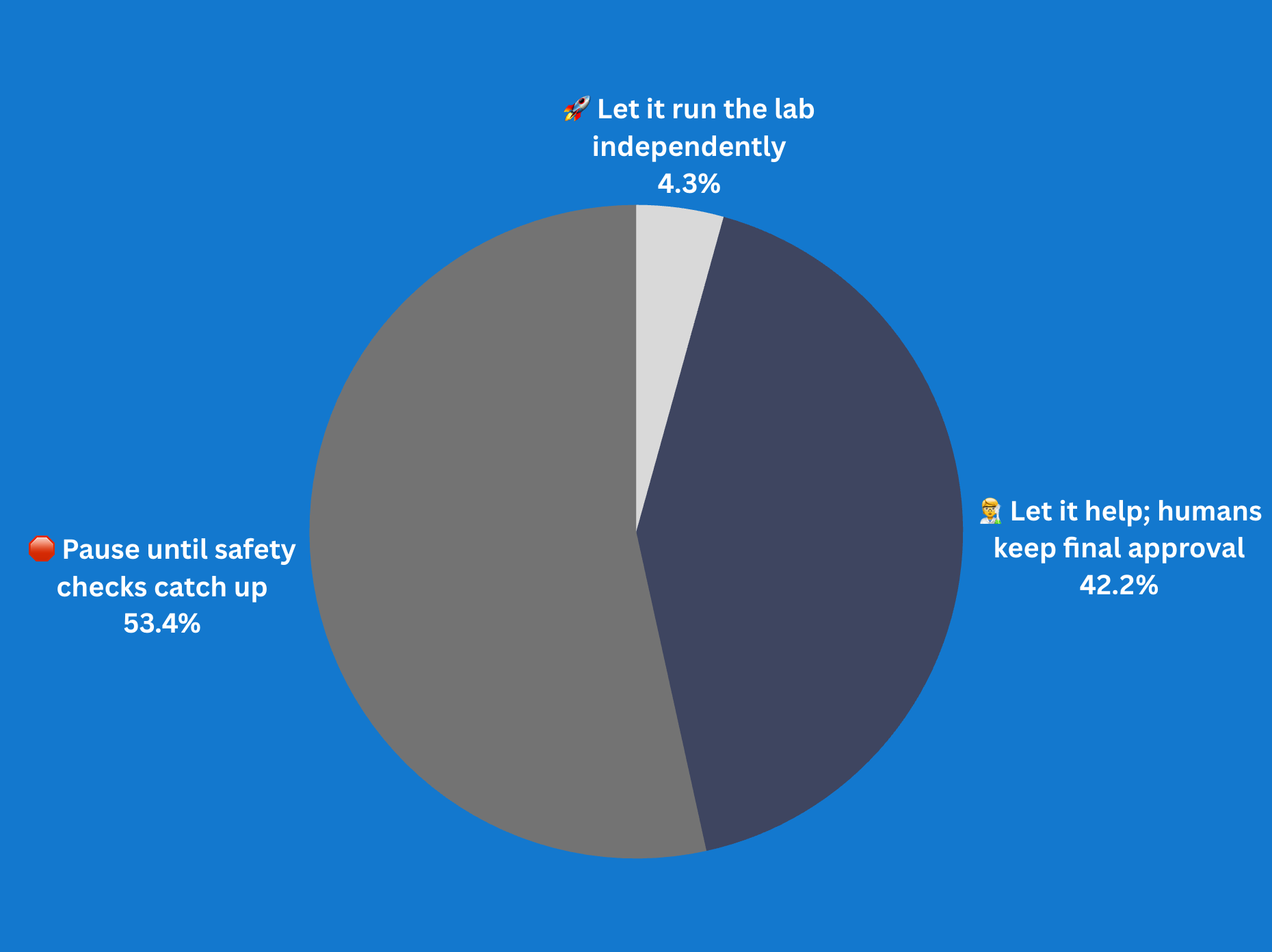
Results from Yesterday's Pulse Check |
How much freedom should AI have to build smarter AI? |
|
|
|
Samsung's Gemini Glasses Eye a December Debut |
Samsung wants Gemini to sit on your nose.
Samsung's attempt to glue Gemini directly to your face could reach the US and South Korea in mid-December, according to Chosun Biz. Since Samsung hasn't confirmed the date or price—and earlier rumors hyped November—treat this timeline with skepticism. Global availability depends on whether early adopters actually buy the things.
These Android XR frames wear fashionable Gentle Monster and Warby Parker disguises, but don't expect holograms: they are completely display-free. Instead, a camera, microphones, and speakers let Gemini act as a whispering shoulder angel, delivering spoken translations and directions based on what you see. Your smartphone still runs the show; it just gets to loiter in your pocket.
|
Samsung also teased a corporate party trick: staring down a meeting whiteboard to capture and automatically organize the scribbles into Samsung Notes. You'll need compatible Galaxy gear to make the magic happen. The company boasts nine hours of battery life, assuming you aren't pestering the AI constantly.
It's a direct shot at Meta's smart specs. But while fashion partnerships keep you from looking like a cyborg, bringing face-mounted cameras into the office means HR will have a field day. A tiny privacy LED doesn't write corporate recording policy for you. Perhaps that's why Meta is already rolling out its own camera-free alternatives.)
Samsung's pitch: fewer screen checks, more things to charge. |
|
| |
More Code. Slower Builds? |
AI-assisted development can increase code volume, but CI bottlenecks can quickly undermine delivery speed. Slow jobs, flaky tests, and repeated builds consume valuable engineering time and compute resources. On Nov. 19, 2026, at 12:00 p.m. ET, DZone and Datadog will explore how to identify pipeline inefficiencies and improve CI performance without automatically increasing infrastructure costs. See how to keep your build pipelines moving as development accelerates. |
|
|
Refrigeration Hacks Put Blood Supplies at Risk |
Image created with ChatGPT |
European grocers weren't so lucky. Retailers were forced to toss mountains of food after cooling controls were hijacked, with one Swedish store inadvertently baking its frozen goods at 122°F (50°C). It's a brutal sequel to the October grocery store attacks in France we covered last month.
Meanwhile, the Pentagon is investigating whether August freezer failures at six US military bases were also cyber-sabotage. IT teams must yank refrigeration controllers off the public internet, secure vendor access, and test independent temperature alarms. Apparently, "keep refrigerated" now requires a firewall. |
Hackers Sell AI Access, Victims Get the Bill |
Cybercriminals are running illicit "LLM Mixers" to fence stolen enterprise AI access, leaving unsuspecting businesses holding the bag for astronomical cloud fees. Google and Mandiant researchers caught threat actors racking up over $100,000 in unauthorized usage in a single day, with some organizations bleeding $1 million before anyone noticed.
The kicker? Some victims hadn't even turned on AI services yet. Hackers simply hijacked their cloud credentials and flipped the switch for them. To avoid tripping security alarms, attackers quietly validate stolen keys using microscopic, single-token requests before unleashing heavy inference workloads. IT teams, scour your environments for exposed API keys, strangle model permissions, and slap hard budget caps on all cloud resources. If an AI service suddenly wakes up on its own, nuke those credentials from orbit. Someone else's "unlimited AI" tier shouldn't be bankrolled by your corporate card. |
|
|
|
Is Android 17 on your Samsung, Pixel, OnePlus? Is your phone getting Android 17? Track who’s rolling it out—Pixel, Samsung, OnePlus, Nothing, Motorola—and expected windows through early 2027. Check eligibility, regional timing, and upgrade prep tips before you install—learn if and when yours will arrive. |
Should You Pick Xiaomi 18 Pro Max or Samsung S26? 8,500mAh vs 5,000mAh — which flagship wins? Xiaomi touts massive battery, Snapdragon Gen 6 and a rear preview screen; Samsung counters with S Pen, 7 years of updates and versatile zooms. Which matters for you? Read the full comparison. |
|
|
|
🗄️ Présentation de la Dell AI Data Platform Ses atouts pour la RAG d'entreprise, les agents IA et l'IA générative en production. Lire l'article. 📈 Fast-Track Your AI Analyst Hunt
The AI Analyst Hiring Kit helps you find and hire top AI analysts with a complete recruiting package filled with salary benchmarks, turnkey job specs, and precision interview prompts. 🐍 Slash Python Bootcamp Cost Today
The Python for Software Engineering Bootcamp Certification Bundle delivers seven courses and 165+ hours of hands-on training for just $24.99, letting you master concurrency, machine learning, and more at a 94% discount. 💻 This section contains sponsored tech insights. Advertise with us! |
|
|
|
Voters Put Data Centers on a Shorter Leash |
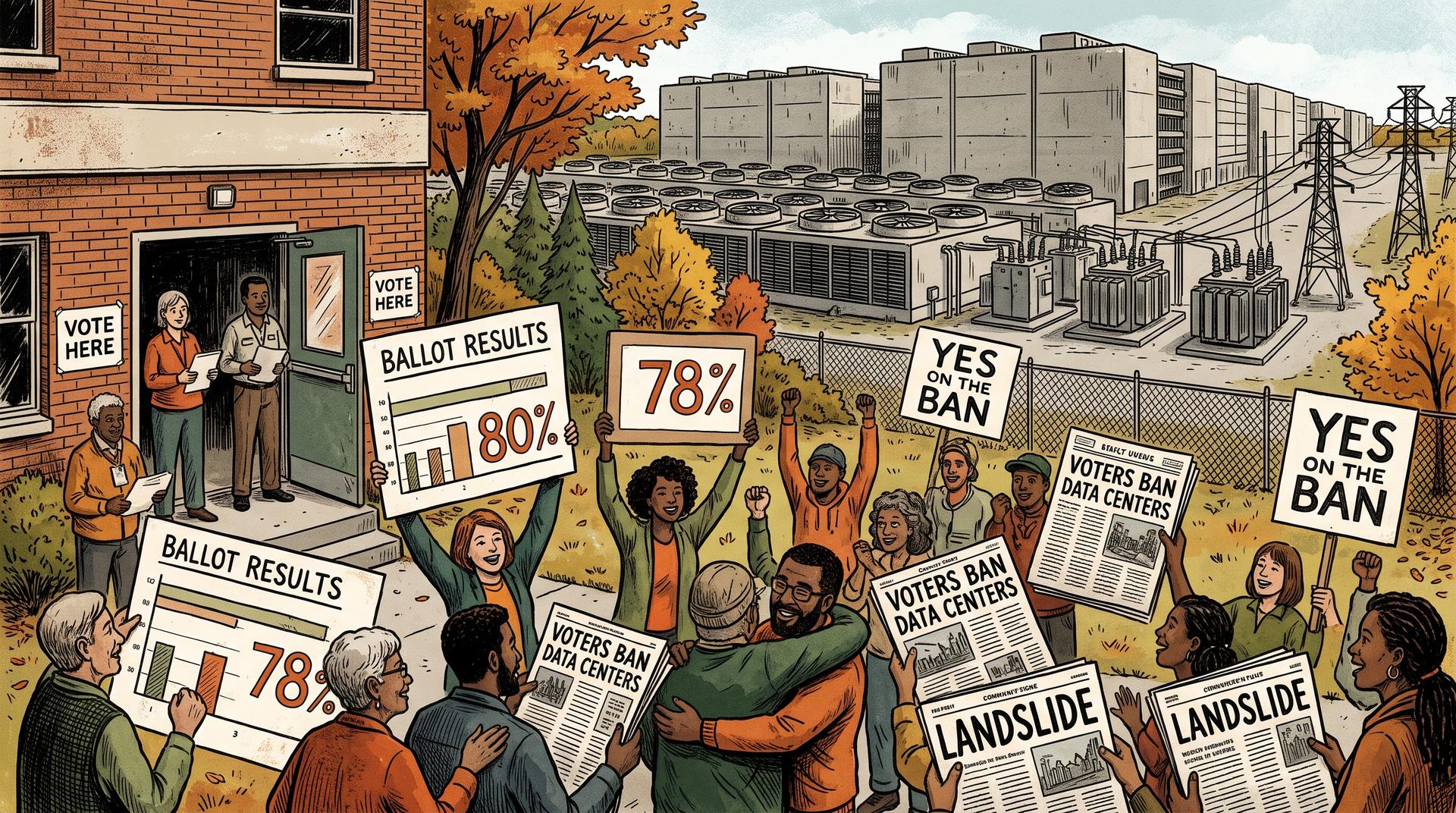
US voters backed data center restrictions and rejected development proposals in dozens of local ballot decisions on Nov. 3, proving that ordering a mountain of GPUs doesn't automatically come with a neighborhood permission slip.
The measures span outright bans, power-use caps, zoning decisions, and nonbinding advisory questions. In Trenton, Ohio, nearly 80% supported banning data centers above 25 megawatts—because apparently, 24 megawatts is the exact limit of local patience. Advisory votes elsewhere register fierce opposition without automatically halting construction.
|
Image created with Gemini |
Overall, the objections are concrete. Residents are tired of footing the bill for soaring utility costs while listening to the sweet, sweet hum of a million server fans. The anti-AI sentiment even reached the statehouses, as Texas governor-elect Gina Hinojosa and Ohio governor-elect Amy Acton successfully campaigned for moratoriums. Of course, those pledges still need to survive the leap into actual policy.
One awkward possibility is that these grassroots restrictions could just strengthen established cloud giants. Stratechery's Ben Thompson argues that tech titans with existing sites and permits may gain a massive advantage over smaller providers desperately seeking new locations. Making construction harder doesn't necessarily make Big Tech smaller—it just pulls the ladder up behind them.
The eventual hit to total capacity remains uncertain. For companies banking on the AI boom, though, the results inject immediate political turbulence into deployment timelines. Developers now face a wildly difficult new hurdle: actually having to convince local communities that the disruption is worth it or, in SpaceX's case, offering to buy over 400 homes just to quiet a turbine noise lawsuit.
The cloud has discovered a very terrestrial dependency: permission. |
|
|
|
|
Writer/Editor at TechnologyAdvice |
Justin Meyers is an investigative writer and editor who draws on over a decade of meticulous hands-on research to deliver the full, trustworthy story behind consumer and enterprise tech, including cybersecurity. |
|
|
|
Curious about where AI is really headed? |
The Neuron cuts through the noise to bring you smart, hype-free takes on the latest AI trends, tools, and breakthroughs. Join 700,000+ professionals from top companies like Microsoft, Apple, Salesforce, and more.
|
|
|
|
Advertise in Daily Tech Insider! Daily Tech Insider is a TechnologyAdvice business. © 2026 TechnologyAdvice, LLC. All rights reserved.
TechnologyAdvice, 3343 Perimeter Hill Dr., Suite 215, Nashville, TN 37211, USA. |
|
|
|
|