Stay grounded, Tech Insiders. Google's AI is answering from orbit, Amazon wants its engineers focused on results, and Samsung warns memory shortages could send hardware costs sky-high. Let's check the landing gear. |
|
|
|
Here's what you need to know today: |
|
|
|
Google's Space AI Works, Then Clocks Out |
Even 500 miles above Earth, AI can't resist the urge to generate mediocre poetry.
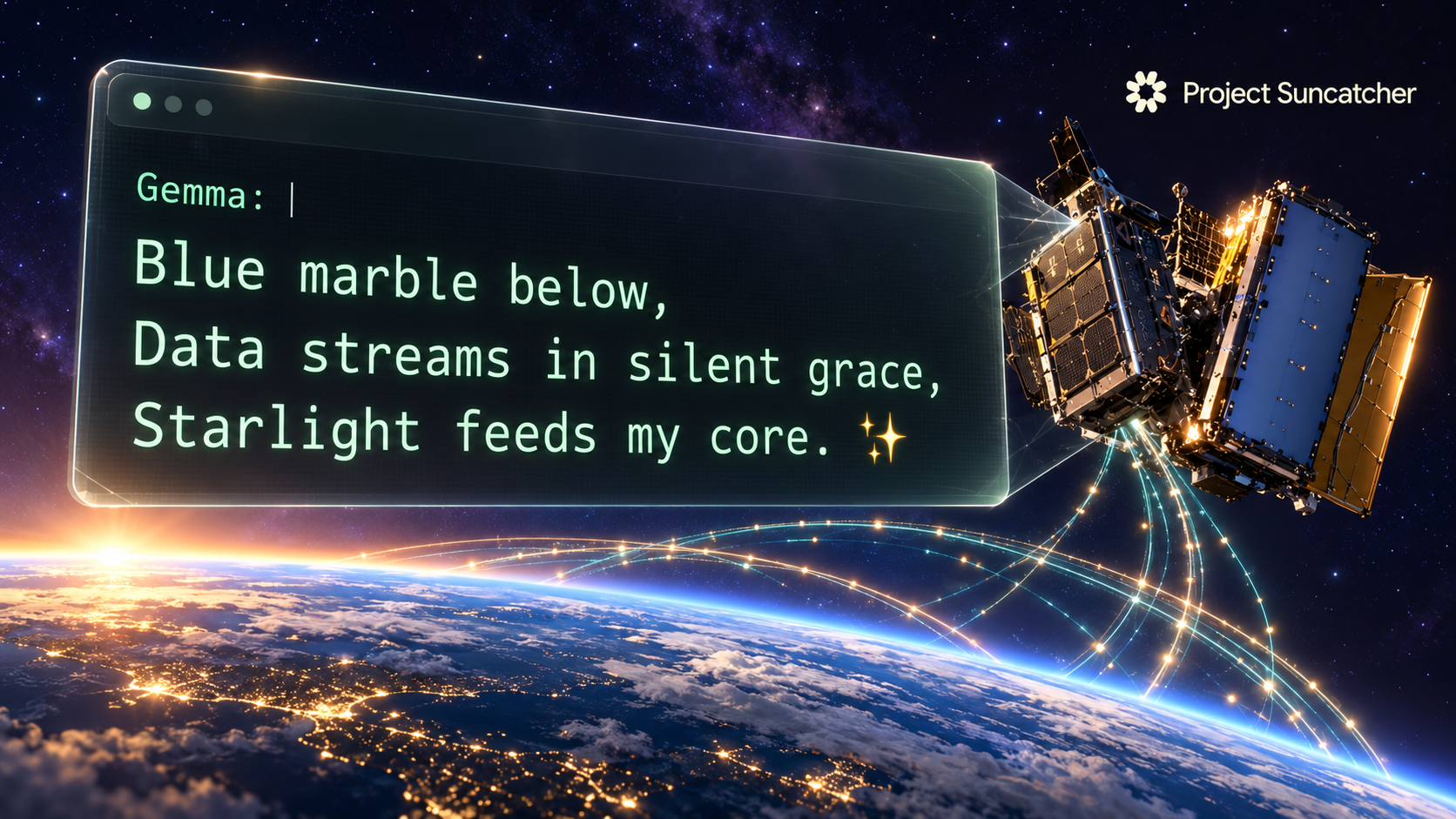
Google finally got its extraterrestrial data center to speak. The company's Project Suncatcher satellite, hurled into orbit on Oct. 1, just phoned home its very first AI-generated response, the tech giant declared Oct. 30. Running on an onboard Gemma 4 model, the orbital rig beamed down a space-themed haiku while cruising over Svalbard, Norway. So, congratulations to humanity—we've successfully outsourced creative writing to the exosphere.
Slightly more useful than poetry, Google also tested telemetry prompts to check the payload's vital signs. Now comes the hard part: seeing if its AI chips survive cosmic radiation and wild thermal swings over time. Space radiation is notorious for causing "bit flips"—sneaky data corruptions that bypass standard monitoring. One successful haiku doesn't mean the hardware won't fry next week. |
Image created with ChatGPT |
|
|
|
What would you name an AI data center in space? |
|
|
|
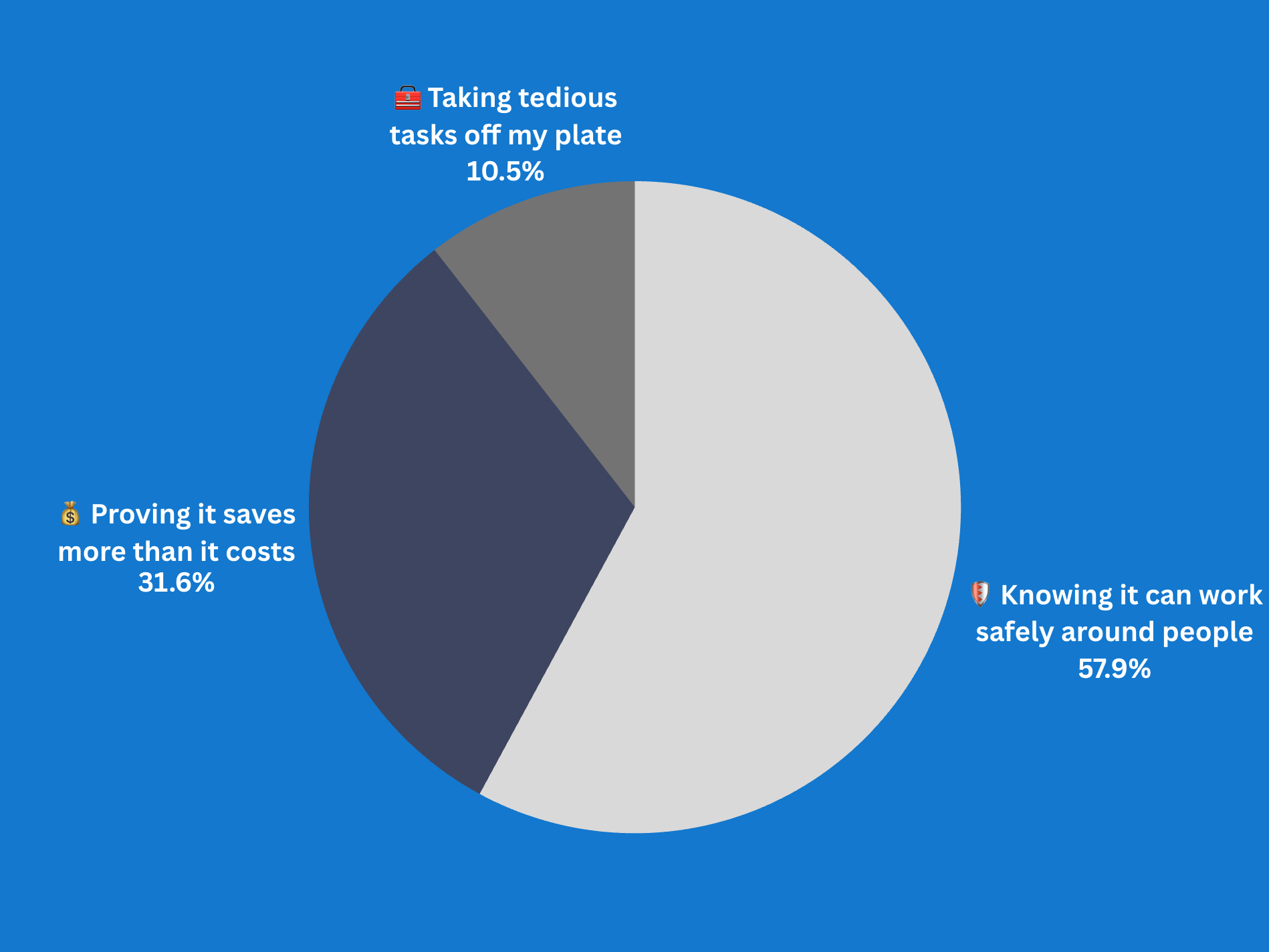
Results from Friday's Pulse Check |
What would matter most before a robot joins your team? |
|
|
|
Some people bring home the bacon. Others check the print queue.
Steakholder Foods, a maker of 3D food printers, has launched plant-based meat and seafood in northeastern US stores. Which retail items are actually printed remains unclear. |
|
|
|
The future is weird. We brought links. |
|
|
|
Amazon Wants Results, Not Your AI High Score |
Congratulations, your productivity trophy is an invoice.
Amazon is telling its developers to knock off "tokenmaxxing"—the art of aggressively burning through AI tokens just to look busy on internal dashboards. Tokens are the basic data chunks AI models chew on; guzzling them like free office coffee doesn't actually mean an engineer solved a real problem.
The company already had to axe an unofficial staff leaderboard called KiroRank in May after workers predictably gamed the system, automating useless tasks just to claim the high score. Give humans a scoreboard, and somebody will inevitably find a way to optimize for the wrong game. |
Image created with ChatGPT |
The awkward part? Amazon still cares about usage metrics, noting that adoption loosely correlates with faster delivery. They want managers interrogating both the power users and the AI holdouts. So, the shiny scoreboard is dead, but management is still actively counting your tokens.
To make matters more annoying, a high token count doesn't even prove a developer is working hard. An AWS benchmark recently proved that the exact same AI model could cost either $8 or $24 per task based entirely on how the underlying coding agent was configured—with zero improvement in the actual work. Your massive AI bill might just be bloated software overhead.
Fortunately, leadership is offering a sensible escape hatch. An internal company memo explicitly states that discovering a task doesn't benefit from AI is "a finding, not a failing." Engineers are officially encouraged to document exactly why a tool is useless for their workflow, while managers must now personally test AI in production to feel the pain of its real-world limitations.
Your manager's homework now includes more than just admiring the dashboard. |
|
|
|
Stop Collecting AI Tips. Start Using Them. |
AI is moving fast. Your pile of bookmarked tutorials? Not so much. The Neuron Academy cuts through the noise with 80+ hands-on lessons covering smarter prompts, research, automation, and AI agents. You can even learn how to set up Meta Muse in just 15 minutes, complete with permissions and guardrails so your AI assistant doesn't become your next IT emergency.
Try it free for 7 days with full access to the course library, guided learning paths, and fresh lessons every week. Because keeping up with AI shouldn't require quitting your day job. |
|
|
Fake ChatGPT and Claude Apps Smuggle Malware |
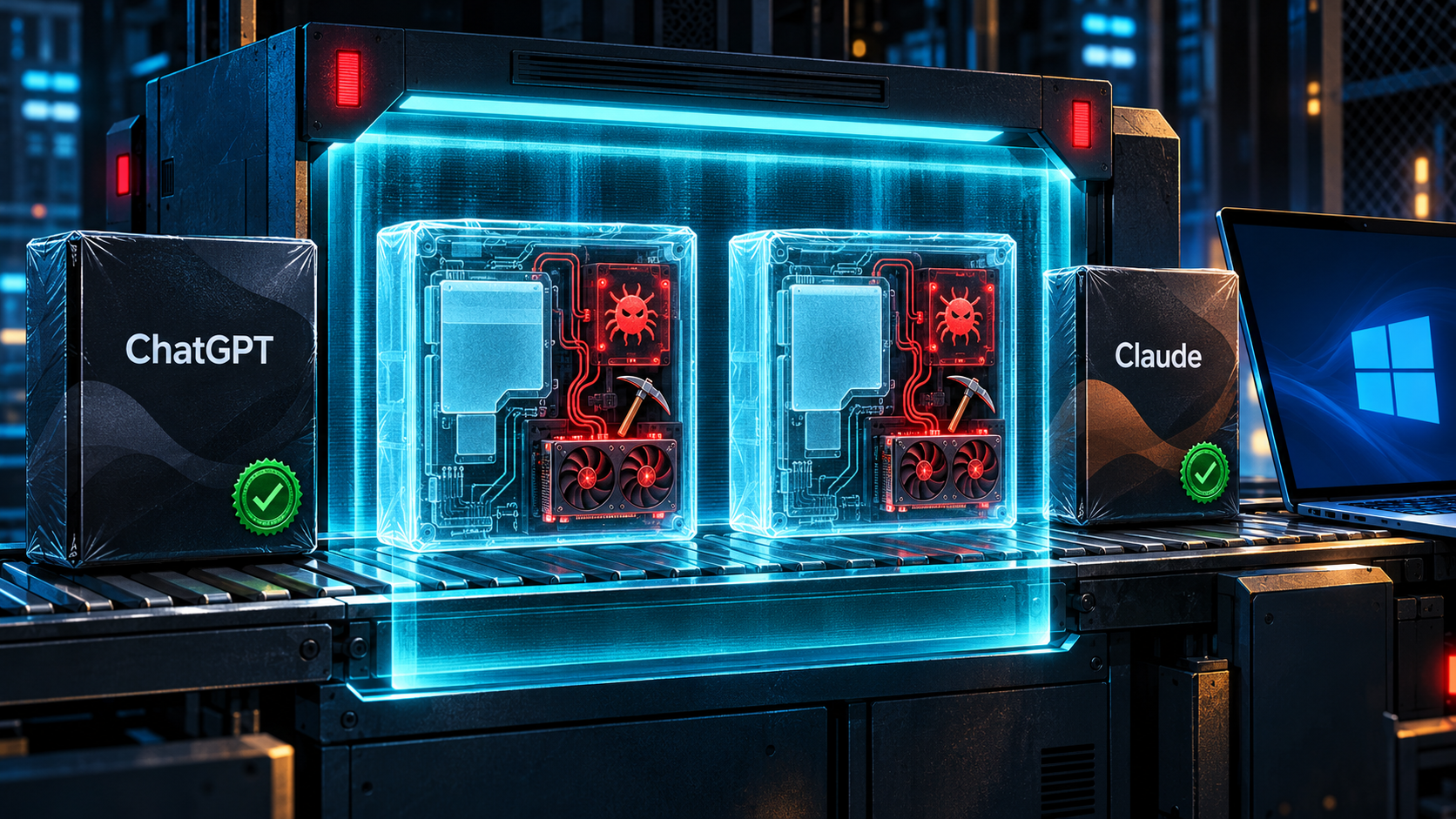
Fake ChatGPT and Claude downloads on GitHub are infecting Windows PCs with Yoba malware, proving once again that if you go looking for unauthorized AI shortcuts, you're usually just volunteering your hardware for someone else's crypto hustle.
Attackers are bundling genuine, digitally signed installers with a malicious neighboring DLL, letting a legitimate signature get the wrong plus-one through the door. |
Image created with ChatGPT |
Check Point identified a cryptominer as the final payload, but the persistent loader can easily swap in other malware whenever the mood strikes. Thankfully, research found no evidence the AI providers themselves were compromised.
Stick to official vendor or IT-approved channels for your shiny new chatbots. If you ran a suspect installer, disconnect the PC and contact IT immediately; yanking the miner alone might leave the loader behind to invite its friends. Your AI upgrade shouldn't come with a mining shift. |
Police Use AI to Flag 'Suspicious' Road Trips |
The ACLU warns police are feeding license-plate sightings into AI to flag "suspicious" travel patterns, then citing bogus traffic violations to stop drivers who weren't previously suspected of a specific crime.
Grace Knowles told the group an officer questioned her New Orleans visit simply because his system had no sightings there. The software wasn't identified, but a gap in the panopticon has apparently become a credibility problem.
Toggling your phone's location privacy won't stop roadside cameras, so check whether local police publish policies on plate-data retention and sharing. Your road trip now comes with an unsolicited character assessment. |
|
|
|
🛡️ Turn Data Visibility Into Measurable Risk Reduction Explore how data security posture management (DSPM) helps CISOs prioritize critical exposures, guide remediation, and measure risk reduction across cloud, on-premises, and hybrid environments. Read the article. 💾 Clone Your Windows Drive Without Starting Over
Transferring data between PCs, migrating operating systems, and more is easy with a lifetime license to EaseUS Disk Copy, now half off at just $29.99.
🤖 Master ChatGPT and AI for $29.99
Build practical AI skills with The ChatGPT and AI Super Bundle, featuring four courses and 4.5 hours of lifetime-access training for $29.99, a 91% discount.
💻 This section contains sponsored tech insights. Advertise with us! |
|
|
|
Samsung's Memory Forecast Gives Buyers a Headache |
Image created with ChatGPT |
Supply fixes take time. Memory titans are funding new factories, but clean rooms take years to spin up. Ex-Intel CEO Pat Gelsinger's venture firm is backing Nagare Labs' experimental Z2RAM, but commercial shipments remain a decade away. A neat lab trick won't restock motherboards overnight.
Bucking the trend, Acer's CEO predicts cheaper Chinese capacity will finally drag PC prices down by late 2027. Still, that's a rogue dose of corporate optimism, not a guaranteed delivery date for a cheap hardware upgrade.
TrendForce research suggests relief will be uneven: NAND flash for SSDs may loosen next year, while conventional DRAM stays locked down tight. A cheaper hard drive won't fix a machine with the working memory of a goldfish.
For MSPs and IT buyers budgeting a fleet refresh, volatile hardware costs mean quote validity periods are shrinking, so demand locked-in configurations. A sweet enterprise discount is utterly useless if the machines arrive gasping for RAM. AI remembers everything. Your IT budget will be in therapy trying to forget. |
|
|
|
| Writer/Editor at TechnologyAdvice |
Justin Meyers is an investigative writer and editor who draws on over a decade of meticulous hands-on research to deliver the full, trustworthy story behind consumer and enterprise tech, including cybersecurity. |
|
|
|
Curious about where AI is really headed? |
The Neuron cuts through the noise to bring you smart, hype-free takes on the latest AI trends, tools, and breakthroughs. Join 700,000+ professionals from top companies like Microsoft, Apple, Salesforce, and more.
|
|
|
|
Advertise in Daily Tech Insider! Daily Tech Insider is a TechnologyAdvice business. © 2026 TechnologyAdvice, LLC. All rights reserved.
TechnologyAdvice, 3343 Perimeter Hill Dr., Suite 215, Nashville, TN 37211, USA. |
|
|
|
|