Think bigger, Tech Insiders. Meta's local AI needs roughly a terabyte of RAM across multiple Macs, Microsoft is planning gigawatt-scale deployments of its own AI chips, and phishing suppliers helped fuel more than a billion malicious messages. Apparently, nobody ordered the small. |
|
|
|
Here's what you need to know today: |
|
| |
Meta's Open AI Needs 1TB of Mac Memory |
Apparently, corporate grudges have a RAM limit.
Meta released Muse Spark Open on Thursday, trailing right behind this week's proprietary Muse Wonder launch. But unlike its corporate siblings, Spark Open lets developers download the raw weights for free—provided you don't mind dropping a small mortgage on the hardware to run it.
Packing 816 billion parameters and a massive 1-million-token context window, the multimodal beast natively digests text, code, audio, video, and images. Meta claims its internal trials included fully on-device operations like editing DaVinci Resolve video timelines and pushing code fixes directly to an iOS app—all without pinging a remote cloud server. |
Image created with ChatGPT |
Your trusty MacBook Air can sit this one out. Running the model locally requires roughly 1TB of unified RAM. That's either four 256GB Mac Studios linked together or two 512GB M5 Ultra behemoths when that larger configuration expected later this month finally ships. The Wall Street Journal estimates compatible Mac setups will cross the $40,000 threshold. So while the software download is technically free, it makes for a shockingly pricey desk ornament.
After half a decade of passive-aggressive privacy feuds, Apple and Meta actually worked together to optimize the model for Apple's MLX framework. Meta AI chief Alexandr Wang credited former Apple executive Daniel Gross, now at Meta, with brokering the unlikely truce. His assessment to Axios: "We're excited for mommy and daddy to be playing nice again."
Don't shed a tear for Jensen Huang, either. Meta trained the model on Nvidia's GB300 NVL72 systems, and Team Green is happily supporting GPU deployments for anyone not buying Mac hardware by the pallet.
Why it matters: On-device execution keeps sensitive developer prompts off Meta's servers and could dramatically slice long-term cloud bills for heavy users. Apple gets to sell eye-wateringly expensive hardware, Meta gets broad open-weight adoption, and your IT department gets to explain to finance why its coding assistant needs four separate computers to run. |
|
|
|
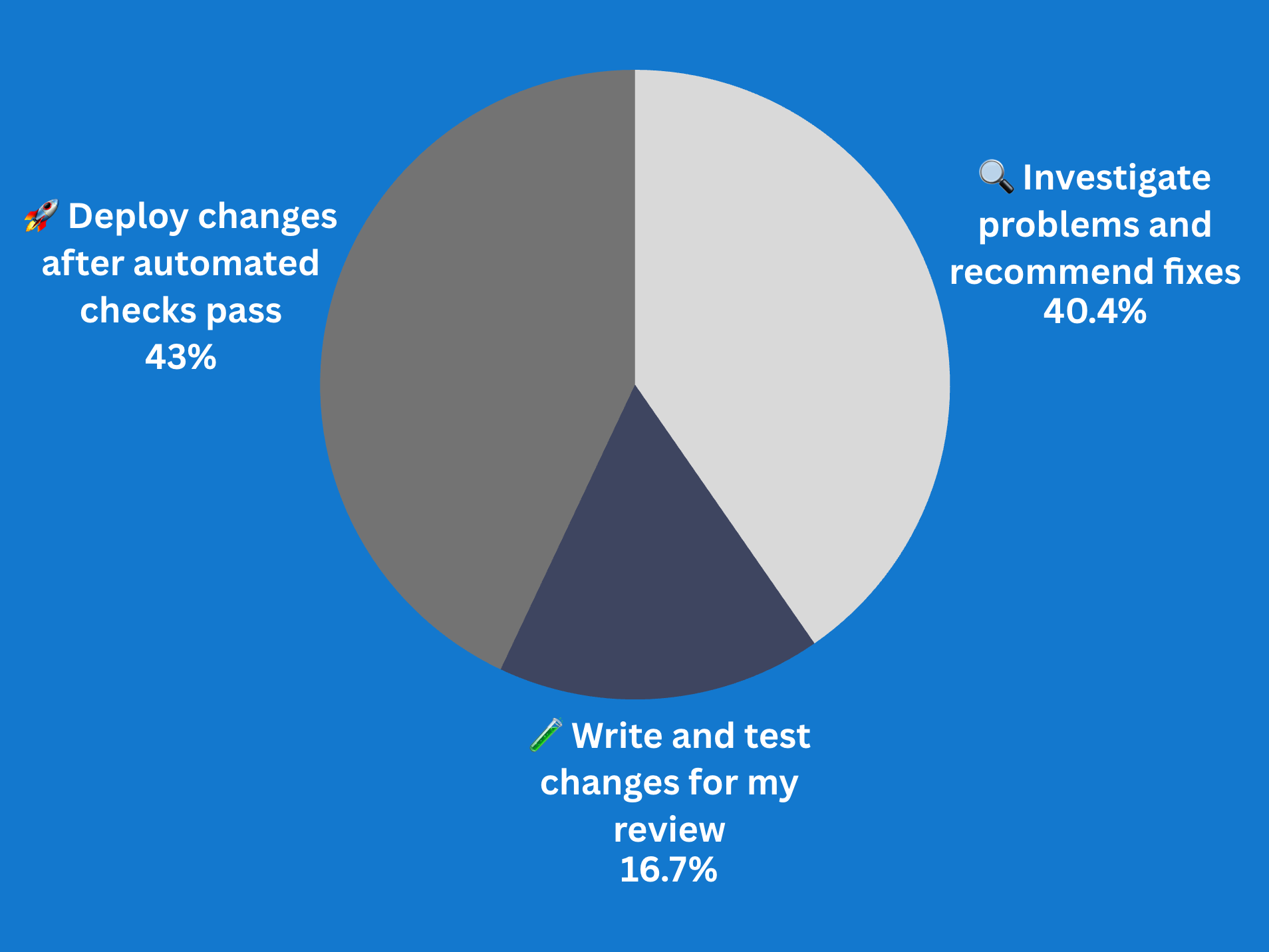
What would justify a $40,000-plus setup for running AI locally? |
|
|
|
Results from Yesterday's Pulse Check |
How much freedom would you give an AI coding agent overnight? |
|
|
|
Stop Collecting AI Tips. Start Using Them. |
AI is moving fast. Your pile of bookmarked tutorials? Not so much. The Neuron Academy cuts through the noise with 80+ hands-on lessons covering smarter prompts, research, automation, and AI agents. You can even learn how to set up Meta Muse in just 15 minutes, complete with permissions and guardrails so your AI assistant doesn't become your next IT emergency.
Try it free for 7 days with full access to the course library, guided learning paths, and fresh lessons every week. Because keeping up with AI shouldn't require quitting your day job. |
|
|
Apple's China AI Rollout Leaves New Siri Behind |
Apple Intelligence is clearing customs. Its newest Siri is still waiting.
Apple is reportedly aiming for a December rollout of Apple Intelligence in mainland China via iOS 27.3, but the fancy new Siri AI is getting left at the border. After years of regulatory purgatory, the initial release will offer a remarkably trimmed-down toolset.
There's a smaller appetizer coming sooner. Apple Executive Chairman Tim Cook told The Paper on Thursday that a few core features have finally scored approval for a late-October beta. That test includes Live Translation, Writing Tools, and Clean Up in Photos—though Cook coyly dodged confirming the December timeline. |
Image created with ChatGPT |
Bloomberg's reported December lineup adds notification summaries and original Genmoji to the mix, while strictly banishing Image Playground, upgraded Genmoji, and the revamped Siri. Throw in app-specific restrictions on text generation, and you're getting Apple's greatest hits from 2024 instead of the new album.
The red tape doesn't end at launch, either. Apple's partnership with Alibaba reportedly includes a screening mechanism that lets regulators thoroughly babysit future AI model updates. Meanwhile, local rivals like Huawei, Xiaomi, and Oppo are happily flaunting their own native AI capabilities while Apple plays catch-up.
For IT teams, mainland China just became a completely separate deployment puzzle. Apple's documentation confirms that existing compatible hardware will support the initial capabilities, saving you an immediate upgrade headache. Just triple-check those local data-handling terms before promising your employees a futuristic assistant experience.
Designed in California. Availability assembled separately. |
|
|
|
Growth can expose operational gaps MSPs could once work around. Onboarding friction, audit demands, unused licenses, and difficulty communicating value can become increasingly important as providers scale. Join Channel Insider and Nerdio on Nov. 5, 2026, at 1:00 p.m. ET for The MSP Efficiency Gap: What Separates Scalable Providers From the Rest, and explore what Nerdio's research reveals about scalable MSP operating models. |
|
|
Spyware Ads Don't Need You to Click |
A nightmare scenario has officially arrived: zero-click spyware delivered through targeted online ads. Dubbed AdFection, the technique infects your device just by loading an ad—no clicking required. A new report links Israeli ad firm Discover-Tech's infrastructure to Candiru's mercenary spyware.
At least 45 Al Jazeera Windows devices were targeted in 2024 and 2025. The dragnet was vastly wider, silently loading ads across 70,000 mobile apps and 120,000 websites. While an ad impression doesn't guarantee infection, the exposure footprint is staggering. |
Image created with ChatGPT |
Discover-Tech sat comfortably on Google's and IAB Europe's approved vendor lists for years before getting booted this week. So much for rigorous vetting. Researchers advise using trusted ad blockers, disabling ad tracking, and resetting mobile advertising IDs. Organizations should block ads at network gateways. Apparently, "don't click suspicious links" desperately needs a sequel. |
Microsoft Hits a Billion-Message Phishing Network |
Microsoft and Health-ISAC just disrupted phishing infrastructure that fueled over 1 billion malicious messages targeting 75,000 organizations since January.
Armed with a federal court order, the partners seized domains propping up YAM Store, CoGUI, and Iron Man, while Microsoft nuked over 20,000 YAM-linked accounts.
This criminal bazaar bundled cloud access with ready-made scams. Hustlers scooped up expired school and nonprofit domains, resurrected the websites, and used that wholesome cover to fraudulently acquire Microsoft 365 accounts for resale. Yes, your fake unpaid toll bill had a corporate supply chain.
This takedown doesn't automatically secure exposed environments. Microsoft urges defenders to deploy passkeys, audit Defender for Office 365 settings, and actively hunt for anomalous sign-ins to terminate compromised sessions. Even phishing has a procurement department. |
|
|
|
Oracle Applications Users Group Supports Acquisition of Sun In a letter to the EC, OAUG President Raymond Payne wrote that Oracle's acquisition of Sun would simplify the integration process associated with merging several technologies, supporting all activities, from hardware to the operating system to middleware to the applications and the database. |
|
|
|
🗂️ Turn Data Chaos Into Something Useful
Get your data under control with What Is Data Management? A Guide to Systems, Processes, and Tools, covering seven management approaches, eight best practices, and ways to tackle security risks before your data lake becomes a swamp.
🎙️ Give Your Keyboard a Break With AI Dictation
Ditch the typing with a VoiceType AI Voice-to-Text: Lifetime Subscription and dictate up to 5,000 words per month across desktop apps, with smart punctuation, grammar corrections, and lifetime access without recurring subscription fees.
☁️ Get 20TB of Cloud Storage Without Monthly Bills
Grab a Scramble Cloud Storage Lifetime Subscription for 75% off and get 20TB of lifetime storage with end-to-end encryption, private file sharing, and zero recurring fees—because your files shouldn't come with a monthly rent payment.
💻 This section contains sponsored tech insights. Advertise with us! |
|
|
|
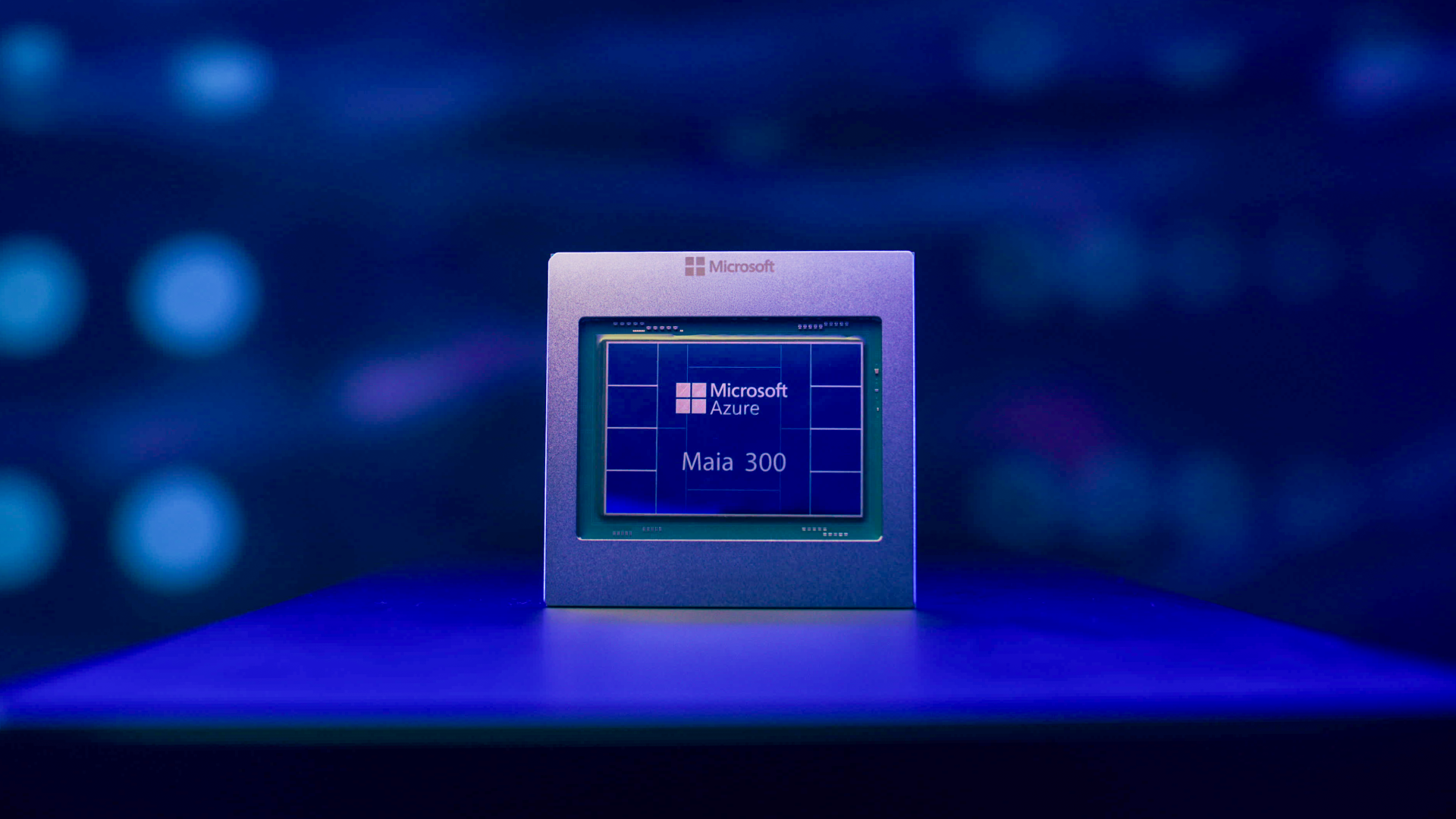
Microsoft's Maia 300 Takes Aim at AI Costs |
Microsoft unveiled the Maia 300 earlier this week, slating production deployments for 2027 with a grand mission to make its homegrown silicon the primary engine for AI inference across its product suite. That's the grunt work of actually running trained models to answer questions instead of just staring blankly at a prompt.
This expansion comes with an appetite that would make a utility company blush. Microsoft is plotting multi-gigawatt deployments of the Maia family starting next year, while Reuters reports a stash of potentially more than 1 million Maia 300 chips in 2027. Looks like Nvidia's favorite customer is finally getting serious about cutting the cord.
|
Microsoft expects the Maia 300 to pump out 40% more tokens per megawatt than "leading GPU-based systems"—conveniently refusing to name whose GPUs those might be. It also boasts up to seven times the rack-scale token throughput of its own Maia 200. Sure, comparing apples to your own older, smaller apples is fun, but neither metric actually establishes a benchmark victory over Nvidia's Rubin platform.
The hardware crams 96 accelerators into a 167-kilowatt rack. Its chiplet design relies on TSMC's N2P process for the actual brainpower, while memory and networking are engineered to reduce the energy wasted shuffling data around. Because even AI needs to cut down on its miserable daily commute.
For Azure partners and customers, the ultimate payoff remains a giant question mark. Maia is strictly an inside job serving Microsoft's own infrastructure right now, with no separate rental offering on the menu. As Channel Insider wisely points out, Microsoft's newfound hardware efficiency doesn't automatically trickle down into customer savings. You might want to wait for actual service performance and contract pricing before promising your boss a smaller cloud bill.
Right now, Microsoft's only customer for cheaper AI is... Microsoft. |
|
|
|
|
Writer/Editor at TechnologyAdvice |
Justin Meyers is an investigative writer and editor who draws on over a decade of meticulous hands-on research to deliver the full, trustworthy story behind consumer and enterprise tech, including cybersecurity. |
|
|
|
Curious about where AI is really headed? |
The Neuron cuts through the noise to bring you smart, hype-free takes on the latest AI trends, tools, and breakthroughs. Join 700,000+ professionals from top companies like Microsoft, Apple, Salesforce, and more.
|
|
|
|
Advertise in Daily Tech Insider! Daily Tech Insider is a TechnologyAdvice business. © 2026 TechnologyAdvice, LLC. All rights reserved.
TechnologyAdvice, 3343 Perimeter Hill Dr., Suite 215, Nashville, TN 37211, USA. |
|
|
|
|