Attackers are finding new ways through familiar technology. |
Today’s threats reach identity platforms, mobile devices, and WordPress sites.
Read past newsletters here. |
|
|
|
Here’s what you need to know: |
|
|
|
Microsoft Fixes Entra ID RCE Flaw Used in Attacks |
Microsoft patched a maximum-severity Entra ID flaw exploited for unauthenticated remote code execution. Tracked as CVE-2026-69836, the unsafe deserialization flaw required no compromised Entra ID account to exploit. |
Microsoft has not disclosed who exploited the vulnerability, which organizations were targeted, or whether customer environments were compromised.
Review Entra ID activity for suspicious changes, revoke exposed access, strengthen privileged accounts, and investigate connected Microsoft environments for signs of compromise. |
Apple Fixes iPhone Flaw That Enables Code Execution |
An Apple vulnerability could enable malicious code execution through image processing. The ImageIO flaw is among several vulnerabilities fixed in Apple’s latest release that could enable code execution, expose sensitive data, or compromise affected devices.
No active exploitation has been reported at the time of publication. Patch affected Apple devices and use mobile device management tools to identify outdated systems. |
WordPress Elementor Pro Bug Opens Door to RCE |
An Elementor Pro vulnerability could let unauthenticated attackers upload malicious PHP files and execute code on vulnerable WordPress servers. The flaw can be exploited when a site uses an Elementor Pro form with a File Upload field and multiple uploads enabled.
No active exploitation has been observed in the wild at the time of publication. Update Elementor Pro and inspect Elementor Forms for unexpected PHP or other suspicious files. |
|
|
|
Medusa Ransomware Strikes More Than 500 Victims |
CISA reports Medusa ransomware has hit 500-plus organizations, exploiting new vulnerabilities within 24 hours. Medusa targets industries including healthcare, education, insurance, and manufacturing, often exploiting unpatched internet-facing systems before using legitimate tools to move laterally. |
These campaigns remain active in the wild at the time of publication.
Prioritize vulnerability mitigation on internet-facing assets, segment critical systems, restrict remote-management tools, enforce phishing-resistant MFA, and maintain immutable offline backups. |
Spectre Attack Steals JWT From Cloudflare Worker |
Researchers used a remote CPU side-channel attack to extract a JWT across Cloudflare Workers. The proof-of-concept attack extracted the planted token at up to 12 bits per second using speculative execution and WebSocket timing, bypassing Cloudflare’s Spectre detection.
Cloudflare found no real-world exploitation and strengthened its isolation defenses, but the research highlights cross-tenant risks that traditional sandboxes may not prevent. When evaluating serverless providers, assess process separation, hardware-enforced memory isolation, side-channel monitoring, and cross-tenant protections alongside traditional sandbox security. |
|
|
|
Are Your Cloud Defenses Strong Enough? |
As organizations expand their cloud footprint, misconfigurations, excessive privileges, compromised credentials, and exposed assets can create attack paths. |
How to strengthen cloud security: |
- Enforce least privilege, phishing-resistant MFA, and secure credential management for users, administrators, and service accounts.
-
Leverage CSPM tools to identify misconfigurations, excessive permissions, exposed resources, and configuration drift across cloud environments.
-
Use CNAPP tools to centralize visibility, detect suspicious activity, prioritize risks, and protect cloud workloads from development through runtime.
|
Security teams need continuous visibility into cloud resources, identities, permissions, and exposures to identify and remediate risks before threat actors can exploit them. |
|
|
|
Security Tools You Can Use |
|
|
|
Pocket Security Test: If your phone became a target today… |
|
|
|
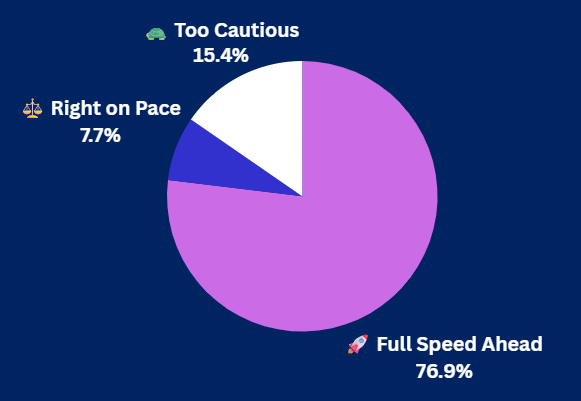
Yesterday's Pulse Check Results |
AI Speed Check: Are companies racing ahead of their safeguards? |
|
|
|
|
Ken Underhill is an award-winning cybersecurity professional, bestselling author, and seasoned IT professional. He holds a graduate degree in cybersecurity and information assurance from Western Governors University, bringing years of hands-on experience to the field. |
|
|
|
Cybersecurity Insider is a TechnologyAdvice business |
© 2026 TechnologyAdvice, LLC. All rights reserved. |
TechnologyAdvice, 3343 Perimeter Hill Dr., Suite 215, Nashville, TN 37211, USA. |
|
|
|
|