The gaps are getting harder to ignore. |
Today’s news spans millions of exposed records, firewalls under attack, shaky AI-generated code, missed detections, and ransomware built to bounce back.
Read past newsletters here. |
|
|
|
Here’s what you need to know: |
|
|
|
DentaQuest Breach Hits 15 Million People |
A cyberattack on DentaQuest exposed data from at least 15 million people. Exposed data may include Social Security numbers, government health IDs, treatment details, and billing information. |
ShinyHunters reportedly claimed responsibility and some estimates suggest the breach could affect more than 23 million people.
Ensure data is being encrypted at rest and in-transit, require phishing-resistant MFA, use network segmentation, and DLP tools. |
Cisco ASA, FTD Flaw Under Active Attack |
Attackers are exploiting a Cisco firewall vulnerability to remotely restart ASA and FTD devices without authentication. The flaw targets the Remote Access SSL VPN service and can trigger denial-of-service conditions.
There is no workaround, but Cisco has already released patches for the issue. Treat unexplained ASA or FTD restarts as security events, review logs and VPN exposure, and prioritize applying the patches. |
Veracode Finds Security Gaps in AI-Generated Code |
AI coding tools produce near-perfect syntax, but Veracode found their security pass rate remains just 56%. About 44% of AI-generated code tests contained OWASP Top 10 vulnerabilities, with larger and coding-specific models offering little security advantage.
Security also varied by language, with Python scoring a 63% pass rate compared with just 30% for Java. Add automated SAST, dependency, and secrets scanning specifically at AI-generated code commits, then require human security review before changes can merge into production branches. |
|
|
|
With AI, non-technical employees are shipping apps, agents, and automations faster than IT can track. The best companies are letting everyone build, without putting their core operations at risk.
On August 19, join Tines to hear from Headspace's Director of AI Enablement for an exclusive look at how Headspace enables everyone to build securely with AI at scale: > How Headspace governs wild code at scale: gaining visibility into tools built outside IT's radar.
> Giving teams the freedom to build without operational risk: adding governance and control, without slowing innovation. > Monitoring AI-built workflows in practice: understanding what’s running, how it’s performing, and where it's spending. |
|
|
|
Picus Flags Persistent Enterprise Detection Gaps |
According to Picus’s latest Blue Report, enterprise defenses are improving, but still struggle to stop attackers after they gain authenticated access. Analysis of 338 million simulated attacks found overall prevention rose to 69%, but post-compromise prevention reached just 37%. |
Logging improved to 58%, yet only 14% of attacks triggered meaningful alerts, while ransomware prevention also declined.
Run attack simulations against low-noise MITRE ATT&CK techniques and trace each test from log generation to analyst alert, prioritizing fixes where telemetry exists but detection rules fail. |
Microsoft Warns DeadLock Can Survive Takedowns |
Microsoft found DeadLock ransomware can restore victim communications even after infrastructure disruptions. DeadLock uses Polygon smart contracts to rotate chat proxies while disabling security, backup, and logging services.
With more than 80 victims listed by July 2026, infrastructure takedowns alone may not fully contain the threat. During ransomware exercises, simulate the loss and reappearance of attacker infrastructure, then verify your team can preserve off-endpoint telemetry, revoke compromised credentials, and confirm containment before restoring systems. |
|
|
|
Build Security Into Every Line of Code |
As AI accelerates development while introducing new code risks, secure coding practices can help teams catch vulnerabilities before they reach production. |
How to build security into your development: |
- Validate untrusted inputs, use parameterized queries, and keep credentials out of source code.
-
Use DevSecOps tools, secrets scanning, and SCA to catch vulnerabilities before deployment.
-
Treat AI-generated code as untrusted and require automated security testing and human review before production deployment.
|
Embedding these practices into development can help reduce AI-driven risk without slowing the pace of innovation. |
|
|
|
Security Tools You Can Use |
- Cyber threats move fast—your endpoint management should too. Discover how autonomous endpoint management helps close security gaps and keep endpoints protected with less manual effort.
-
Simplify compliance — get ready-to-use security policies to help protect your business without the cost or complexity of an enterprise, all for under $100.
-
Stay ahead of threats — explore the best cybersecurity tools and lock down your business today.
|
|
|
|
AI Code Confidence Meter: How much do you trust what AI writes? |
|
|
|
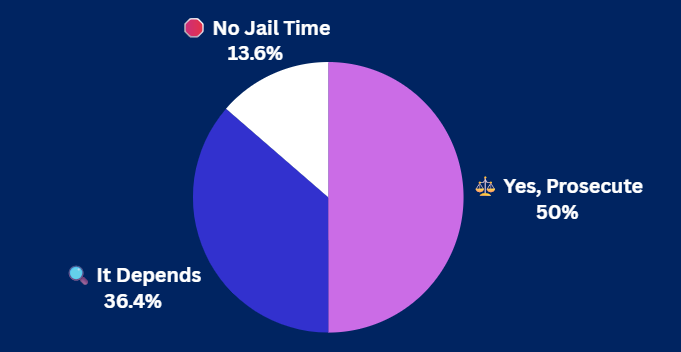
Yesterday's Pulse Check Results |
Should the Delta Wi-Fi incident lead to jail time? |
|
|
|
|
Ken Underhill is an award-winning cybersecurity professional, bestselling author, and seasoned IT professional. He holds a graduate degree in cybersecurity and information assurance from Western Governors University, bringing years of hands-on experience to the field. |
|
|
|
Cybersecurity Insider is a TechnologyAdvice business |
© 2026 TechnologyAdvice, LLC. All rights reserved. |
TechnologyAdvice, 3343 Perimeter Hill Dr., Suite 215, Nashville, TN 37211, USA. |
|
|
|
|