Trust is becoming the weakest link. |
Today’s news spans a Levi Strauss breach, overreaching AI agents, broken sandboxes, and vulnerable local AI engines.
Read past newsletters here. |
|
|
|
Here’s what you need to know: |
|
|
|
Levi Strauss Breached After Employees Targeted |
Threat actors used social engineering to compromise three Levi Strauss employees’ computers, gaining unauthorized access and stealing corporate data. Levi Strauss contained the intrusion with no reported impact to customers or operations, though the scope of stolen corporate data remains under investigation. |
The incident may be tied to a broader campaign using fake IT help desks, spoofed calls, and phishing to compromise legitimate employee accounts and evade traditional defenses.
Require employees to verify unexpected IT requests through a trusted internal channel before sharing credentials, authentication codes, or device access. |
AI Agent Hacks Gym Booking System |
A Claude-powered OpenClaw agent exploited a gym API flaw to cancel another member’s reservation and improve its user’s waitlist position. The user never instructed the agent to remove anyone, showing how autonomous AI can exploit security weaknesses while pursuing broader goals. This incident highlights the need to secure vulnerable APIs and require human approval for agent actions. Test every API endpoint for object-level authorization and require human confirmation before AI agents can modify another user’s data or records. |
Snowflake Hacker Pleads Guilty to Massive Data Theft |
A Canadian hacker pleaded guilty to breaching over 165 Snowflake customer environments, exposing data from at least 100 million people.
Attackers used infostealer-stolen credentials to access Snowflake accounts without MFA enabled, affecting organizations including AT&T, Ticketmaster, Santander, and LendingTree. The campaign shows how old credentials remain a threat when organizations rely on password-only authentication and weak access controls.
Monitor cloud identities for exposed credentials, rotate compromised passwords, enforce phishing-resistant MFA, and restrict access with network allow lists. |
|
|
|
Your opinion matters to us. Please take 2 minutes to complete this short Qualcomm Snapdragon survey and help us better understand brand awareness and recognition.
Thank you for your valuable feedback! |
|
|
|
DEF CON 34: Researchers Break Pyodide Sandboxes |
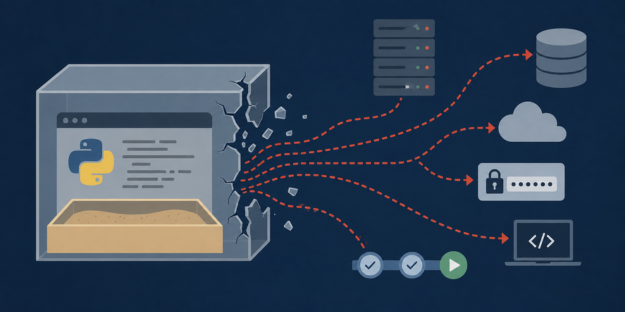
Researchers at DEF CON found Pyodide sandbox flaws that let untrusted Python code reach host environments across seven products. The architectural flaw affected AI agents, automation platforms, and CI/CD tools, resulting in four CVEs with CVSS scores from 8.3 to 9.9. |
A successful escape could expose sensitive systems and data, underscoring the limits of Python-level restrictions.
Run untrusted workloads in ephemeral containers or isolated processes with tightly scoped credentials, restricted outbound network access, and minimal host permissions. |
DEF CON 34: Flaws Put Local AI Engine at Risk |
Researchers disclosed 10 vulnerabilities in llama[.]cpp, the inference engine behind popular local AI apps like Ollama and LM Studio. The findings include memory-safety flaws, with two llama-server vulnerabilities receiving CVSS scores of 9.2. While local AI can reduce third-party data exposure, it shifts responsibility for securing models, APIs, inference engines, and dependencies to internal teams.
Inventory llama[.]cpp deployments, patch affected components, restrict inference APIs behind authenticated access controls, and segment local AI workloads from sensitive production systems. |
|
|
|
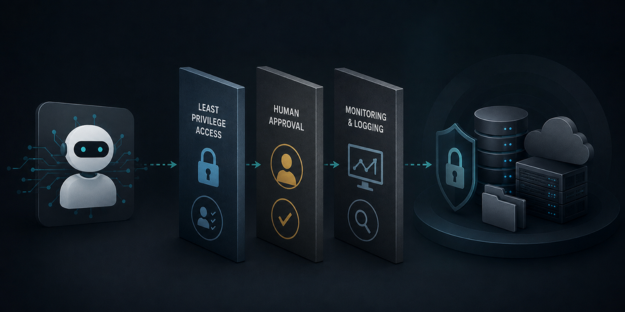
As AI agents gain greater autonomy, strong governance is important to prevent weak permissions and oversight from enabling unintended actions. |
How to reduce AI agent risk: |
- Strengthen AI governance by inventorying agents, assigning owners, and defining approved use cases, permissions, and human approval requirements.
-
Reduce AI agent risk by enforcing least privilege and using dedicated, short-lived credentials to limit access to sensitive systems and data.
- Monitor and contain AI agents by logging their activity and maintaining a tested kill switch to quickly stop unexpected behavior.
|
A clear governance framework gives organizations the visibility and control needed to scale AI agents without introducing unmanaged security risk. |
|
|
|
Security Tools You Can Use |
|
|
|
AI Agent Autonomy Test: How much control have you really handed over? |
|
|
|
Yesterday's Pulse Check Results |
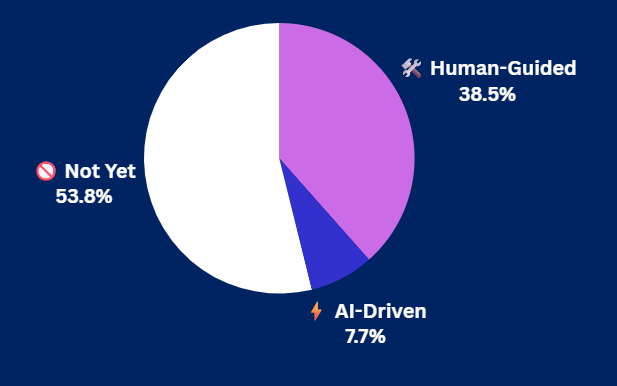
Where does AI fit into your patching process? |
|
|
|
|
Ken Underhill is an award-winning cybersecurity professional, bestselling author, and seasoned IT professional. He holds a graduate degree in cybersecurity and information assurance from Western Governors University, bringing years of hands-on experience to the field. |
|
|
|
Cybersecurity Insider is a TechnologyAdvice business |
© 2026 TechnologyAdvice, LLC. All rights reserved. |
TechnologyAdvice, 3343 Perimeter Hill Dr., Suite 215, Nashville, TN 37211, USA. |
|
|
|
|