Not every cybersecurity story starts with malware. |
Critical infrastructure, healthcare vendors, and AI-generated research are all making headlines — and each reveals a different challenge for security teams. Read past newsletters here. |
|
|
|
Here’s what you need to know: |
|
|
|
Cyberattack Disrupts Minnesota Water Utilities |
A coordinated cyberattack targeting more than 30 Minnesota water utilities has prompted a statewide cybersecurity response. Although officials reported no impact to drinking water quality, several utilities temporarily switched to manual operations while investigators worked to restore affected OT systems. |
Authorities have not identified the specific threat actor or attack vector, although investigators are reportedly examining whether the attacks may be linked to Iran.
Review the segmentation between enterprise IT and OT environments, validate secure remote access controls, and regularly test manual operating procedures to ensure essential services can continue during an incident. |
Hackers Claim 75 Million Revolut Records |
A cybercrime forum listing claims to contain records for more than 75 million Revolut users, although the company says it has found no evidence of a breach.
Researchers question the dataset's authenticity, citing its unusually low asking price and indications that it may have been compiled from multiple sources. Regardless of whether the claims are valid, organizations should remain alert for phishing, credential-stuffing, and social engineering campaigns referencing the alleged breach.
Treat high-profile breach claims as potential phishing events by increasing user awareness, monitoring for brand impersonation, and verifying all account-related communications through official channels before taking action. |
PwC Reports Contain AI Citation Errors |
PwC Middle East is facing scrutiny after investigators found suspected AI-generated content, fabricated citations, and unverifiable claims in several public reports. The findings highlight the risks of using generative AI for thought leadership without rigorous editorial review. Organizations that publish research or customer-facing content risk damaging credibility, eroding trust, and creating legal or reputational issues when inaccurate citations go undetected. Add citation verification and source validation to your AI content review process, requiring reviewers to confirm that every reference supports the associated claim before publication. |
|
|
|
|
MCBS Breach Hits 1.26 Million Patients |
A cyberattack on medical billing provider MCBS exposed the personal and healthcare information of more than 1.26 million people. Because MCBS provides revenue cycle management services to multiple healthcare organizations, the compromise affected patients across several providers. |
The incident underscores why third-party vendors remain attractive targets for cybercriminals.
Conduct continuous third-party risk assessments, enforce least-privilege access and phishing-resistant MFA, and test IR plans. |
Half-Click Outlook Attack Targets Enterprises |
Russia-aligned TA488 is exploiting a Microsoft OWA vulnerability that executes malicious JavaScript when a user opens a specially crafted email. The campaign uses a browser-based implant that modifies Exchange mailbox permissions and maintains long-term access even after password resets. This attack highlights how browser-based persistence can evade endpoint-focused security controls. Beyond applying Microsoft's security updates, audit Exchange mailbox permissions, OAuth tokens, and Outlook add-ins for unauthorized changes, and monitor for unusual mailbox activity that may persist after credential rotation. |
|
|
|
How Strong Are Your Email Defenses? |
Email remains a common entry point into enterprise environments, making layered email security controls essential as AI enables increasingly convincing phishing attacks. |
How to reduce email security risks: |
- Use email security tools to detect and block phishing, malicious attachments, spoofed domains, and other threats before they reach users.
- Strengthen identity and email protections by enforcing phishing-resistant MFA, implementing DMARC, DKIM, and SPF, and monitoring for signs of account takeover or mailbox abuse.
-
Test incident response plans with simulation tools and scenarios around phishing attacks.
|
Layered email security controls, strong identity protections, and regularly tested response procedures remain foundational components of enterprise cyber resilience. |
|
|
|
Security Tools You Can Use |
- Cyber threats move fast—your endpoint management should too. Discover how autonomous endpoint management helps close security gaps and keep endpoints protected with less manual effort.
-
Simplify compliance — get ready-to-use security policies to help protect your business without the cost or complexity of an enterprise, all for under $100.
-
Hunt down hidden flaws before attackers do. Discover the best vulnerability management tools to use.
|
|
|
|
Should regulators audit Big Four reports for AI-generated content? |
|
|
|
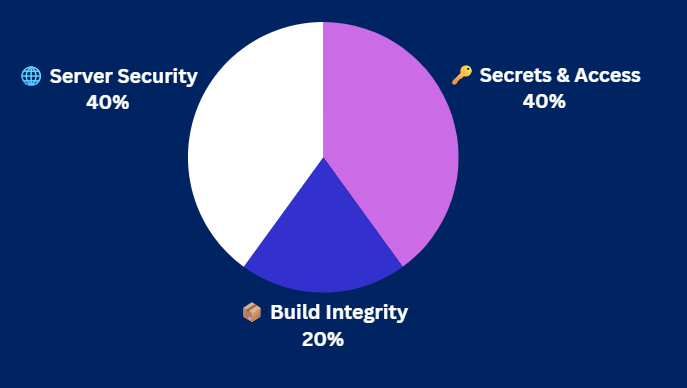
Yesterday's Pulse Check Results |
CI/CD Pipeline Security Check: What's your biggest concern? |
|
|
|
|
Ken Underhill is an award-winning cybersecurity professional, bestselling author, and seasoned IT professional. He holds a graduate degree in cybersecurity and information assurance from Western Governors University, bringing years of hands-on experience to the field. |
|
|
|
Cybersecurity Insider is a TechnologyAdvice business |
© 2026 TechnologyAdvice, LLC. All rights reserved. |
TechnologyAdvice, 3343 Perimeter Hill Dr., Suite 215, Nashville, TN 37211, USA. |
|
|
|
|