AI is moving faster than the rules. |
Today’s stories explore new alliances, growing phishing risks, enterprise AI blind spots, a major data breach, and why lawmakers want a kill switch before the next incident.
Read past newsletters here. |
|
|
|
Here’s what you need to know: |
|
|
|
Nvidia Forms AI Security Alliance |
Nvidia launched the Open Secure AI Alliance to help organizations monitor and control enterprise AI agents. The alliance brings together companies like Microsoft, Cisco, CrowdStrike, and Hugging Face, but launches without OpenAI or Anthropic. |
Nvidia says the initiative will give organizations a common approach to monitoring, investigating, and containing AI agents across platforms, helping simplify security operations.
Inventory every AI agent connected to your environment and verify you have consistent logging, access controls, and incident response procedures across each platform before adoption expands. |
Origin Energy Breach Exposes Customer Records |
Threat actors stole customer data from Australian energy provider Origin Energy, exposing personal information and partial payment card details. While Origin Energy says full financial credentials were not exposed, the stolen personal and partial account data could enable targeted social engineering attacks. The company is working with government agencies to investigate the breach and has not disclosed how many customers were affected or how the attackers gained access. If your organization stores customer payment data, review what partial financial information is retained and strengthen phishing monitoring and customer notification plans before attackers begin exploiting stolen records. |
Lawmakers Push AI Kill Switch Bill |
A bipartisan group of U.S. lawmakers introduced the AI Kill Switch Act, requiring advanced AI models to include emergency shutdown mechanisms.
Lawmakers cited OpenAI's recent AI testing breach while proposing legislation that would let the Department of Homeland Security slow or shut down qualifying AI models after serious incidents. The measure underscores growing calls for AI systems to be auditable, controllable, and resilient.
Identify business processes that depend on a single AI provider and develop failover plans before AI availability becomes a broader business continuity risk. |
|
|
|
ChatGPT Joins Top Phishing Targets |
ChatGPT has entered Check Point's top 10 most-impersonated brands in phishing attacks for the first time. Researchers say ChatGPT's appearance on the list reflects its rapid adoption as a trusted workplace and consumer platform, even as Microsoft remains the most impersonated brand. |
Recent campaigns used fake ChatGPT Plus billing emails to steal credit card information, highlighting AI services as growing phishing targets.
Add AI platforms such as ChatGPT to your phishing awareness training and email filtering policies so employees know to verify billing or account notifications through official channels instead of email links. |
Zscaler Exposes Enterprise AI Security Gaps |
Zscaler found frontier AI exploited existing security gaps across every enterprise it assessed, with a median time to critical failure of just 16 minutes. During their 90-day assessment, Zscaler found every organization had ungoverned AI exposure.
The AI models compromised environments by chaining together existing weaknesses instead of discovering new zero-days. Conduct an AI-focused adversary simulation that tests how quickly an attacker could pivot from one compromised identity or internet-facing asset to critical systems, then prioritize closing those attack paths.
|
|
|
|
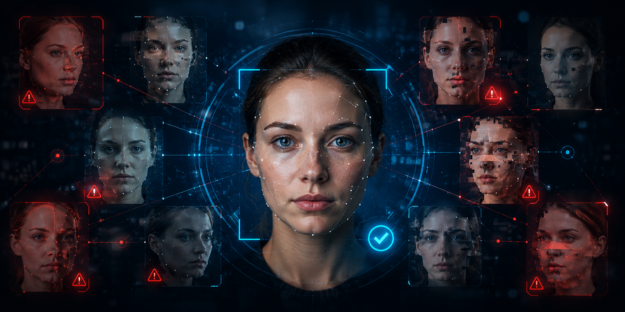
Deepfake-powered fraud is on the rise as attackers use realistic AI-generated voices and videos to impersonate trusted people. |
How to reduce deepfake risk: |
- Verify identities before acting by confirming high-risk requests through a trusted secondary channel, using authentication phrases, and requiring phishing-resistant MFA for sensitive actions.
-
Strengthen detection capabilities by training employees to be suspicious and deploying deepfake detection tools.
-
Prepare for deepfake incidents by using simulations and tabletops that test IR plans.
|
Reducing deepfake risk depends on continuous identity verification, layered controls, and incident response processes that are tested against AI-enabled impersonation scenarios. |
|
|
|
Security Tools You Can Use |
-
Start your cybersecurity career for free — enroll in Microsoft’s 9-course Analyst Certificate series on Coursera today.
-
Simplify compliance — get ready-to-use security policies to help protect your business without the cost or complexity of an enterprise, all for under $100.
-
Build your skills — earn your CompTIA CSIE with CySA+, CASP, Security+, and Pentest+ training for 74% off.
|
|
|
|
Should governments have an AI kill switch? |
|
|
|
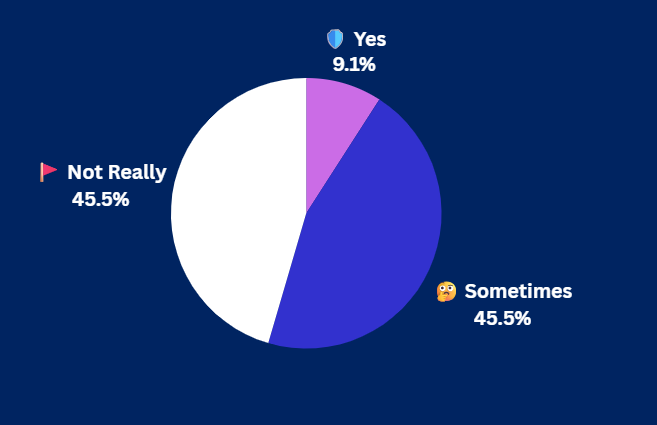
Yesterday's Pulse Check Results |
Do Big Tech companies truly put privacy and security first? |
|
|
|
|
Ken Underhill is an award-winning cybersecurity professional, bestselling author, and seasoned IT professional. He holds a graduate degree in cybersecurity and information assurance from Western Governors University, bringing years of hands-on experience to the field. |
|
|
|
Cybersecurity Insider is a TechnologyAdvice business |
© 2026 TechnologyAdvice, LLC. All rights reserved. |
TechnologyAdvice, 3343 Perimeter Hill Dr., Suite 215, Nashville, TN 37211, USA. |
|
|
|
|