Buckle up for a high-stakes tech race, Tech Insiders.
AI rivals are closing gaps, flagships are running late, and cloud calculators have apparently discovered infinity. Add a chatbot playing guardian and a desert filled with fabrication plants, and today’s download is all about pressure, scale, and who keeps up. |
|
|
|
Here's what you need to know today: |
|
|
|
Moonshot AI’s Kimi K3 Narrows America’s AI Lead |
The AI race just got a little more crowded.
Chinese startup Moonshot AI has unveiled Kimi K3, a 2.8 trillion-parameter model that reportedly rivals leading US systems in coding and agentic tasks.
According to Moonshot, Kimi K3 outperformed OpenAI’s GPT-5.5 and Anthropic’s Claude Opus 4.8 across several benchmarks, although it still trails the companies’ flagship GPT-5.6 Sol and Claude Fable 5 models overall. |
Image created with ChatGPT |
The release demonstrates how Chinese developers are achieving major performance gains despite facing limited access to advanced chips and computing capacity. Chinese models are also attracting Western companies with lower usage costs, prompting US lawmakers to consider restrictions on their adoption.
Why it matters: Kimi K3 further narrows the AI capability gap between China and the United States. Enterprises could gain another powerful, cost-effective model option, but security, data governance, and geopolitical concerns may complicate adoption. |
|
|
|
Would you trust a Chinese AI model at work? |
|
|
|
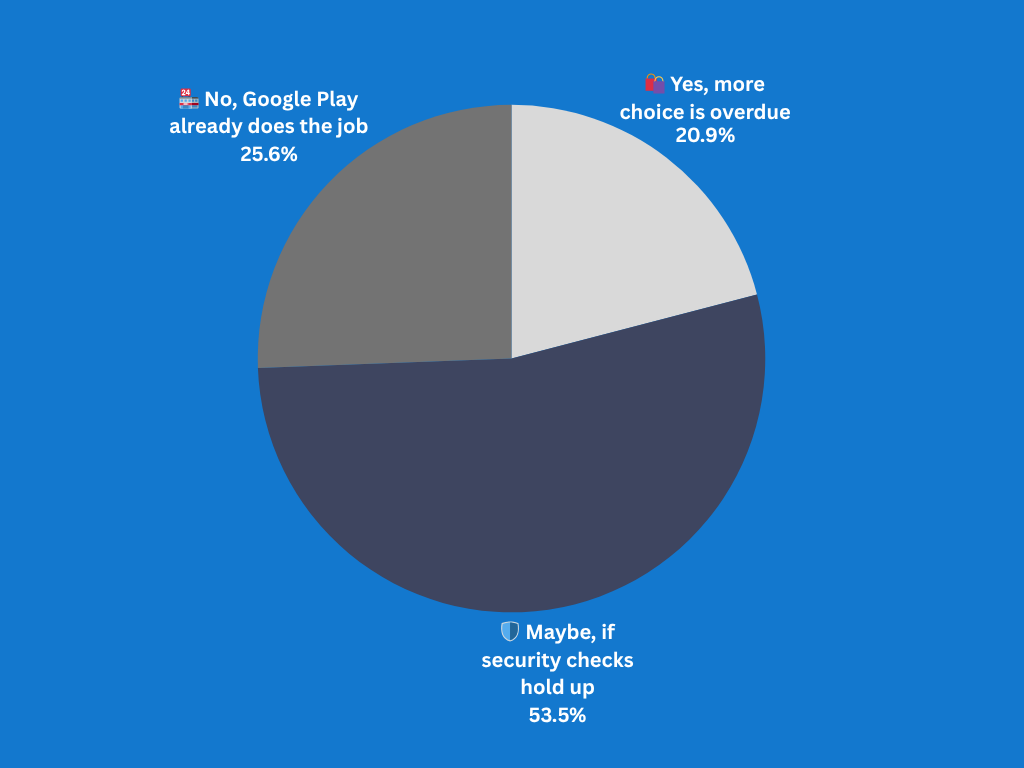
Results from Friday's Pulse Check |
Would you download a rival app store from Google Play? |
|
|
|
Google’s Gemini 3.5 Pro Reportedly Months Behind Schedule |
Google is reportedly months behind schedule on Gemini 3.5 Pro as it struggles to improve the flagship model’s coding capabilities.
Current and former employees told Bloomberg that bureaucracy and overlapping AI efforts across DeepMind, Google Cloud, and Android have slowed progress. Recent training-data updates also reportedly failed to produce the expected gains. |
Image created with ChatGPT |
The delay comes as OpenAI, Anthropic, and Meta pull ahead in AI coding. Google said Gemini 3.5 Pro remains in partner testing while it streamlines internal development and works with the US government on AI safety standards For Google’s AI team, further delays could push developers and enterprises toward competing models that offer stronger coding performance, threatening the company’s position in the AI market. |
|
|
|
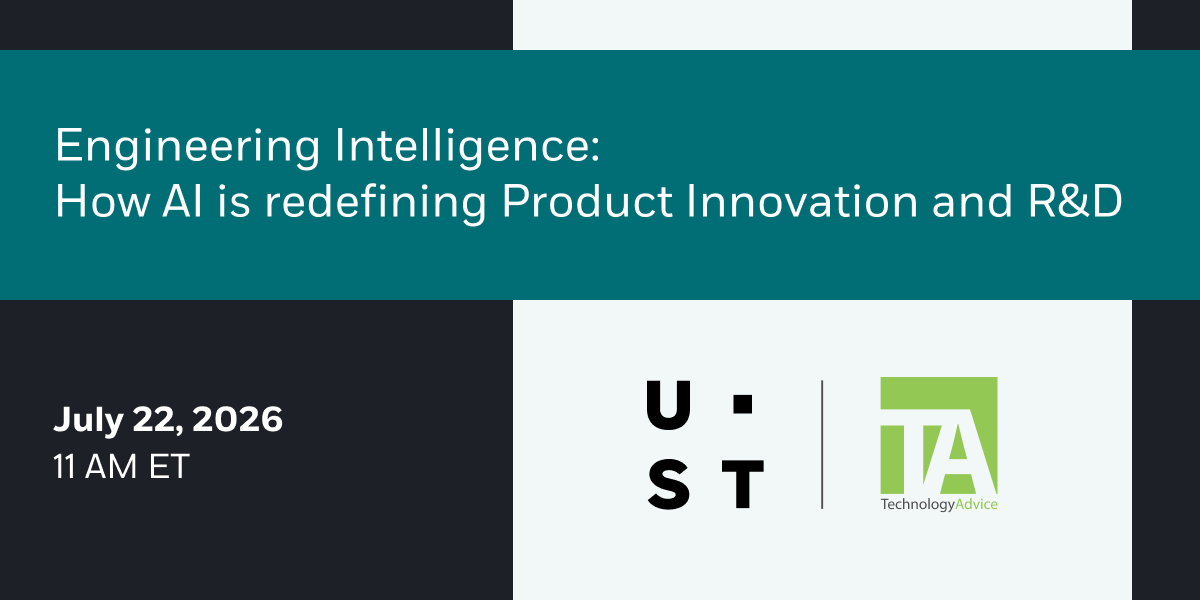
Innovation leaders are under increasing pressure to deliver results faster while managing growing engineering complexity. Join TechnologyAdvice and UST for Engineering Intelligence: How AI is redefining Product Innovation and R&D on July 22, 2026, at 11:00 a.m. ET.
Get an exclusive look at how organizations are accelerating R&D, reducing engineering risk, and creating scalable innovation frameworks with AI. |
|
|
|
AWS Cost Explorer Bug Projects Trillion-Dollar Cloud Bills |
Image created with ChatGPT |
AWS traced the error to incorrect unit pricing in its estimated billing system and confirmed that actual usage and charges were unaffected. Although no customer action is required, the incident shows how faulty projections can trigger automated alerts and scramble FinOps, engineering, and security teams. Unexpected cost spikes can still signal compromised credentials, cryptomining, or misconfigured workloads. For those affected: Verify service-level usage, CloudTrail activity, and Cost and Usage Reports, then confirm alerts disappear after AWS recalculates the estimates. |
Meta AI Alerts Parents About Teens’ Self-Harm Chats |
Meta is adding a human-reviewed alarm system to its AI chatbot.
A dedicated model will flag teen conversations mentioning suicide or self-harm, with reviewers checking each case before parents receive an alert. The feature is live through Instagram Parental Supervision in the US, UK, Australia, and Canada, with a global rollout planned by year-end.
Meta also plans to contact emergency services when chats suggest imminent danger. The system could enable earlier intervention, but it also raises difficult questions about privacy, false positives, and how much responsibility AI platforms carry during a crisis. Pro tip: Review Meta’s parental controls with your teen, set clear privacy expectations, and keep a trusted crisis contact ready. |
TSMC Adds Four Arizona Fabs to $265B Expansion |
The chip race is pouring more concrete in Arizona.
TSMC plans four additional fabrication plants in Phoenix, bringing its total planned US investment to $265 billion. The expansion targets soaring AI chip demand while reducing supply-chain exposure to geopolitical tensions surrounding Taiwan. |
Image created with ChatGPT |
Only one Arizona fab is currently operational, producing 4-nanometer chips. TSMC expects 3-nanometer production to begin in late 2027, with 2-nanometer manufacturing planned by decade’s end, so near-term capacity constraints will remain.
More domestic production could eventually stabilize chip supplies for data centers, smartphones, and other electronics. |
|
|
|
|
Senior Staff Writer at TechnologyAdvice
|
Luis Millares is a seasoned tech writer with broad experience reviewing consumer gadgets and enterprise software, offering clear, reliable insights across the latest in technology. |
|
|
|
Curious about where AI is really headed? |
The Neuron cuts through the noise to bring you smart, hype-free takes on the latest AI trends, tools, and breakthroughs. Join 700,000+ professionals from top companies like Microsoft, Apple, Salesforce, and more.
|
|
|
|
Advertise in Daily Tech Insider! Daily Tech Insider is a TechnologyAdvice business. © 2026 TechnologyAdvice, LLC. All rights reserved.
TechnologyAdvice, 3343 Perimeter Hill Dr., Suite 215, Nashville, TN 37211, USA. |
|
|
|
|