Identity, infrastructure, and compliance all take center stage. |
From Microsoft's largest Patch Tuesday to evolving phishing campaigns and enterprise messaging risks, today's stories highlight why security teams can't afford to stand still. Read past newsletters here. |
|
|
|
Here’s what you need to know: |
|
|
|
Microsoft Patches Record 570 Vulnerabilities |
Microsoft's recent Patch Tuesday fixed a record 570 security flaws, including three zero-days and two vulnerabilities already under active exploitation. The release includes 59 critical vulnerabilities, many involving remote code execution across Windows, SharePoint, and other enterprise products. |
AI is accelerating vulnerability discovery and shrinking the window to exploit flaws, making strong security fundamentals and detection engineering more important than ever.
Apply the latest patches or compensating controls, and focus first on vulnerabilities being actively exploited. |
CMMC Assessments Pause, Compliance Doesn't |
The Department of War has paused third-party CMMC Level 2 assessments due to a shortage of accredited assessors, but cybersecurity requirements remain unchanged.
Contractors must still comply with DFARS 252.204-7012 and NIST SP 800-171, meaning gaps between security practices and compliance attestations could still draw Department of Justice scrutiny. The pause also gives organizations an opportunity to strengthen continuous governance by extending security controls beyond human users to AI agents, automated workflows, and other systems handling Controlled Unclassified Information (CUI). Inventory every human and non-human identity that can access CUI and verify that consistent access controls, logging, and policy enforcement apply across both. |
FaceTime Scams Target iPhone Users |
Apple is warning iPhone users about rising FaceTime impersonation scams and urging them to report suspicious calls.
The attacks do not exploit a FaceTime vulnerability but instead use social engineering to trick victims into sharing passwords, verification codes, financial information, or screen access. Apple reminded users it will never ask for account passwords, device passcodes, or two-factor authentication codes.
Train users to be suspicious of unexpected video calls and independently verify the caller’s identity through another method before sharing any information or taking action. |
|
|
|
What's your biggest weakness when spotting scams? |
|
|
|
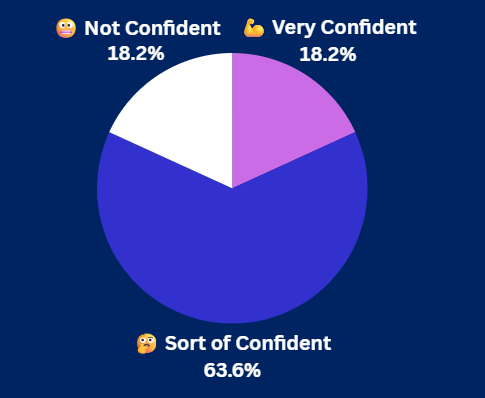
Yesterday's Pulse Check Results |
How confident are you in your organization's zero-day readiness? |
|
|
|
Security Tools You Can Use |
|
|
|
RabbitMQ Flaws Expose Message Brokers |
Researchers have disclosed two RabbitMQ vulnerabilities that could allow attackers to take over vulnerable message brokers or expose metadata across shared environments. The first flaw could allow an unauthenticated attacker to gain administrative control of affected RabbitMQ deployments, while the second exposes tenant metadata. |
There were no indications that either vulnerability had been exploited in the wild at the time of publication.
Apply the latest patch, rotate OAuth client secrets, verify least-privilege permissions, and confirm the RabbitMQ management interface is restricted behind VPN, IP allowlists, and/or Zero Trust access controls.
|
Phishing Kits Bypass Microsoft 365 MFA |
Researchers have identified two phishing kits, Jalisco and OmegaLord, that bypass Microsoft 365 MFA by abusing legitimate authentication workflows. Jalisco uses device code phishing to capture OAuth tokens, while OmegaLord steals credentials and phone numbers to facilitate MFA interception. Both phishing kits remain active in the wild at the time of publication. Disable device code authentication where it is not required, audit newly registered devices, and revoke active OAuth sessions. |
|
|
|
Phishing attacks are becoming harder to stop as threat actors use AI, phishing kits, and legitimate authentication workflows to steal credentials and bypass traditional defenses. |
How to reduce phishing risk: |
- Confirm unexpected requests through secondary channels and never share sensitive information without validating the source.
-
Use phishing-resistant MFA, least privilege, email security tools, and apply Zero Trust principles to continuously verify users and devices.
-
Test incident response plans and use attack simulation tools with scenarios around phishing and credential compromise.
|
Reducing phishing risk requires a layered strategy that combines strong identity controls, user verification, and continuous monitoring. |
|
|
|
|
Ken Underhill is an award-winning cybersecurity professional, bestselling author, and seasoned IT professional. He holds a graduate degree in cybersecurity and information assurance from Western Governors University, bringing years of hands-on experience to the field. |
|
|
|
Cybersecurity Insider is a TechnologyAdvice business |
© 2026 TechnologyAdvice, LLC. All rights reserved. |
TechnologyAdvice, 3343 Perimeter Hill Dr., Suite 215, Nashville, TN 37211, USA. |
|
|
|
|