Security priorities are shifting fast |
Today’s news includes an Accenture attack, AI trust concerns, an actively exploited Adobe vulnerability, and why traditional security operations are being challenged.
Read past newsletters here. |
|
|
|
Here’s what you need to know: |
|
|
|
Accenture Confirms Security Incident |
Accenture confirmed a security incident after a threat actor claimed to have stolen 35 GB of source code and cloud-related data, though those claims remain unverified.
Stolen developer credentials, source code, and cloud access tokens can expose development environments and provide attackers with valuable insight into enterprise applications. |
Accenture is continuing to investigate the incident. Treat any suspected source code exposure as a potential credential compromise by immediately rotating keys and tokens, auditing repository and cloud activity, and scanning codebases for hardcoded secrets before attackers can exploit them. |
Alibaba has reportedly banned Claude Code for internal developers after claims of a backdoor. A reverse-engineering discovery of undocumented environment checks has renewed concerns about transparency in AI coding assistants.
As these tools gain broad access to developer workstations, organizations should closely evaluate what data they inspect, collect, and modify.
Before deploying AI coding assistants at scale, require vendors to clearly document local system access, validate permissions during security reviews, and continuously monitor endpoint activity for unexpected behavior. |
AI Warning Labels Fail to Stop Hallucination Risk |
Research suggests warning labels alone are unlikely to prevent users from trusting inaccurate AI-generated responses. As AI expands into regulated business functions, organizations need processes to review, verify, and escalate AI-generated responses before they influence important decisions. Audit trails, governance, and human oversight help ensure those controls are effective and accountable. Before deploying AI advisors in sensitive use cases, confirm that outputs are logged, human escalation paths are available, and review processes are documented rather than relying on warning messages alone. |
|
|
|
What's your biggest source code security concern? |
|
|
|
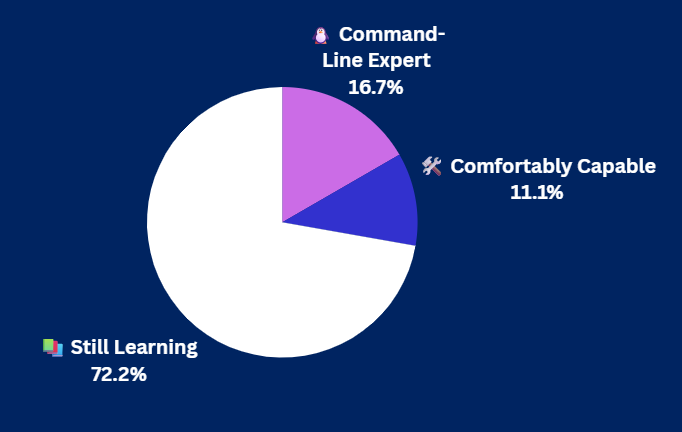
Yesterday's Pulse Check Results |
How confident are your Linux security skills? |
|
|
|
Security Tools You Can Use |
-
Oligo provides runtime security for modern applications, cloud workloads, and AI systems, detecting and blocking threats by continuously analyzing runtime behavior. Learn more
-
Discover how continuous AI-powered penetration testing helps uncover exploitable risks before attackers do—at a fraction of traditional testing costs.
-
Protect your business from threats — get 30% off Bitdefender’s powerful cloud and on-premise protection today.
|
|
|
|
CISA Warns of Active ColdFusion Exploitation |
Federal agencies are racing to patch a critical Adobe ColdFusion vulnerability after CISA confirmed active exploitation and issued an emergency remediation deadline. CVE-2026-48282 allows unauthenticated remote code execution on vulnerable ColdFusion servers. |
Researchers reported exploitation within hours of Adobe's patch release.
Patch to the latest version and monitor for unexpected web server activity or signs of post-compromise persistence. |
Sevii CEO Curt Aubley suggests that operational complexity, not staffing shortages, is leaving security teams behind. Years of adding security tools have increased alert fatigue while delivering only incremental improvements.
As organizations evaluate the next generation of security operations, the focus is shifting toward governed AI that can reduce operational complexity and enable trusted decision-making at machine speed. Measure AI success by reductions in operational complexity, analyst workload, and response times — not just the number of automated tasks or alerts processed. |
|
|
|
As you enter new markets and serve larger customers, your compliance program must scale with you. This guide shows you how to build a foundation beyond one-time compliance - streamlining controls, reducing manual work, and adapting to Europe's evolving regulations.
Download the ebook to build a security posture designed for growth. |
|
|
|
How Secure are Your Endpoints? |
Endpoints are frequent attack targets, making layered security essential for reducing risk and improving detection and response. |
How to reduce endpoint risk: |
- Deploy EDR or XDR solutions to help detect, investigate, and respond to suspicious endpoint activity while improving visibility across your environment.
- Reduce the attack surface by automating patch management, enforcing least privilege, requiring phishing-resistant MFA, and allowing only trusted applications to run.
-
Adopt a Zero Trust approach with continuous monitoring to continuously verify device health, user access, and suspicious activity.
|
A layered endpoint security strategy that integrates continuous monitoring and rapid response helps reduce risk, while improving organizational resilience against threats.
|
|
|
|
|
Ken Underhill is an award-winning cybersecurity professional, bestselling author, and seasoned IT professional. He holds a graduate degree in cybersecurity and information assurance from Western Governors University, bringing years of hands-on experience to the field. |
|
|
|
Cybersecurity Insider is a TechnologyAdvice business |
© 2026 TechnologyAdvice, LLC. All rights reserved. |
TechnologyAdvice, 3343 Perimeter Hill Dr., Suite 215, Nashville, TN 37211, USA. |
|
|
|
|