One weak link is all it takes |
This edition explores a DHS breach, zero-click RCEs, an active Cisco exploitation, mobile privacy risks, and the identity security gaps that continue to open doors for attackers.
Read past newsletters here. |
|
|
|
Here’s what you need to know: |
|
|
|
DHS Confirms Breach of HSIN Platform |
DHS is investigating a cyberattack that compromised the Homeland Security Information Network (HSIN), which shares sensitive but unclassified information across government and private-sector partners.
Although classified systems were not affected, the attackers reportedly targeted HSIN servers and a related SharePoint environment used for collaboration. |
The full scope of the breach, including whether data was exfiltrated and the identity of the threat actor, remains under investigation.
Review and restrict access to collaboration platforms, continuously monitor SharePoint environments, and validate incident response plans with attack simulations and not just tabletop exercises. |
Cursor IDE Flaws Trigger Zero-Click RCE |
Researchers at Cato AI Labs uncovered two critical Cursor IDE vulnerabilities that enable zero-click remote code execution through prompt injection, even with sandboxing enabled.
The flaws allow attackers to overwrite critical system files and escape Cursor's sandbox through malicious content processed by AI agents. Given Cursor's widespread enterprise adoption, the research highlights how AI coding assistants can create new attack paths beyond just traditional prompt injection.
Restrict AI coding agents to trusted data sources, validate MCP integrations, and monitor developer workstations for unexpected changes to system binaries, shell profiles, and startup files. |
Cisco Warns of Active Unified CM Attacks |
Cisco has confirmed that attackers are actively exploiting a server-side request forgery (SSRF) vulnerability in Unified Communications Manager (Unified CM). The flaw allows unauthenticated attackers to send crafted HTTP requests that create files on vulnerable Unified CM systems. Cisco has released a fix and recommends disabling the vulnerable WebDialer service until affected systems can be patched.
Audit internet-facing Unified CM deployments, apply the latest updates, disable WebDialer where possible, and monitor for unexpected file creation or suspicious HTTP requests targeting Unified CM servers. |
|
|
|
How confident are you that government agencies can protect your sensitive data? |
|
|
|
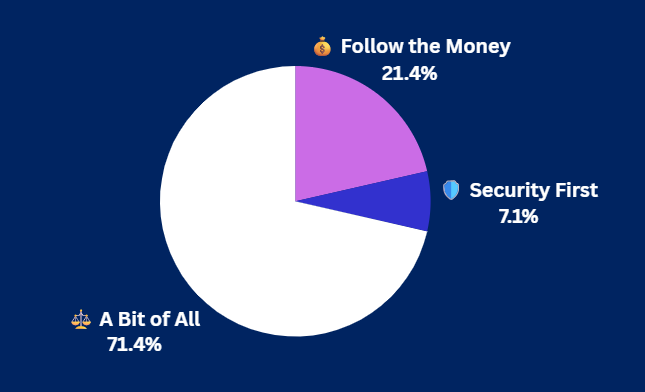
Yesterday's Pulse Check Results |
What's really driving frontier AI restrictions? |
|
|
|
Security Tools You Can Use |
|
|
|
Apple Privacy Flaw Reveals Real Email Addresses |
Researchers say a vulnerability in Apple's Hide My Email feature could expose users' real email addresses despite two attempted fixes. The flaw affects an iCloud+ privacy feature designed to hide users' real email addresses when signing up for websites and online services. |
Researchers are withholding technical details until Apple releases a complete fix and recommend notifying affected users.
If you use Hide My Email for sensitive accounts, consider using a dedicated email address for untrusted services until Apple confirms the vulnerability has been fully resolved. |
Barracuda Flags Weak Access Control Risks |
Barracuda Managed XDR researchers found attackers continue to exploit weak credentials, exposed remote services, and poor access controls to breach enterprise networks. Researchers identified LemonDuck malware, GoldBrute botnet activity, and a 55% increase in password spraying attacks targeting FortiGate VPNs. Together, the findings show attackers continue exploiting the same identity and remote access weaknesses to establish and expand their footholds.
Audit all internet-facing remote access services, eliminate direct RDP exposure where possible, enforce phishing-resistant MFA on VPNs and privileged accounts, and monitor authentication logs for password spraying and other abnormal login activity. |
|
|
|
Oracle Red Bull Racing developers ship faster with 1Password
There’s no time for manual coordination on the F1 racetrack. Except when it comes to wind tunnel recovery. For Oracle Red Bull Racing, restoring critical services meant tracking down the right people and scattered credentials. That’s why Oracle Red Bull Racing partnered with 1Password to fast-track their recovery process. The result? 1Password simplified redeployment from 20 services to one button and cut recovery time from 60 minutes to 2 minutes. Discover how centralized secrets management became a competitive advantage for one of F1's top teams. |
|
|
|
How Strong Is Your Email Security? |
Email remains a common initial entry point into organizations, and threat actors are leveraging AI to create more convincing phishing emails that bypass traditional user awareness training. |
How to strengthen email security: |
- Strengthen identity security with phishing-resistant MFA and Zero Trust to continuously verify every user, non-human identity (NHI), application, and device.
- Reduce email threats with advanced filtering and user verification by blocking malicious messages and confirming unexpected requests through a trusted secondary communication channel.
-
Deploy AI-powered email security tools that use threat intelligence and sandboxing to detect and block email-based threats.
|
Reducing email risk requires layered controls that strengthen identity, improve visibility, and stop threats before they reach users. |
|
|
|
|
Ken Underhill is an award-winning cybersecurity professional, bestselling author, and seasoned IT professional. He holds a graduate degree in cybersecurity and information assurance from Western Governors University, bringing years of hands-on experience to the field. |
|
|
|
Cybersecurity Insider is a TechnologyAdvice business |
© 2026 TechnologyAdvice, LLC. All rights reserved. |
TechnologyAdvice, 3343 Perimeter Hill Dr., Suite 215, Nashville, TN 37211, USA. |
|
|
|
|