Cybersecurity risk keeps showing up |
Today's news brings more than 1 million leaked records, 236K scam domains, GEO poisoning research, and a DOJ website takedown. Tell us what content you want to see on TechRepublic by taking this quick survey.
Read past newsletters here. |
|
|
|
Here’s what you need to know: |
|
|
|
1 Million French Worker Records Allegedly Leaked |
Threat actors claim they hacked France Travail-linked employment applications and exposed more than 1 million worker records. This exposure also includes application source code, security keys, configuration files, and Windows credentials. |
The investigation into the alleged hack is ongoing.
Affected individuals should change login credentials, use phishing-resistant MFA if not already doing so, and validate any urgent requests through another channel. |
236,000 Scam Domains Tied to Chinese App Framework |
Infoblox researchers found that cybercriminals used the legitimate DCloud Uni-App framework to build more than 236,000 scam domains for crypto fraud, phishing, gambling, and investment scams.
The findings show how legitimate frameworks can be abused to scale scams, with nearly 1,000 organizations generating more than five million DNS requests to the infrastructure. Researchers also observed attackers using legitimate government registrations and bulletproof hosting providers to increase credibility and make fraudulent operations more difficult to disrupt.
Monitor DNS activity for connections to known scam infrastructure and expand security awareness training to remind employees that government registrations and professional-looking websites do not guarantee a service is legitimate. |
License Plate Readers Track Phones, Smart Devices |
Leonardo has introduced SignalTrace, an ALPR upgrade that detects nearby Bluetooth, Wi-Fi, and RFID signals from smartphones, AirPods, smartwatches, and other wireless devices.
By associating wireless device identifiers with vehicle movements, the platform gives investigators a richer view of travel patterns while raising new concerns about privacy. How do you think governments can balance data collection for safety, while ensuring privacy?
Organizations that operate connected surveillance technologies should inventory exposed systems, apply patches, and regularly review access controls and data retention policies to reduce the risk of unauthorized access or misuse. |
|
|
|
Privacy vs. Public Safety: Where Do You Draw the Line? |
|
|
|
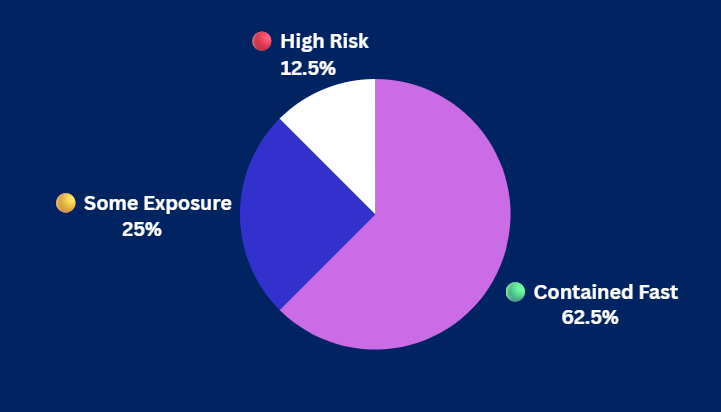
Yesterday's Pulse Check Results |
If one employee account was compromised today, what happens next? |
|
|
|
Security Tools You Can Use |
-
We’re in a Patch Apocalypse. That means these three IT excuses won’t work anymore.
-
See why security teams are replacing fragmented tools with a single AI-powered platform that stops threats before they become breaches.
-
Discover how continuous AI-powered penetration testing helps uncover exploitable risks before attackers do—at a fraction of traditional testing costs.
|
|
|
|
GEO Poisoning Manipulates AI Answers |
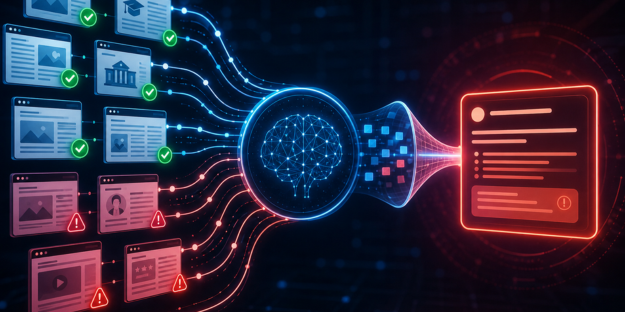
Lasso Security researchers showed that attackers can manipulate AI-generated answers by using GEO techniques on public web content without compromising the models themselves.
The technique uses tactics such as fake editorial endorsements, fabricated statistics, and coordinated supporting websites to increase the likelihood that AI assistants cite and repeat false information. |
In testing across five production AI models, Llama-4-Maverick and GPT-4o-mini were the most susceptible, while Grok and Claude Haiku showed strong resistance to the manipulation attempts. Treat retrieved web content as untrusted, validate AI-generated information, and verify claims against trusted sources. |
DOJ Shuts Down 400 World Cup Streaming Sites |
The DOJ seized nearly 400 domains used to illegally stream FIFA World Cup 2026 matches during Operation Offsides.
This operation involved law enforcement agencies across multiple countries and reflects a broader effort to disrupt criminal online ecosystems that profit from illicit content distribution. The takedown also highlights the cyber risks of unauthorized streaming sites, including malware, phishing, malicious redirects, and data theft.
Organizations should discourage unauthorized streaming on corporate devices and use DNS, web filtering, and zero trust controls to block known malicious domains. |
|
|
| How Well Are You Protecting Sensitive Data? |
Data leakage remains a common security challenge, making it important for organizations to protect sensitive information from unauthorized access, sharing, or exposure. |
How to reduce data exposure: |
- Classify sensitive data, enforce least-privilege access, and encrypt data at rest and in transit to reduce unauthorized access and limit the impact of data exposure.
-
Deploy data loss prevention (DLP) solutions and continuously monitor data access to detect and block unauthorized sharing across endpoints, email, and cloud applications.
- Maintain immutable, offline backups to improve recovery from ransomware, accidental deletion, and other data loss incidents.
|
Reducing data exposure requires a layered approach that combines preventive controls, continuous visibility, and resilient recovery capabilities. |
|
|
|
|
Ken Underhill is an award-winning cybersecurity professional, bestselling author, and seasoned IT professional. He holds a graduate degree in cybersecurity and information assurance from Western Governors University, bringing years of hands-on experience to the field. |
|
|
|
Cybersecurity Insider is a TechnologyAdvice business |
© 2026 TechnologyAdvice, LLC. All rights reserved. |
TechnologyAdvice, 3343 Perimeter Hill Dr., Suite 215, Nashville, TN 37211, USA. |
|
|
|
|