Attackers are moving faster |
From credential theft to AI-powered fraud and global cybercrime trends, today's stories reveal how the threat landscape continues to evolve.
Tell us what content you want to see on TechRepublic by taking this quick survey. Read past newsletters here. |
|
|
|
Here’s what you need to know: |
|
|
|
Arctic Wolf Reverses CyberStrike Harvester Behind FortiBleed |
Arctic Wolf reverse engineered the CyberStrike Harvester behind the FortiBleed campaign, which targets Fortinet FortiGate devices through credential theft rather than malware.
The CyberStrike Harvester automates credential extraction and validation, enabling attackers to access VPNs, enumerate Active Directory, browse SMB file shares, and steal enterprise data. |
This campaign reportedly affects tens of thousands of FortiGate devices across 194 countries and remains active in the wild.
Rotate credentials, continuously monitor, and test incident response plans with scenarios around credential compromise and identity attack paths. |
Operation Endgame Cripples StealC |
An international law enforcement operation disrupted the StealC malware ecosystem, seizing more than 25.6 million stolen credentials. StealC is a malware-as-a-service infostealer that steals credentials and other data used in ransomware and account takeover attacks.
Europol, Microsoft, Proofpoint, IBM X-Force, and other partners supported the investigation, including the discovery of a flaw in the StealC C2 panel. Search your environment for compromised credentials, force password resets for exposed accounts, and require phishing-resistant MFA. |
Kitana Powers AI-Driven Fraud |
AI is helping cybercriminals build more sophisticated fraud platforms that steal credentials and payment data during live online sessions.
NCC Group found that Kitana combines phishing, reverse proxy infrastructure, and real-time attacker interaction to steal credentials, authentication codes, and payment data. Researchers also identified evidence of AI-assisted development, highlighting how AI is accelerating cybercrime.
Monitor certificate transparency logs and newly registered typosquatted domains, and alert users to verify website URLs before entering credentials or approving unexpected authentication prompts. |
|
|
|
If one employee account was compromised today, what happens next? |
|
|
|
Yesterday's Pulse Check Results |
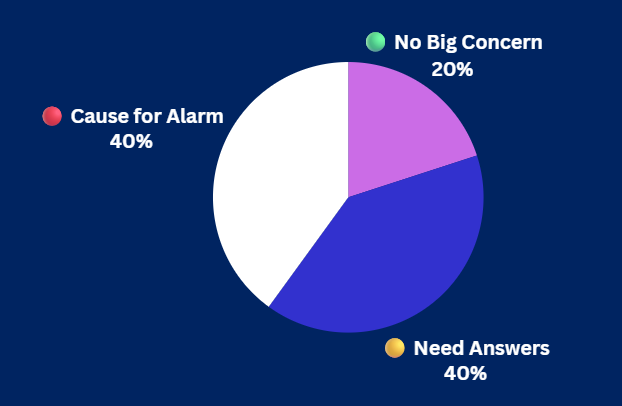
A venue you used last month suffers a data breach. What's your first thought? |
|
|
|
Security Tools You Can Use |
-
Take a 2-minute survey on Cisco Secure Access and share your perspective on today’s security challenges.
-
Simplify compliance — get ready-to-use security policies to help protect your business without the cost or complexity of an enterprise, all for under $100.
-
Find out how security teams gain complete visibility across cloud environments and detect issues before they become outages or incidents.
|
|
|
|
Five Eyes Sounds AI Alarm |
Artificial intelligence is expected to accelerate cyberattacks within months, according to a new warning from the Five Eyes intelligence alliance.
The alliance warned that AI is accelerating cyberattacks by shortening the time between vulnerability discovery and exploitation while enabling more convincing phishing and prompt injection attacks. |
As AI adoption grows, organizations should strengthen access controls, monitor AI activity, and continuously assess third-party risk. Create an inventory of every AI assistant, copilot, and agent connected to enterprise systems, then review each integration for excessive permissions, unnecessary connectors, and missing activity logs before expanding AI deployments. |
Interpol Flags Rising APAC Cybercrime |
Cybercrime now accounts for 30% of nationally recorded crimes in more than half of the APAC countries surveyed by Interpol. The report identifies phishing, ransomware, DDoS attacks, infostealers, and AI-enabled scams as key cyber threats across APAC. It also warns that cloud phishing and AI-powered social engineering are making traditional awareness training less effective.
Update phishing simulations to include AI-written lures, review cloud access controls, and map incident escalation communication contacts by country before a cross-border attack occurs. |
|
|
|
Are You Prepared for Cybercrime? |
Cybercrime continues to evolve as attackers combine phishing, ransomware, AI tools, and infostealers to target organizations of every size. |
How to reduce your attack surface: |
-
Strengthen identity security by using phishing-resistant MFA, enforcing least-privilege access with identity and access management (IAM) tools, and monitoring for unusual logins, privilege escalation, and other signs of account compromise.
-
Reduce your attack surface by maintaining a strong patch management program and segmenting critical systems to limit lateral movement after an initial breach.
- Prepare for evolving threats by training users and using deepfake detection tools, while testing IR plans through tabletop exercises.
|
Cyber resilience is built through consistent security fundamentals, including identity protection, attack surface reduction, and operational preparedness. |
|
|
|
|
Ken Underhill is an award-winning cybersecurity professional, bestselling author, and seasoned IT professional. He holds a graduate degree in cybersecurity and information assurance from Western Governors University, bringing years of hands-on experience to the field. |
|
|
|
Cybersecurity Insider is a TechnologyAdvice business |
© 2026 TechnologyAdvice, LLC. All rights reserved. |
TechnologyAdvice, 3343 Perimeter Hill Dr., Suite 215, Nashville, TN 37211, USA. |
|
|
|
|