The attack surface keeps evolving. |
This week, billions of exposed credentials, AI-driven security challenges, trusted tools gone sideways, and new guardrails for autonomous systems remind us that convenience and risk often arrive together. Tell us what content you want to see on TechRepublic by taking this quick survey. Read past newsletters here. |
|
|
|
Here’s what you need to know: |
|
|
|
24 Billion Credentials Left Exposed |
Researchers uncovered a massive database containing roughly 24 billion stolen login credentials exposed online. The dataset reportedly included usernames, email addresses, plaintext passwords, and login URLs gathered from infostealer logs. |
Although the database has since been taken offline, the exposed data still poses risks for credential stuffing when passwords are reused across services.
Use phishing-resistant MFA when available, use separate passwords accounts, and use password managers to help share access without exposing credentials. |
Patch Backlogs Grow as AI Finds Flaws |
AI is driving a “patch apocalypse” by dramatically increasing the volume of newly discovered vulnerabilities. Organizations using manual patching processes may struggle to keep pace with rising CVE volumes and shrinking exploit windows as attackers increasingly leverage AI. Security teams are using autonomous endpoint management, risk-based prioritization, and continuous verification to speed remediation and reduce bottlenecks.
Measure patching delays and use layered security controls and zero trust to reduce risk while remediation is underway. |
Copilot Flaw Exposed Sensitive Business Data |
Researchers uncovered a SearchLeak vulnerability that could expose Microsoft 365 Copilot data with a single malicious click. The attack combined prompt injection, HTML rendering, and server-side request forgery techniques to potentially access emails, MFA codes, and other sensitive information. Although Microsoft has patched the issue, the use of trusted Microsoft domains helped the attack evade some traditional security controls. Review Microsoft 365 Copilot permissions to identify excessive access to sensitive data. |
|
|
|
The "Patch Apocalypse" Is Coming. How worried are you? |
|
|
|
Yesterday's Pulse Check Results |
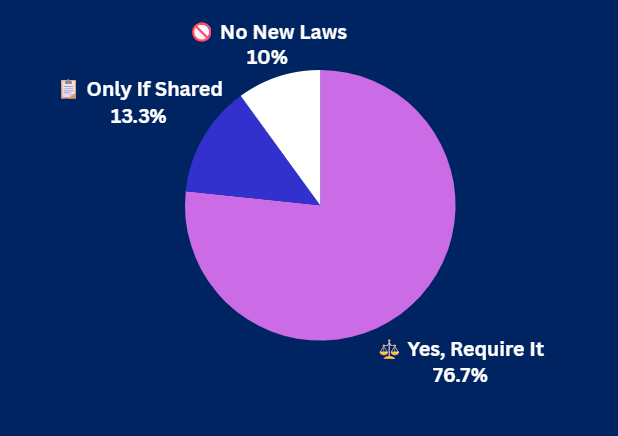
Should job-search platforms be required to clearly explain how they use your data, similar to GDPR-style notices? |
|
|
|
Security Tools You Can Use |
-
Take a 2-minute survey on Cisco Secure Access and share your perspective on today’s security challenges.
-
See why security teams are replacing fragmented tools with a single AI-powered platform that stops threats before they become breaches.
-
See how organizations securely share, govern, and unlock the full value of their data without adding operational complexity.
|
|
|
|
Biometrics Help Spot Trafficking at Major Events |
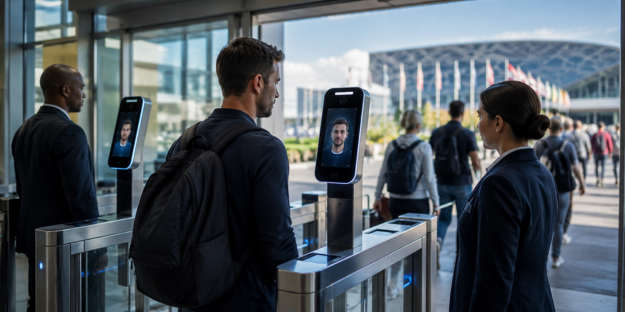
Major events like the FIFA World Cup and Super Bowl can create conditions that traffickers exploit, including large crowds, labor demand, and increased travel. Biometric technologies are helping law enforcement verify identities, detect fraudulent documents, and identify potential trafficking victims at major events. |
Experts say biometrics are most effective when paired with intelligence sharing, cybersecurity monitoring, document verification, and traditional investigative techniques.
Train frontline staff to recognize trafficking indicators and report suspicious activity before and during major events. |
Google Unveils AI Agent Guardrails |
Google DeepMind published an AI Control Roadmap for monitoring, restricting, auditing, and stopping advanced AI agents in enterprise environments. The framework treats AI agents as a security challenge, introducing controls such as access restrictions, behavioral monitoring, real-time blocking, and threat modeling.
As AI agents become more autonomous, organizations must evaluate governance and security controls alongside performance.
Add AI agents to your privileged access management reviews and require vendors to demonstrate audit logs, action-level monitoring, and emergency shutdown controls before expanding agent access to production systems. | |
|
|
Secure AI Agents Before They Act |
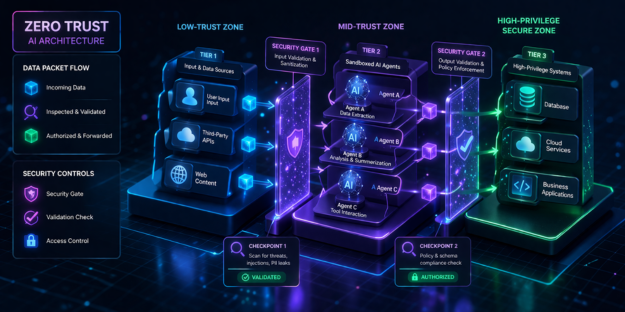
AI agents have the ability to access data, execute tasks, write code, and interact with enterprise systems. While these capabilities can boost productivity, they also create new security risks if organizations grant excessive permissions or fail to monitor agent behavior. |
How to reduce AI agent risk: |
-
Apply least-privilege access to AI agents and require human approval for high-risk activities such as code deployment, administrative changes, or financial transactions.
-
Establish AI governance policies that include comprehensive audit logging, continuous monitoring, and regular reviews of agent behavior, permissions, and decision-making processes.
-
Use sandboxed environments to test agents, monitor for prompt injection attacks, and maintain emergency shutdown capabilities to quickly stop suspicious or unintended actions.
|
Organizations deploying AI agents should treat them as privileged systems by enforcing strong access controls, continuous monitoring, and clear governance over what actions they can perform and what data they can access. |
|
|
|
|
Ken Underhill is an award-winning cybersecurity professional, bestselling author, and seasoned IT professional. He holds a graduate degree in cybersecurity and information assurance from Western Governors University, bringing years of hands-on experience to the field. |
|
|
|
Cybersecurity Insider is a TechnologyAdvice business |
© 2026 TechnologyAdvice, LLC. All rights reserved. |
TechnologyAdvice, 3343 Perimeter Hill Dr., Suite 215, Nashville, TN 37211, USA. |
|
|
|
|