The weakest link isn't always where you expect it. |
In today’s news, researchers find new ways to exploit AI models, while security leaders rethink what success looks like. Tell us what content you want to see on TechRepublic by taking this quick survey. Read past newsletters here. |
|
|
|
Here’s what you need to know: |
|
|
|
Hugging Face Vulnerability Opens Door to RCE |
Organizations using Hugging Face AI models may have been exposed to remote code execution through a newly disclosed Transformers vulnerability. Researchers at Pluto disclosed multiple Hugging Face vulnerabilities, including CVE-2026-4372, which allows malicious AI models to execute code through a crafted configuration file. |
Patches have already been released for all of the vulnerabilities.
Audit all systems using Hugging Face Transformers, upgrade to patched versions, and require sandbox testing of external AI models before deploying them into production environments. |
GitHub Flaw Exposes Developer Tokens |
A vulnerability in github[.]dev could have allowed attackers to steal GitHub OAuth tokens and gain access to developers’ repositories through a simple one-click attack. The flaw allowed a malicious extension to escape a VSCode webview sandbox and steal GitHub OAuth tokens.
A fix was already released for the issue. In addition to applying the patch, instruct developers to regularly clear cached data and restrict the use of untrusted repositories in browser-based coding sessions. |
Researchers Bypass Gemini Defenses Again |
SafeBreach researchers demonstrated an attack that tricks Google Gemini into following hidden instructions embedded in messaging app notifications. The technique disguises malicious prompts as trusted context, causing Gemini to process them without warning.
Google has already released a fix for the issue. Review every app and notification source Gemini can access, disable unnecessary integrations, and regularly audit AI assistant permissions to minimize the impact of prompt injection attacks. |
|
|
|
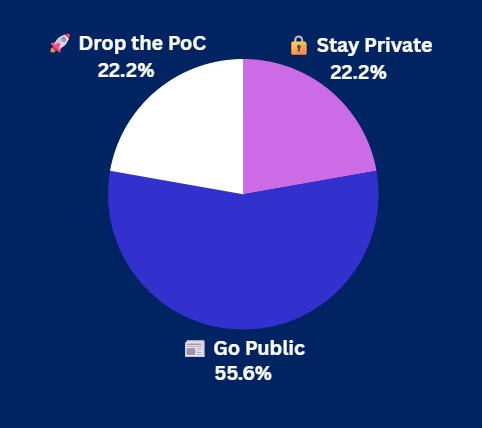
A critical vendor ships compromised code tomorrow. What's your response? |
|
|
|
Yesterday's Pulse Check Results |
Vendor hasn't responded after multiple disclosure attempts. Your call? |
|
|
|
Security Tools You Can Use |
|
|
|
AI Supercharges Southeast Asia Scam Networks |
Scam compounds across Southeast Asia are using AI, malware, and automation to turn online fraud into a faster, more scalable cybercrime operation. These types of operations are difficult to contain because they combine technology with forced labor, corruption, and uneven regional enforcement. |
A close friend who has investigated these types of scam groups along the Thailand-Myanmar border believes we'll continue to see them grow.
Add AI-assisted scam compounds to threat modeling, then test controls for synthetic identity creation, mobile-risk signals, mule-account behavior, and suspicious fund movement. |
Resilience Takes Center Stage at Gartner |
Gartner SRM 2026 emphasized a shift from breach prevention to operational resilience. According to Gartner, evolving AI threats are making resilience a more practical goal than prevention.
The summit also highlighted agentic AI risks and the need for stronger identity and data-layer controls. Conduct an AI governance review that maps every agent, its permissions, connected data sources, and enforcement controls to identify hidden risks before they become operational incidents. |
|
|
|
Traditional QA signals are struggling to keep pace with AI-driven development. As release cycles accelerate, fragmented workflows and disconnected visibility make it harder to measure true software quality.
DZone and SmartBear bring you AI-Driven Quality: Shifting Beyond Traditional Test Metrics on June 11, 2026 at 11:00 AM ET, focused on improving release confidence with unified visibility, measurable assurance, and real-time quality insights.
Learn practical ways to strengthen quality workflows without adding unnecessary complexity. |
|
|
|
How Secure Is Your Software Supply Chain? |
From malicious npm packages to vendor compromises, software supply chain attacks are becoming a preferred path for attackers seeking large-scale impact. |
Reducing software supply chain risk: |
-
Maintain visibility into your software ecosystem by using an SBOM, monitoring third-party vendors, and tracking open-source vulnerabilities.
-
Reduce exposure to compromised code by using dependency scanning tools and verifying package integrity through code signing, checksums, and other validation controls.
- Limit the impact of supply chain attacks by enforcing least-privilege access for developers and regularly reviewing permissions across development tools and environments.
|
As attackers target trusted software ecosystems, proactive supply chain governance is becoming essential for resilience. |
|
|
|
|
Ken Underhill is an award-winning cybersecurity professional, bestselling author, and seasoned IT professional. He holds a graduate degree in cybersecurity and information assurance from Western Governors University, bringing years of hands-on experience to the field. |
|
|
|
Cybersecurity Insider is a TechnologyAdvice business |
© 2026 TechnologyAdvice, LLC. All rights reserved. |
TechnologyAdvice, 3343 Perimeter Hill Dr., Suite 215, Nashville, TN 37211, USA. |
|
|
|
|