Your Q3 Pipeline Problem Is Being Created Right Now |
Memorial Day has passed. For many revenue teams, that marks the unofficial start of summer planning.
Attention shifts to Q3. Buyers start mentioning vacations. Leadership teams begin talking about second-half targets. And that's usually when pipeline risk starts getting overlooked. Marketing is still launching campaigns. Sales is still booking meetings. Dashboards still look busy.
Meanwhile, small problems start accumulating. These could include slow follow-ups, weak buying signals, lingering opportunities without meaningful progress, delayed campaigns, and stakeholders disappearing from conversations. |
None of those issues triggers immediate alarm bells. Then again, pipeline gaps rarely appear overnight; most are created weeks or months before they show up in a forecast. By the time leadership starts asking where the pipeline went, the answer is usually: it left a while ago.
As Julie Thomas, President and CEO of ValueSelling Associates, put it: |
"Pipeline volume is the number that most often gives a false sense of security early in the quarter. A full pipeline can look encouraging, but if it's driven by unqualified leads or inconsistent qualification criteria, it won't convert." |
🩺 Diagnosis: Most pipeline gaps are visibility problems disguised as forecasting problems.
Teams tend to monitor what is easiest to see: campaigns launched, meetings booked, emails sent, and opportunities created. Meanwhile, the signals that actually determine future pipeline health are often harder to measure. Buyer engagement starts fading. Response times stretch. Stakeholders disappear. Urgency weakens.
By the time a pipeline problem appears in a forecast, the underlying buyer behavior has usually been changing for weeks. |
|
|
|
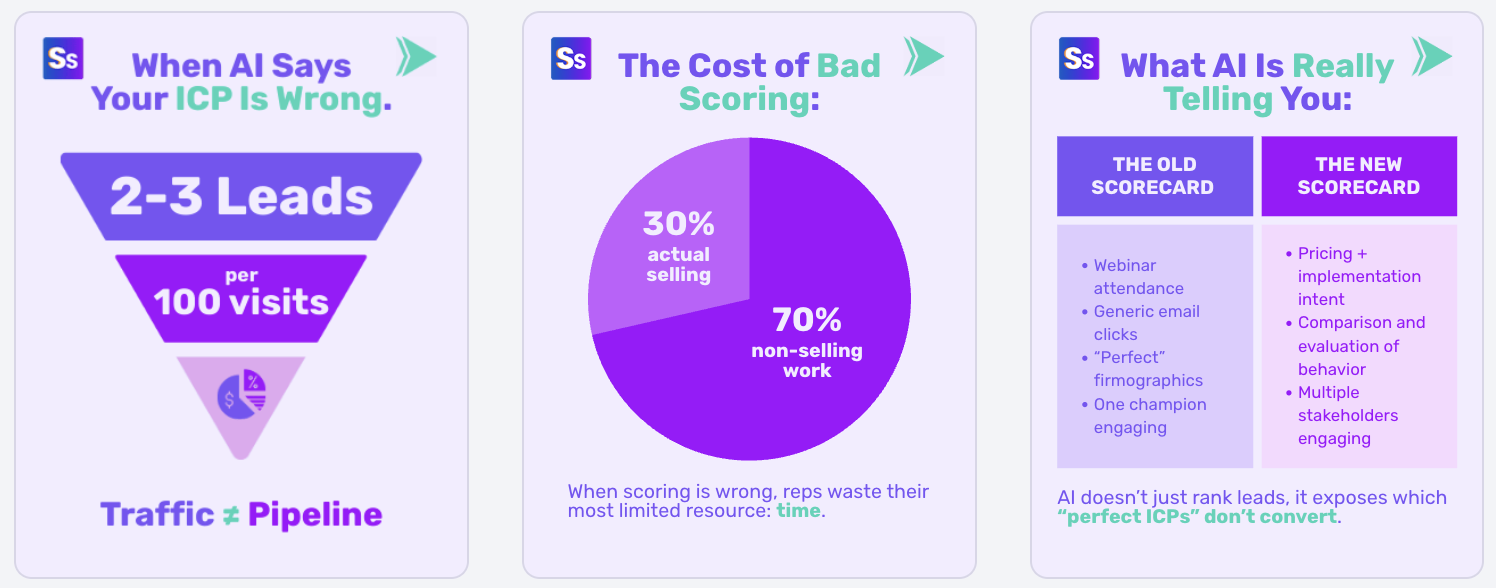
AI is generating more revenue insights than ever, but most teams still struggle to act on them. 👉 Read more |
|
|
|
One of the biggest mistakes marketing teams make during summer planning is focusing on campaign activity instead of buyer engagement. Campaigns launching on schedule does not automatically mean the future pipeline is healthy. What matters is whether target buyers are still showing signs of movement.
|
"When new customers are not flowing in, obvious indicators are campaign setup, targeting, audience, and new-versus-existing customer growth rates." |
That is where marketing can catch pipeline risk before it becomes a sales problem. Look for declining engagement from high-fit accounts, fewer repeat visits from target buyers, slower content consumption, reduced nurture response rates, and overdependence on one or two channels. |
Run a mid-year engagement audit and compare the accounts that were most engaged during Q1 against their activity today. If engagement is declining among your best-fit buyers, don't treat it as a reporting observation. Treat it as an early warning sign. Pipeline problems are easier to solve when they're still engagement problems. |
|
|
|
Submissions have been edited for length & clarity |
|
|
|
|
What early indicators tell you the Q3 pipeline is already at risk? “The earliest signal I track is top-of-funnel conversion-rate decay six to eight weeks before a quarter starts. If trial-signup conversion drops 15% week-over-week across your highest-volume sources, that's often a 60-day warning before it shows up in pipeline velocity. Most teams don't notice until the SDR pipeline tightens, and by then, Q3 has already started. Second is pipeline coverage. If coverage falls below 3.5x by week four of Q2, Q3 is structurally short. Coverage degrades faster than most teams expect because back-end deals are usually the first to slip.
Third — and the one most teams miss — is source-to-close timing. Most B2B deals need 60–90 days to move from source to signature. If you're sourcing the Q3 pipeline in mid-June, the math is already working against you. RevOps should be reviewing source-to-close timing monthly so structural gaps become visible while there's still time to act.” What should teams address now before it becomes a forecast problem? “Start with a loss-reason audit of Q1 and Q2 closed-lost deals. The biggest patterns usually reveal a fixable friction point — pricing objections, demo-to-paid drop-off, or stakeholder churn — that compounds into a larger pipeline problem.
Next, revisit closed-lost opportunities that ended in "no decision." In our data, 11-14% re-engage within 90 days when approached with the right follow-up, especially as new budget cycles open. That's the pipeline you've already paid to acquire.
Finally, build a leading-indicator dashboard before you need one. Track top-of-funnel conversion rates, stage velocity, win rates, pipeline coverage, and source-to-close timing. Review it weekly. Forecasts improve when teams spot velocity erosion before it impacts the number — not after.”
- Chris McCarron, Founder of GoGoChimp |
|
|
|
Most stalled deals announce themselves long before they officially stall. Response times get longer. Meetings become harder to schedule. New stakeholders stop appearing. Next steps become less specific.
The opportunity remains active in CRM, but buyer commitment starts fading. Many opportunities remain in forecast because technically nothing has changed. That is where risk starts accumulating. As Cam Conley, Founder of Conley Consulting Group, put it: |
"If you forecast only on the status quo, your Q3 is a hope, not a projection." |
A deal should not stay in the forecast simply because no one has admitted it's in trouble yet. |
Following frameworks rigidly is not enouReview your top opportunities and ask: What changed on the buyer side in the last 30 days? If the answer is "nothing," the deal may still be open, but it probably isn't progressing.
Track buyer movement alongside seller activity. A deal is not healthier because your team is working harder to keep it alive.
gh to be a strong marketer. You also need to adapt fast when buyer behavior stops matching the model. |
|
|
|
One of the easiest ways to miss a future pipeline problem is confusing activity with momentum. This could look like an active CRM, marketing generating engagement, completed sales tasks, and intact forecasts. Everything appears healthy because work is happening. The problem is that activity and momentum are not the same thing. |
Pipeline is created when buyers move closer to a decision. That's why some quarters miss expectations even when every dashboard looked healthy beforehand. As you head into summer planning, spend less time asking: |
"What evidence do we have that buyers are actually moving forward?""How much are we doing?" |
The answer will tell you far more about Q3 than your activity metrics ever will. |
|
|
|
Enjoyed this issue?
We break down how buyers actually move and what top teams do differently. If you’re rethinking your funnel or pipeline, catch up with our past issues. |
|
|
|
More ways to connect with Selling Signals! |
Get the latest in sales and marketing without opening your email. Follow us on LinkedIn or Facebook for swipeable frameworks, bite-sized visual breakdowns, and a chance to join the conversation. |
|
|
|
|
Bianca has spent the past four years helping businesses strengthen relationships and boost performance through strategic sales and customer engagement initiatives. Drawing on her experience in field sales and territory management, she transforms real-world expertise into actionable insights that drive growth and foster lasting client partnerships. |
|
| |
Selling Signals is a TechnologyAdvice business © 2026 TechnologyAdvice, LLC. All rights reserved.
TechnologyAdvice, 3343 Perimeter Hill Dr., Suite 215, Nashville, TN 37211, USA. |
|
|
|
|