Attackers are leaning harder into identity, AI, and trust. |
Today’s stories include massive breach claims, fake IT support operations, AI assistants with new security blind spots, and a future where humanoid robots may become part of everyday city life. Tell us what content you want to see on TechRepublic by taking this quick survey.
Read past newsletters here. |
|
|
|
Here’s what you need to know: |
|
|
|
ShinyHunters Claims Theft of 42M Charter Records |
ShinyHunters claimed it stole more than 42 million customer records from Charter Communications in a suspected social engineering attack. The group allegedly used vishing to compromise a Microsoft Entra account and access Charter’s Salesforce environment. |
Charter is continuing to investigate the incident and has not confirmed the 42M record claim.
Review MFA enforcement, audit OAuth permissions, and monitor SaaS environments for abnormal data exports or suspicious identity-related activity that may indicate account compromise. |
FBI Flags Silent Ransom Law Firm Attacks |
Silent Ransom Group is targeting U.S. law firms by impersonating internal IT staff to gain remote access and steal sensitive data.
They focus on data theft and extortion, while abusing legitimate remote administration tools such as AnyDesk and Quick Assist to blend into normal enterprise activity. The threat actors remain active in the wild.
Require verification procedures for all remote IT support requests and monitor for unauthorized remote administration tools or abnormal cloud-based data transfers. |
Tokyo Plans City Filled With Humanoid Robots |
Tokyo researchers plan to turn part of Meguro Ward into a live testing ground for humanoid robots, autonomous transport, drone deliveries, and AI-powered services.
The project, backed by the Institute of Science Tokyo and companies including NTT, Hitachi, and Denso, will test how physical AI systems operate in real-world urban environments outside controlled labs. Do you think this is a security nightmare in the making?
Organizations evaluating physical AI deployments should begin tabletop testing for edge-case failures, pedestrian safety scenarios, and infrastructure disruptions before scaling autonomous systems into public-facing environments. |
|
|
|
Robot City Reality Check: Would you actually live there? |
|
|
|
Yesterday's Pulse Check Results |
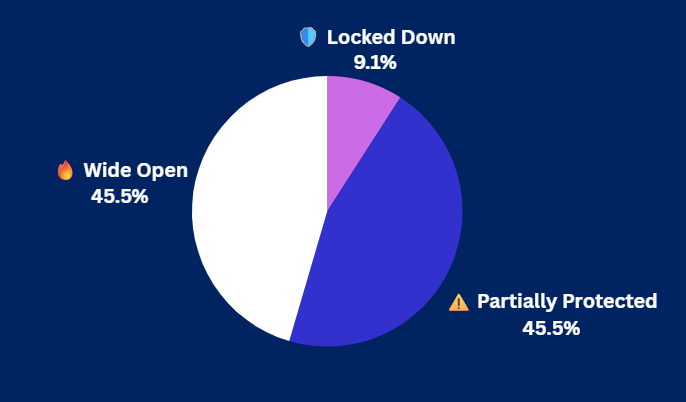
How confident are you in your AI guardrails? |
|
|
|
Security Tools You Can Use |
|
|
|
AI Assistants Open New Security Gaps |
A recently patched flaw in a popular AI coding assistant highlighted how AI tools can be manipulated into exposing sensitive enterprise data. Prompt injection combined with a sandbox bypass could let attackers exfiltrate data through trusted AI workflows. |
The risk grows as organizations deploy AI assistants faster than they can enforce independent access controls, audit logs, and governance outside the model itself.
Implement policy-based data access controls and immutable audit logging outside the AI model so compromised assistants cannot retrieve information they were never authorized to access. |
Data Lineage Boosts AI Audit Readiness |
Security teams are increasingly using data lineage technology to track how sensitive data moves across users, systems, applications, and AI agents.
Data lineage tracks the full lifecycle of files and data objects, preserving records of actions, transfers, and ownership even after content is copied or reformatted. As organizations face growing challenges around insider threats, SaaS misuse, and AI-driven workflows, lineage data is becoming increasingly valuable for investigations and compliance.
Prioritize security platforms that integrate lineage signals directly into policy enforcement workflows rather than relying on standalone monitoring tools with limited interoperability. |
|
|
| Join live: How leading teams operationalize AI risk
AI is accelerating vendor sprawl, expanding third-party risk, and increasing the volume of controls teams need to manage. Join Vanta CEO Christina Cacioppo and CPO Jeremy Epling on June 3rd for a virtual launch event showing how Vanta is built to handle the risk AI creates. You’ll walk away with a clear view of how to manage AI-driven risk across vendors, controls, and continuous monitoring. |
|
|
|
Are Your Ransomware Protections Enough? |
Ransomware attacks continue evolving beyond just basic file encryption, with many ransomware-as-a-service groups now focusing more on data theft and extortion. |
How to reduce ransomware risk: |
- Implement phishing-resistant MFA, restrict remote access tools, and use network segmentation to limit credential theft and lateral movement.
-
Use EDR/XDR monitoring, regularly test backups, and use ransomware removal tools.
- Test incident response plans and use attack simulation solutions with scenarios around ransomware attacks.
|
Layered protections across identities, endpoints, backups, and user behavior help organizations detect ransomware sooner and minimize blast radius. |
|
|
|
|
Ken Underhill is an award-winning cybersecurity professional, bestselling author, and seasoned IT professional. He holds a graduate degree in cybersecurity and information assurance from Western Governors University, bringing years of hands-on experience to the field. |
|
|
|
Cybersecurity Insider is a TechnologyAdvice business |
© 2026 TechnologyAdvice, LLC. All rights reserved. |
TechnologyAdvice, 3343 Perimeter Hill Dr., Suite 215, Nashville, TN 37211, USA. |
|
|
|
|