Trust is being tested again. |
Today’s news brings exposed baby monitors and cameras, hijacked AI tooling, stealthy OAuth theft, vision model bypasses, and a debate over privacy.
Help shape our latest TechRepublic research by taking this quick survey. Read past newsletters here. |
|
|
|
Here’s what you need to know: |
|
|
|
Over 1 Million Baby Monitors and Cameras Exposed |
More than one million baby monitors and security cameras were reportedly exposed through Meari vulnerabilities that could allow unauthorized access to images, device data, and live camera activity.
The flaws affected a white-label IoT ecosystem used by more than 300 camera brands, exposing backend systems, weak encryption, public image storage, and hardcoded credentials. |
At the time of disclosure, the researcher reported that the company still has not fully fixed the issues. Organizations and consumers should keep devices updated, enable MFA, assess third-party risk, and segment devices from critical systems. |
Cisco Flags Vision AI Security Risks |
Cisco researchers found that tiny image perturbations can bypass VLM safety protections and cause some models to comply with harmful prompts.
Researchers observed notable increases in attack success rates under optimized conditions, including Claude Sonnet 4.5 improving from 0% to 28% under heavily blurred image scenarios. The findings raise concerns for organizations using multimodal AI because the attacks can evade OCR-based defenses and transfer across multiple models.
Test adversarial image attacks against internal AI deployments and expand defenses beyond pixel-level filtering to include representation-space and reasoning-layer protections. |
Malicious Claude Installs Target Mac Users |
Threat actors are using Google Ads and Claude shared chats to trick Mac users into running malicious Terminal commands disguised as setup instructions.
This campaign uses legitimate Claude-related pages to deliver fake setup instructions that can deploy MacSync infostealer malware and steal browser credentials, cookies, and Keychain data. The campaign is active in the wild at the time of publication.
Mac users should only install Claude from Anthropic’s official website or documentation and avoid pasting Terminal commands from shared chats, ads, forums, or unofficial setup guides. |
|
|
|
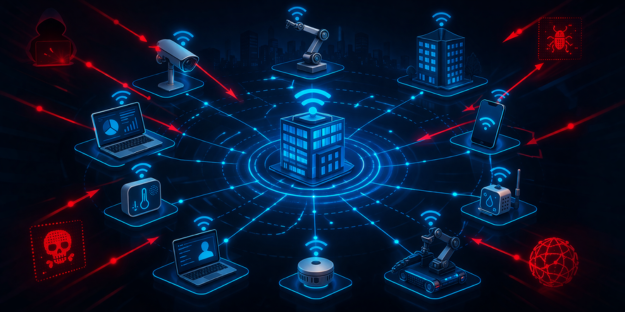
If someone targeted the smart devices in your home tonight… |
|
|
|
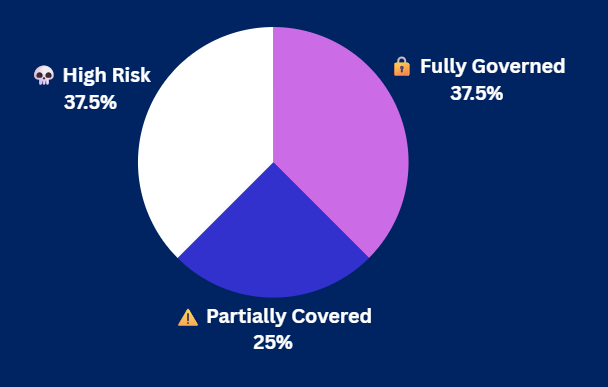
Yesterday's Pulse Check Results |
How Exposed Is Your Data Layer? |
|
|
|
Security Tools You Can Use |
-
Help shape our latest TechRepublic research by taking this quick survey.
-
Explore how Cisco is redefining cybersecurity with solutions designed to protect your entire digital ecosystem. Discover solutions
-
Simplify compliance — get ready-to-use security policies to help protect your business without the cost or complexity of an enterprise, all for under $100.
|
|
|
|
Claude Code Attack Steals OAuth Tokens |
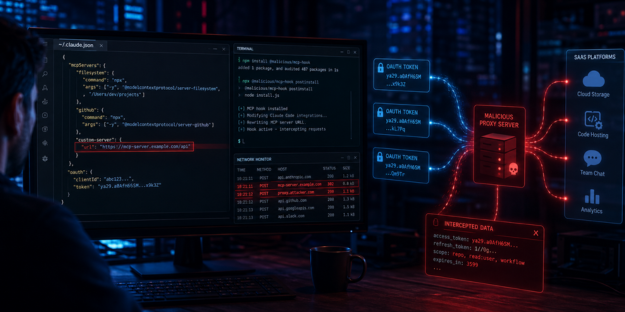
Researchers demonstrated a Claude Code MitM attack that abuses MCP integrations and malicious npm hooks to steal OAuth tokens and maintain SaaS access. Attackers can modify the ~/.claude.json configuration file, rewrite MCP server URLs, and continuously recapture refreshed OAuth tokens even after credential rotation.
|
The attack highlights risks in AI development environments where trusted integrations can silently redirect traffic through attacker-controlled proxies.
Organizations using AI coding assistants should monitor configuration changes, restrict npm postinstall hooks, baseline approved MCP endpoints, and shorten OAuth token lifetimes. |
FCC Robocall Plan Raises Privacy Concerns |
The FCC is advancing anti-robocall proposals that could require carriers to verify customer identities, raising privacy concerns around anonymous phone use.
These rules would expand telecom oversight, strengthen STIR/SHAKEN authentication, and introduce stricter customer verification requirements to help block scam calls. Privacy advocates warn the proposals could eliminate anonymous phone use while increasing long-term identity retention and screening risks.
Evaluate how expanded identity verification and telecom data retention requirements could affect privacy, compliance, and communications for your organization. |
|
|
|
Fast API generation without validation leads to technical debt.
In this DZone session with SmartBear on May 21, 2026 at 11:00 AM ET, discover how to enforce testing, consistency, and governance across AI-generated APIs. Save your seat to move from speed to production-ready quality. |
|
|
|
Are You Overlooking Wireless Security Risks? |
Wireless security risks continue to increase as threat actors target public Wi-Fi networks, Bluetooth connections, and other wireless infrastructure. |
How to reduce wireless security risks: |
- Use WPA3 encryption where possible, keep router firmware updated, and disable automatic Wi-Fi connections.
-
Use a VPN on public Wi-Fi networks to help protect internet traffic from interception and unauthorized monitoring.
- Segment IoT and guest networks while monitoring for rogue access points and suspicious wireless activity.
|
Stronger wireless security practices can help reduce exposure to unauthorized access and data interception. |
|
|
|
|
Ken Underhill is an award-winning cybersecurity professional, bestselling author, and seasoned IT professional. He holds a graduate degree in cybersecurity and information assurance from Western Governors University, bringing years of hands-on experience to the field. |
|
|
|
Cybersecurity Insider is a TechnologyAdvice business |
© 2026 TechnologyAdvice, LLC. All rights reserved. |
TechnologyAdvice, 3343 Perimeter Hill Dr., Suite 215, Nashville, TN 37211, USA. |
|
|
|
|