The stack you trust is under pressure. |
From upstream outages to trusted tools turning risky, today’s stories highlight how quickly dependencies can become exposure points. Read past newsletters here. |
|
|
|
Here’s what you need to know: |
|
|
|
Canonical DDoS Hits Ubuntu Services Worldwide |
A sustained DDoS attack disrupted key Canonical services, impacting Ubuntu-dependent operations globally. The outage impacted services like Livepatch and Launchpad and was claimed by a politically motivated hacktivist group with suspected Iran ties. |
Canonical is still working through the incident and the threat actors have sent an extortion demand. I think the timing of the attack is suspicious due to the recent “Copy Fail” Linux flaw.
Build resilience by using multiple threat intel feeds, maintaining internal mirrors, pre-staging updates, and preparing offline response plans to sustain operations during service disruptions. |
Wireshark Vulnerabilities Enable Remote Code Execution |
Multiple vulnerabilities in Wireshark can enable remote code execution. The flaws stem from how Wireshark parses untrusted traffic, where malicious packets or capture files can trigger crashes or potential system compromise.
Wireshark has already released patches for the vulnerabilities. Patch to the latest version, run Wireshark with least privilege in isolated environments, and validate all traffic and capture files before analysis. |
Linux “Copy Fail” Flaw Grants Root Access Across Distros |
A Linux kernel vulnerability named “Copy Fail” allows authenticated users to reliably escalate privileges to root across major distributions. The flaw impacts kernels dating back to 2017 and exploits a cryptographic logic issue to enable controlled file modification and privilege escalation. Patches have already been released and there is a proof-of-concept. Patch affected kernels, restrict AF_ALG access, and reduce reliance on setuid binaries to limit privilege escalation paths. |
|
|
|
If a critical upstream service went down today… how would you hold up? |
|
|
|
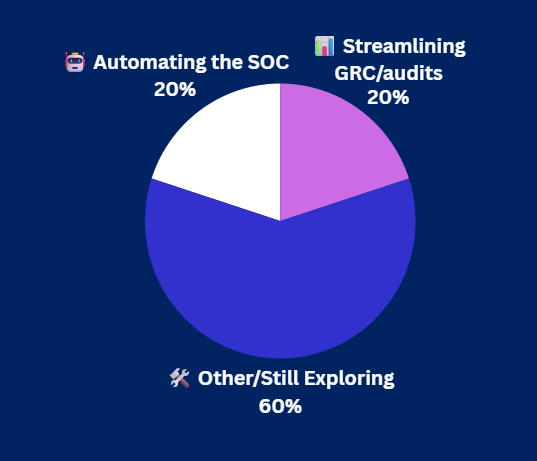
Yesterday's Pulse Check Results |
How are you currently using AI in your role? |
|
|
|
Security Tools You Can Use |
-
Share your approach to Cisco secure access and see how your strategy compares to peers.
-
Simplify compliance — get ready-to-use security policies to help protect your business without the cost or complexity of an enterprise, all for under $100.
-
Protect your business from threats — get 30% off Bitdefender’s powerful cloud and on-premise protection today.
|
|
|
|
Malicious PyPI Package Hits AI Developers |
A compromised version of the popular lightning Python package has introduced credential-stealing malware into AI environments. The malicious code executes on import, silently harvesting tokens, environment variables, and repository credentials, then attempting exfiltration via GitHub. |
PyPI is used in CI/CD pipelines and researchers suspect the cause is potentially from a compromised maintainer account.
Mitigate exposure by removing malicious package versions, rotating all credentials, enforcing dependency validation, and isolating build environments. |
Jenkins Plugin Flaws Expose CI/CD Pipelines |
Multiple high-severity Jenkins plugin vulnerabilities are driving urgent updates to reduce the risk of CI/CD compromise. The flaws include path traversal, XSS, and unsafe deserialization, and could let low-privileged users write files, execute scripts, or hijack sessions.
There are no reports of active exploitation at this time. Update all plugins, enforce strict access controls, and isolate Jenkins environments. |
|
|
|
How Mature is Your Vulnerability Management? |
Unpatched vulnerabilities remain a key risk, which makes vulnerability management critical, especially as AI tools like Mythos accelerate discovery and exploitation. |
How to strengthen vulnerability management: |
-
Use vulnerability management tools and a defined vulnerability management policy to continuously scan assets and maintain complete visibility.
-
Prioritize and remediate risks faster by combining threat intelligence with risk-based prioritization and automated patch management.
- Reduce exposure by maintaining accurate asset inventory and applying compensating controls, like WAF, when patching is delayed.
|
Proactive vulnerability management helps reduce operational risk and limit the blast radius of successful attacks. |
|
|
|
|
Ken Underhill is an award-winning cybersecurity professional, bestselling author, and seasoned IT professional. He holds a graduate degree in cybersecurity and information assurance from Western Governors University, bringing years of hands-on experience to the field. |
|
|
|
Cybersecurity Insider is a TechnologyAdvice business |
© 2026 TechnologyAdvice, LLC. All rights reserved. |
TechnologyAdvice, 3343 Perimeter Hill Dr., Suite 215, Nashville, TN 37211, USA. |
|
|
|
|