Choose your fighter, Tech Insiders.
AWS grabs OpenAI, Google courts the Pentagon, and Microsoft races to plug a zero-click hole. Cloud, code, and combat are suddenly one tangled leaderboard. Ready up, because this bracket's reshuffling faster than a grand-finals rematch. |
|
|
|
Here's what you need to know today: |
|
|
|
AWS Lands OpenAI in Bedrock |
Alexa, meet your new buddy—ChatGPT just moved in.
Amazon Web Services is now selling OpenAI's GPT-5.4, the Codex coding agent, and other frontier models through Amazon Bedrock, one day after Microsoft dropped its exclusive license to resell OpenAI products. The move instantly puts AWS on equal footing with Azure for access to ChatGPT-grade intelligence and lets developers start testing this week, with GPT-5.5 arriving in weeks.
It's the payoff for Amazon's record $50 billion investment in OpenAI. The startup has committed to spending $100 billion on AWS compute and to co-build Bedrock Managed Agents. This agentic runtime embeds memory, tools, and security controls directly in the cloud. All of this comes at a crucial time for OpenAI, which reportedly missed internal revenue targets and desperately needs AWS's massive enterprise base to fund its cash burn.
Microsoft keeps a capped revenue share but loses a marquee advantage, forcing Redmond to prove its in-house models can rival OpenAI while juggling new ties to Anthropic. |
AWS CEO Matt Garman framed the win simply: customers can finally use OpenAI models where their data already lives, without cross-cloud gymnastics or fresh compliance audits.
Why it matters: AWS regains the AI high ground, giving enterprises a straight shot to ChatGPT-grade intelligence without leaving their familiar governance guardrails. It's perfect timing for 2026 budget talks.
Because keeping track of those newly automated AI workflows shouldn't require a second AI, many outfits pair Bedrock's brains with monday.com's project management platform to keep deliverables, deadlines, and automated workflows in one customizable hub, so the human work scales as smoothly as the models. | |
|
|
Which cloud now feels like the safest bet for future-proof AI? |
|
|
|
Results from Yesterday's Pulse Check |
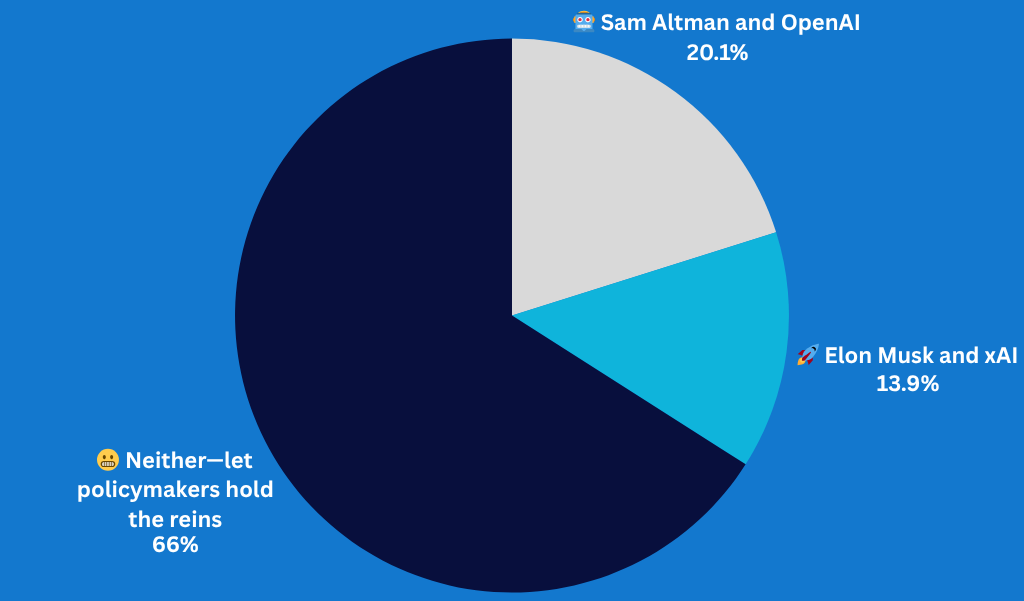
Who do you trust more to steer AI's future? |
|
|
|
Google Translate Adds AI Pronunciation Coach |
For those of you who hop time zones or manage global teams, this shifts Translate from emergency phrasebook to on-demand speech coach, squeezing language learning into the same tool you already use for menus, signs, and live-captioned headphone audio. It's the ultimate hack to avoid accidentally insulting your international clients during business dinners. Android users outside the US and India, as well as iOS and web users, and most of Translate's 250-language roster are still stuck with listen-only playback; Google hasn't announced an expansion timeline. Until then, US and Indian Android users get bragging rights (and instant embarrassment insurance) first. Meanwhile, iPhone users must keep rolling their Rs the old-school way. |
|
| |
ClickUp Leak Leaves Fortune 500 Emails Exposed |
Image created with ChatGPT |
If your team uses ClickUp, brace for targeted phishing. Rotate workspace keys, audit inactive users, enable phishing-resistant MFA, and monitor for campaigns spoofing leaked addresses. Compliance badges are great, but they clearly won't save you from basic client-side slip-ups. |
Zero-Click Windows Flaw Forces Rapid Patch Redo |
Microsoft updated its advisory this week to say that CVE-2026-32202, a Windows Shell spoofing bug patched on April 14, is already being exploited in the wild, despite its deceptively wimpy 4.3 CVSS score.
The zero-click flaw, left behind by February's incomplete fix for APT28's CVE-2026-21510 attack chain, leaks Net-NTLMv2 hashes (your hashed passwords) when Explorer merely previews a booby-trapped shortcut (.lnk) file. Microsoft technically insists "user interaction is required," but no clicks are actually needed. Patch now (KB5082052 and related), block outbound SMB/NTLM (the chatty sharing protocols) or enable SMB signing, and beef up filters for rogue .lnk attachments; CISA has ordered federal agencies to comply by May 12. |
Google's Gemini Joins Pentagon's Classified AI Roster |
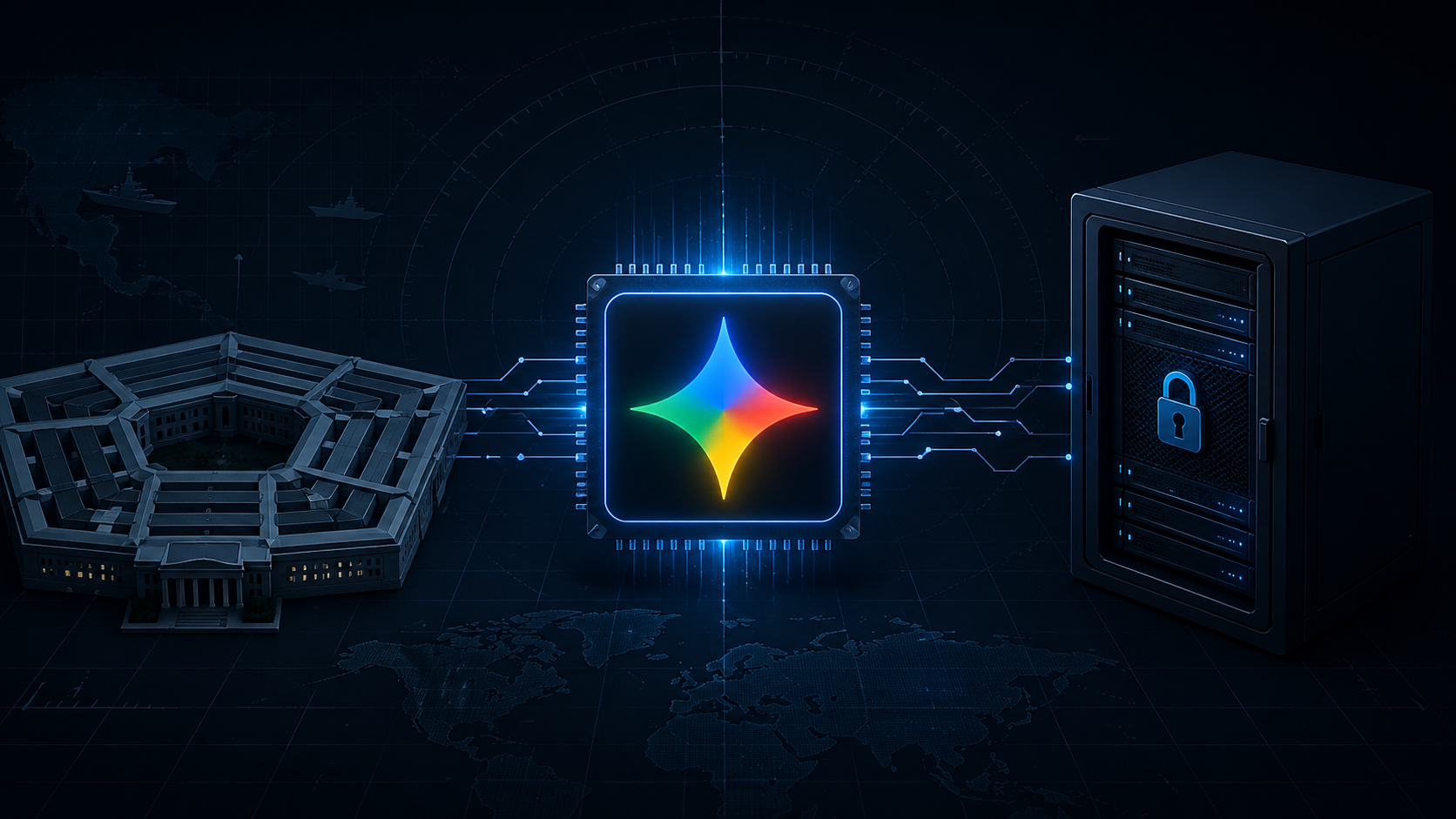
Google has quietly amended a $200 million contract so the Pentagon can run its Gemini models on classified networks for "any lawful government purpose," expanding earlier unclassified work into mission-planning and targeting spheres. Defense users are already hooked: GenAI.mil boasts 1.3 million active users (from 3 million total) who have built over 100,000 AI agents.
Over 700 Googlers, many from DeepMind, immediately protested in an open letter to CEO Sundar Pichai, warning that once AI disappears behind security clearances, the company can't police uses such as autonomous weapons or mass surveillance.
Defense officials counter that supplier diversity matters after blacklisting Anthropic for refusing similar terms; Gemini now joins OpenAI and Musk's xAI in the Pentagon's classified-AI stable.
But that Anthropic ban might be short-lived; the White House is actively drafting guidance that could allow non-DoD agencies to resume using Anthropic's powerful new "Mythos" model, even if Pentagon talks remain frozen.
|
Image created with ChatGPT |
Meanwhile, the contract obliges Google to tweak safety filters at the government's request and grants no veto over "lawful" ops, turning ethical guardrails into mere aspirations.
Google, which famously walked away from Project Maven—a controversial Pentagon contract to use AI for analyzing drone surveillance footage—in 2018, also just abandoned a $100 million drone-swarm contest after an internal ethics review, proof that its wariness and ambition are now colliding head-on in real time.
Funny how "don't be evil" got redacted to "don't microwave the turkey." |
|
|
|
|
Writer at TechnologyAdvice |
Justin Meyers is an investigative writer and editor who draws on over a decade of meticulous hands-on research to deliver the full, trustworthy story behind consumer and enterprise tech, including cybersecurity. |
|
|
|
Curious about where AI is really headed? |
The Neuron cuts through the noise to bring you smart, hype-free takes on the latest AI trends, tools, and breakthroughs. Join 500,000+ professionals from top companies like Microsoft, Apple, Salesforce and more.
|
|
|
|
Advertise in Daily Tech Insider! Daily Tech Insider is a TechnologyAdvice business. © 2026 TechnologyAdvice, LLC. All rights reserved.
TechnologyAdvice, 3343 Perimeter Hill Dr., Suite 215, Nashville, TN 37211, USA. |
|
|
|
|