The pace of cyber risk is accelerating fast. |
AI is reshaping both attacks and careers, ransomware is hitting critical systems, and hidden flaws are exposing millions — while scams grow more convincing by the day.
Take Cisco’s quick survey to share how you’re securing access. Read past newsletters here. |
|
| Here’s what you need to know: |
|
|
Anthropic Glasswing AI Speeds Up Exploit Discovery |
Anthropic’s Project Glasswing signals AI can autonomously find and exploit vulnerabilities at unprecedented scale and speed. Early claims suggest models like Claude Mythos can uncover thousands of critical, previously missed flaws — potentially lowering the barrier to exploitation and accelerating attack timelines. |
While some cybersecurity professionals see this as a breakthrough for proactive defense, others caution that capabilities may be overstated and lack independent validation.
Implement AI-driven code scanning and DevSecOps tools, enforce least privilege and CI/CD access controls, continuously monitor and test incident response plans. |
Ransomware Hits ChipSoft, Disrupts Dutch Hospitals |
A ransomware attack on ChipSoft forced Dutch hospitals offline, disrupting operations and impacting patient care. The attack hit the widely used HiX EHR platform, disrupting scheduling, data access, and communication across multiple hospitals, including some in Belgium. While details remain limited at the time of publication, the event underscores how quickly ransomware can paralyze critical infrastructure.
Implement zero trust, enforce MFA and least privilege, maintain immutable backups, and continuously monitor to detect and contain ransomware early.
|
Cybersecurity Jobs Evolve as AI Takes Over Tasks |
Artificial intelligence is transforming cybersecurity roles by automating routine tasks and pushing professionals toward higher-level analysis and decision-making.
I spoke with Mike Baker, CISO of DXC Technology out at RSAC 2026 and his team uses AI agents to help with initial triage and ticket writing, which has freed up their analysts for other critical tasks like threat hunting. Remember, rather than replacing most cybersecurity jobs, AI is simply augmenting them — making human judgment more essential as the volume and complexity of decisions increase.
Upskill teams on interpreting AI outputs and prioritize hiring for critical thinking and domain expertise to maximize AI-driven security operations. |
|
|
Will AI Replace Your Cybersecurity Role? |
|
|
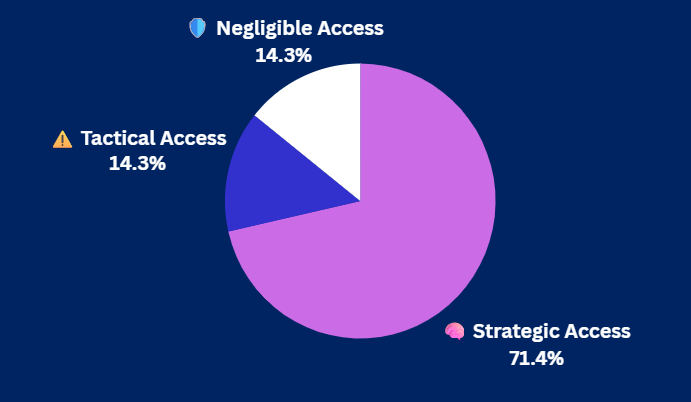
Yesterday's Pulse Check Results |
Do you think nation states already have each other’s data? |
|
|
Security Tools You Can Use |
|
|
Android SDK Flaw Exposes 50M Users |
An EngageLab SDK vulnerability lets malicious apps exploit trusted permissions and access data from over 50 million users. The flaw allows attackers to send crafted messages the SDK trusts as legitimate, turning it into a malware bridge that can expose credentials, private data, and crypto assets. |
A patch has been released for the vulnerability.
Continuously audit third-party libraries, enforce strict input validation, and promptly update dependencies to prevent trust-based exploitation paths. |
Apple Scam Drains User Bank Accounts |
A widespread scam uses fake Apple alerts to trick iPhone users into sharing sensitive data and withdrawing money. The scam uses panic-driven Apple Pay alerts to push users into calling fake support, where attackers steal credentials or funds — even fooling security-aware users.
This campaign shows how social engineering continues to be effective in bypassing technical controls. Train users to verify alerts only through official apps or websites and enforce policies that prohibit acting on unsolicited messages or calls requesting sensitive actions. |
|
|
Are You Prepared for a Deepfake Scam? |
Deepfake scams use AI-generated voice and video to impersonate executives, vendors, authorities, or other trusted contacts. These attacks are increasingly convincing and are being used for fraud, identity theft, and financial theft. |
How to defend against deepfake scams: |
-
Verify urgent requests using out-of-band channels, call-back procedures, and pre-agreed code words to confirm identity before taking action.
- Deploy deepfake detection tools to analyze audio and video for synthetic manipulation and flag suspicious content early.
-
Use privileged access management tools and train employees to recognize urgency-based social engineering tactics used in deepfake scams.
|
Deepfake scams rely on trust and urgency, but consistent verification, strong access controls, and user awareness can help reduce risk. |
|
|
|
Ken Underhill is an award-winning cybersecurity professional, bestselling author, and seasoned IT professional. He holds a graduate degree in cybersecurity and information assurance from Western Governors University, bringing years of hands-on experience to the field. |
|
|
Cybersecurity Insider is a TechnologyAdvice business |
© 2026 TechnologyAdvice, LLC. All rights reserved. |
TechnologyAdvice, 3343 Perimeter Hill Dr., Suite 215, Nashville, TN 37211, USA. |
|
|
|