AI is moving fast — and attackers are moving faster. |
From invisible agents and poisoned recommendations to sandbox escapes and trusted frameworks breaking down, today’s stories reveal how quickly assumptions fail.
The question isn’t what’s vulnerable… it’s what you’re already trusting. Read past newsletters here. |
|
| Here’s what you need to know: |
|
|
OpenClaw Growth Exposes Enterprise Risks |
OpenClaw is rapidly spreading across enterprises, often running unnoticed on employee devices. Unlike traditional shadow IT, this AI agent connects across enterprise systems and builds persistent memory, increasing risk of credential exposure and data leakage over time. |
Traditional security tools often can’t reliably distinguish legitimate activity from malicious behavior.
Shift from blocking AI tools to enforcing data-level governance — require identity-aware access controls and audit logging for every AI-driven data interaction. |
Fake Fitness Tracker Poisons AI Recommendations |
A fake fitness tracker made its way into AI chatbot recommendations after attackers flooded the web with fabricated reviews and rankings. This incident shows how generative engine optimization (GEO) can manipulate AI outputs at scale, poisoning data and misleading users.
The risk extends to enterprise AI tools and decision systems, which can be influenced by coordinated data injection as the GEO market grows and oversight lags. Validate AI outputs against trusted, curated data sources and implement controls to detect anomalous content patterns before they influence business decisions. |
AWS Bedrock Flaw Enables DNS Data Exfiltration |
A flaw in AWS Bedrock’s sandbox permits DNS traffic, enabling covert command-and-control and data exfiltration despite supposed isolation. Researchers showed attackers could bypass controls, establish covert communication, and exfiltrate sensitive data, especially with overprivileged IAM roles. This undermines trust in sandboxed environments, expands risk across connected services, and shifts responsibility to customers, as AWS considers the behavior intended by design.
Move sensitive AI workloads to VPC-isolated environments, enforce strict DNS and egress controls, and apply least-privilege access with continuous monitoring to prevent covert data exfiltration. |
|
|
Do you trust fitness apps with your data? |
|
|
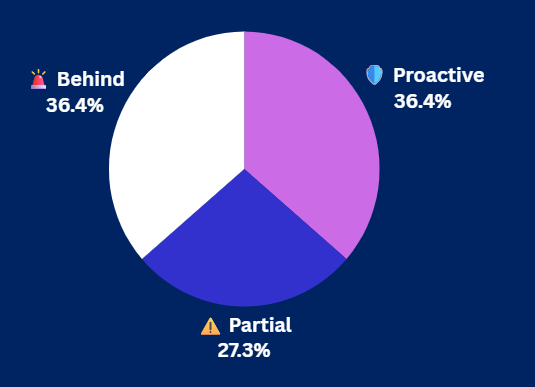
Yesterday's Pulse Check Results |
AI Phishing Defense Check: How prepared are you? |
|
|
Security Tools You Can Use |
|
|
Kubernetes NFS Flaw Enables Path Traversal |
A vulnerability in the Kubernetes NFS CSI driver enables path traversal, allowing attackers to access or delete data outside intended boundaries. The flaw affects versions before v4.13.1, where weak validation lets low-privileged users manipulate storage — creating a blind spot in trusted automation and risking data integrity. |
A patch has been released for the issue.
Patch to the latest version, restrict PV creation via RBAC, use Kubernetes security best practices, and enforce path validation with continuous monitoring to prevent unauthorized storage access and data tampering. |
Angular Vulnerability Breaks Sanitization Safeguards |
An Angular flaw allows attackers to bypass sanitization and inject malicious scripts via internationalization features. The vulnerability breaks XSS protections in apps using dynamic data and i18n, which can enable session hijacking and data theft. A patch has been released for the vulnerability.
Patch to the latest version, enforce strict input validation and sanitization, deploy CSP with Trusted Types to prevent XSS exploitation, and test incident response plans. |
|
|
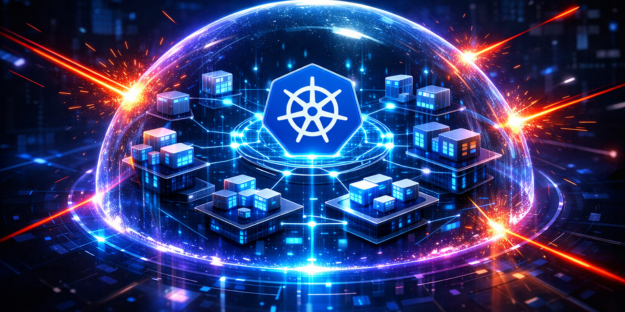
Is Your Kubernetes Environment Secure? |
As Kubernetes adoption grows, attackers are exploiting misconfigurations, excessive privileges, and exposed APIs to access data and move laterally — making proactive security controls essential. |
How to harden your Kubernetes environment: |
-
Enforce least-privilege access and segment network traffic to reduce unauthorized access and lateral movement within the cluster.
- Scan container images and enforce policies at deployment to prevent vulnerable or misconfigured workloads from running.
- Secure secrets and continuously monitor activity to detect, respond to, and contain potential threats quickly.
|
Kubernetes security requires continuous management — by enforcing access controls, validating configurations, and monitoring activity, you can reduce risk and maintain better visibility into your environment. |
|
|
| Ken Underhill is an award-winning cybersecurity professional, bestselling author, and seasoned IT professional. He holds a graduate degree in cybersecurity and information assurance from Western Governors University, bringing years of hands-on experience to the field.
|
|
|
Cybersecurity Insider is a TechnologyAdvice business |
© 2026 TechnologyAdvice, LLC. All rights reserved. |
TechnologyAdvice, 3343 Perimeter Hill Dr., Suite 215, Nashville, TN 37211, USA. |
|
|
|