The lines between hardware, software, and AI are starting to blur. |
Today’s stories span chip-level risks, AI-driven phishing, disappearing encryption, and growing pressure on critical infrastructure — plus a new class of machines reshaping the attack surface.
Read past newsletters here. |
|
| Here’s what you need to know: |
|
|
Chip Flaw Exposes Millions of Android Devices |
A MediaTek chipset vulnerability could expose up to 875 million Android devices to data compromise — even when locked. The flaw targets the secure boot process, enabling attackers with physical access to bypass protections, extract encryption keys, and crack PINs in seconds. |
While MediaTek issued a fix earlier this year, delayed OEM rollouts mean many devices remain exposed.
Verify devices are fully patched with the latest Android security updates and restrict physical access to mitigate exploitation risk. |
AI Summaries Enable New Phishing Attacks |
Researchers found that hidden email instructions can manipulate Microsoft Copilot into generating phishing-style summaries. Attackers can exploit how AI processes untrusted email content to inject fake alerts into trusted Copilot summaries in Outlook and Teams.
This shifts phishing into AI-generated outputs that users are more likely to trust, especially in enterprise environments with inconsistent safeguards in place.
Treat AI-generated summaries as untrusted input — apply strict access controls, monitor outputs for anomalies, and train users to verify any security-related prompts outside the assistant. |
Meta Ends Instagram Encrypted Messaging |
Meta will end encrypted Instagram DMs by May 2026, urging users to download their conversations before removal.
The move, driven by low adoption, removes a key privacy control and also highlights ongoing tensions between encryption, safety, and regulation, while exposing the risks of optional security features. Users who rely on Instagram for sensitive communication may now face increased vulnerability.
Export any sensitive encrypted conversations now and migrate critical communications to platforms with default, consistently supported end-to-end encryption. |
|
|
AI Phishing Defense Check: How prepared are you? |
|
|
Yesterday's Pulse Check Results |
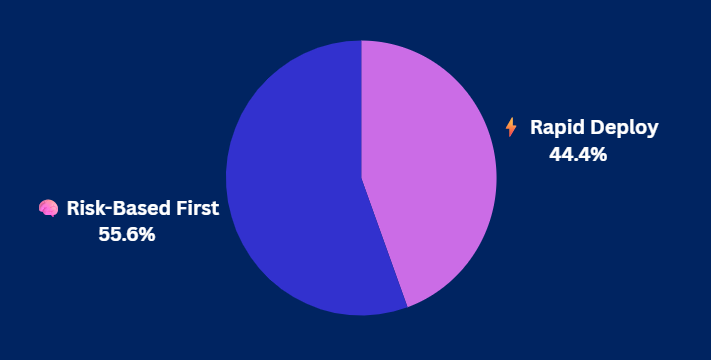
When an emergency patch drops, what’s your move? |
|
|
Security Tools You Can Use |
|
|
OT Attacks Surge Across Critical Infrastructure |
A new survey finds 77% of OT environments experienced a breach in the past year, signaling rising threats across industrial sectors. The findings expose persistent security gaps as industries modernize faster than they secure, leaving critical infrastructure vulnerable to disruption, data loss, and physical impact. |
With 41% of attacks going undetected and recovery taking months, risks are amplified by third-party entry points and extend beyond IT into systems tied to national security and public safety. Prioritize continuous OT monitoring and enforce strict third-party access controls to reduce blind spots and limit attack pathways.
|
AI Robots Blur Line Between IT and OT |
AI-driven humanoid robots are entering enterprises, creating a new class of cyber-physical systems that combine OT with AI decision layers.
Unlike traditional endpoints, these systems interact with the physical world, so compromise can lead to safety incidents, disruption, or unauthorized actions. Layered architectures, especially the agent layer, expand risk by allowing attackers to manipulate high-level instructions, requiring security teams to combine OT security, AI governance, and safety controls.
Treat robots as OT assets from day one — enforce network segmentation, strict access controls on agent layers, and require signed updates before deployment. |
|
|
How Secure Is Your Data Right Now? |
Data breaches continue to rise as organizations store more sensitive information across cloud, SaaS, and hybrid environments. Misconfigurations, weak access controls, and unencrypted data remain key risks, making proactive data protection essential for reducing exposure and maintaining compliance. |
How to protect your data: |
-
Encrypt and classify data to protect sensitive information at rest and in transit while prioritizing critical assets.
-
Enforce RBAC and monitor activity with logging and DLP tools to prevent unauthorized access and data exfiltration.
-
Maintain secure, offline backups to help recovery from ransomware or data loss incidents.
|
Strong data protection builds resilience by combining encryption, visibility, and access controls to reduce breach impact, starting with your most sensitive data. |
|
|
|
Ken Underhill is an award-winning cybersecurity professional, bestselling author, and seasoned IT professional. He holds a graduate degree in cybersecurity and information assurance from Western Governors University, bringing years of hands-on experience to the field. |
|
|
Cybersecurity Insider is a TechnologyAdvice business |
© 2026 TechnologyAdvice, LLC. All rights reserved. |
TechnologyAdvice, 3343 Perimeter Hill Dr., Suite 215, Nashville, TN 37211, USA. |
|
|
|