Threats are converging across cybercrime and geopolitics. |
Today’s stories span gray-market software license schemes, money laundering with luxury goods, identity blind spots, threats from Middle East tensions, and a sextortion case that shows how easily trust becomes a weapon. Read past newsletters here. |
|
|
Here’s what you need to know: |
|
|
$5M Microsoft Key Resale Scheme Lands Prison Sentence |
A Florida software reseller received 22 months in prison for trafficking thousands of improperly distributed Microsoft activation keys in a $5 million scheme. Although the COA labels were genuine, prosecutors said the keys were removed from required OEM hardware and resold in violation of Microsoft’s licensing terms.
|
The case underscores how gray-market software can trigger compliance failures, audit findings, and contractual risk even when license activations succeed.
Buy only from authorized resellers, validate bulk discounts with the vendor, and use centralized ITAM plus periodic audits to detect and prevent unauthorized or gray-market license use. |
Cybercriminals Use Luxury Goods to Launder Millions |
Telegram channels and dark web storefronts are turning high-end handbags into tools for fraud and money laundering. Researchers warn that counterfeit and stolen luxury goods now circulate in crypto-funded ecosystems, acting as portable stores of value that convert illicit proceeds into resale revenue. The threat extends beyond brand damage to payment fraud, phishing, carding, and identity crime, as even authentic goods purchased with stolen funds can become laundering vehicles.
Unify brand protection, fraud detection, and crypto-transaction monitoring to flag anomalous bulk purchases, track suspicious wallet activity, and track threat intel feeds. |
UK Braces for Potential Iran Cyber Spillover |
British organizations are being urged to heighten cyber vigilance as Middle East tensions raise the risk of Iranian-linked activity spilling beyond the region.
The UK’s National Cyber Security Centre warns that even without a confirmed spike in direct attacks, organizations with regional or supply chain ties could face indirect disruption, including DDoS. Geopolitical instability can fuel opportunistic hacktivism and state-aligned campaigns that amplify this third-party risk.
Harden DDoS and phishing defenses, reduce exposed assets, reassess third-party dependencies, and test incident response plans. |
|
|
Have you adjusted defenses amid the Middle East escalation? |
|
|
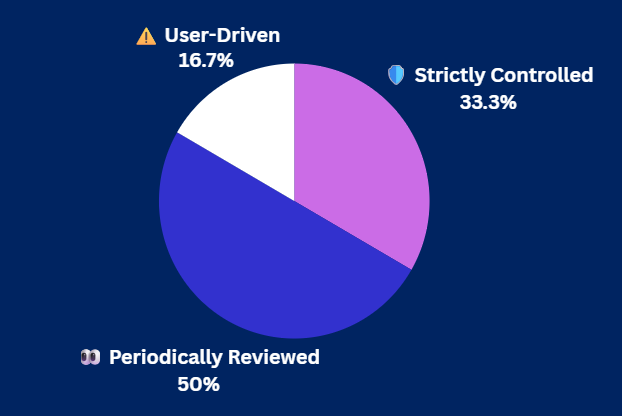
Yesterday's Pulse Check Results |
If a trusted browser add-on turned rogue tomorrow… |
|
|
Security Tools You Can Use |
|
|
Identity Blind Spots Put Cloud Environments at Risk |
New research shows identity-related incidents now dominate cloud security events, as AI-driven automation and multi-cloud sprawl outpace governance controls.
Permiso’s survey of 512 organizations found that 77% experienced predominantly identity-related incidents in 2025, while 92% run AI agents that create or modify access without traditional approvals. |
The risk extends beyond stolen credentials to fragmented visibility and rapidly expanding non-human identities with limited oversight, where delayed blast-radius analysis gives attackers time to escalate and move laterally.
Centralize identity visibility, enforce phishing-resistant MFA and just-in-time least-privilege access, and continuously govern human, non-human, and AI identities. |
Alabama Man Admits to Sextortion Targeting Hundreds |
A 22-year-old Alabama man admitted to hijacking hundreds of social media accounts and extorting victims with stolen intimate images over a three-year campaign.
Prosecutors say he posed as friends to obtain account recovery codes, then locked victims out and threatened exposure unless they paid or sent more content. The suspect is scheduled for sentencing in May 2026.
Enforce app-based MFA, lock down account recovery workflows, educate users never to share one-time codes, and regularly monitor for unusual login or reset activity to stop sextortion-driven account takeovers early. |
|
|
By 2027, 40% of organizations will adopt formal exposure validation. Don't fall behind. Learn how Adversarial Exposure Validation bridges the gap between assessment and action within your CTEM framework. Prioritize smarter and validate your true risk today. |
|
|
Is Identity Your Biggest Security Gap? |
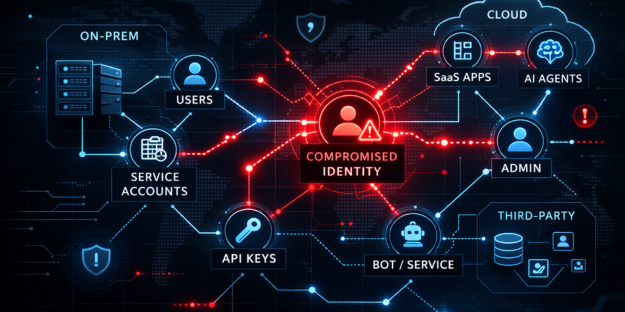
Identity has become a primary attack surface across modern IT environments, with credential abuse and session hijacking driving a growing share of successful attacks. As AI agents and non-human identities multiply across on-prem, cloud, and SaaS systems, traditional governance models are struggling to keep pace. |
How to strengthen identity security: |
- Enforce phishing-resistant MFA and just-in-time access to prevent credential abuse and eliminate standing privileges.
-
Deploy identity threat detection with attack path analysis to spot anomalous behavior and block privilege escalation early.
- Continuously discover and manage non-human identities while automating credential rotation to remove hidden and stale access paths.
|
Strengthening identity controls — including governance for AI-driven and non-human access — helps limit blast radius, improve response times, and reduce overall risk. |
|
|
|
Ken Underhill is an award-winning cybersecurity professional, bestselling author, and seasoned IT professional. He holds a graduate degree in cybersecurity and information assurance from Western Governors University, bringing years of hands-on experience to the field. |
|
|
Cybersecurity Insider is a TechnologyAdvice business |
© 2026 TechnologyAdvice, LLC. All rights reserved. |
TechnologyAdvice, 3343 Perimeter Hill Dr., Suite 215, Nashville, TN 37211, USA. |
|
|
|