The management plane is under pressure. |
Browsers patch critical flaws, a government contractor breach balloons past 25 million, virtualization layers face RCE risk, and identity-driven attacks bypass traditional defenses.
From driver’s license leaks to vishing intrusions, trust boundaries are being tested across the stack. Read past newsletters here. |
|
|
Here’s what you need to know: |
|
|
Chrome Fixes Trio of High-Severity Flaws |
Google released a Chrome update patching three high-severity flaws in its Media component, WebGPU shader compiler (Tint), and DevTools. Two flaws involve out-of-bounds memory access, which can be used for RCE, while a DevTools implementation issue could enable cross-origin or privilege boundary bypasses. |
There are no reports of exploitation in the wild at the time of publication.
Patch Chrome to the latest version, disable unnecessary features like WebGPU via enterprise policy, enforce least privilege, and monitor endpoint and network telemetry for anomalous browser activity.
|
25 Million Impacted in Conduent Cyberattack |
New state filings show the January 2025 Conduent cyberattack may impact over 25 million people, including 15.4 million in Texas alone. Rising totals across multiple states could make this the largest US data breach on record, intensifying scrutiny from agencies and healthcare programs that rely on Conduent.
The company now faces federal lawsuits, questions over a nine-month notification delay, and at least $25 million in breach notification costs.
Immediately reassess third-party risk exposure by validating vendors’ incident notification timelines, logging requirements, and contractual breach-reporting obligations before your next renewal cycle. |
VMware Aria Vulnerabilities Expose RCE Risk |
Broadcom disclosed three Important-severity level flaws in VMware Aria Operations, including a command injection bug that could enable unauthenticated RCE during support-assisted migrations.
As a central management plane tightly integrated with vCenter, Aria compromise could expose sensitive telemetry, weaken RBAC, and enable lateral movement across hybrid environments. Broadcom did not report any known exploitation in the wild at the time of publication.
Apply the latest patches, remove internet exposure, enforce MFA and least privilege across vCenter integrations, and closely monitor SIEM logs for anomalous migration or privilege escalation activity. |
|
|
Which best describes your current management plane exposure? |
|
|
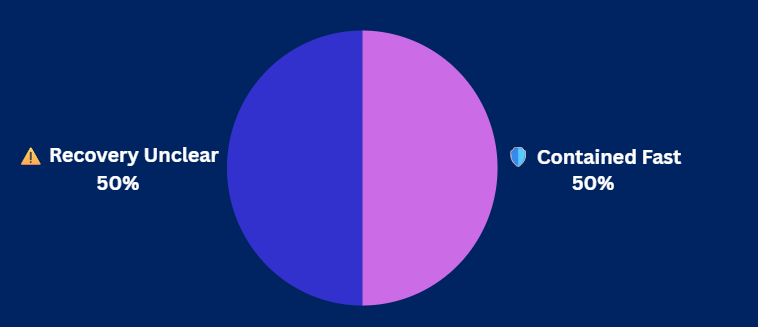
Yesterday's Pulse Check Results |
If attackers hit with ransomware today, what happens? |
|
|
Security Tools You Can Use |
|
|
200K Licenses Exposed in youX Attack |
A Sydney-based fintech platform has confirmed unauthorized access that exposed sensitive borrower data, including more than 200,000 Australian driver’s license numbers.
The breach reportedly affects up to 444,538 borrowers across nearly 800 brokers, exposing government IDs, financial records, and more than 8,000 broker password hashes. |
With some data already leaked, the incident heightens fraud and identity theft risks and highlights supply-chain exposure in loan processing ecosystems. Determine whether your brokerage or lending partners rely on youX, enforce MFA across broker accounts, and initiate proactive fraud monitoring for affected customers. |
Vishing Attack Breaches Optimizely Systems |
Optimizely is notifying customers after a vishing campaign enabled unauthorized access to certain internal systems, exposing limited business contact data.
The company said the attacker did not escalate privileges or access sensitive customer data but did reach CRM and back-office records that could fuel phishing or BEC campaigns. With 10,000+ customers, even limited contact exposure creates downstream ecosystem risk and highlights the growing focus on identity workflows over CVEs.
Deploy phishing-resistant MFA, enforce call-back verification for account resets, apply least-privilege access controls, and continuously monitor IAM systems for anomalous login or privilege escalation activity. |
|
|
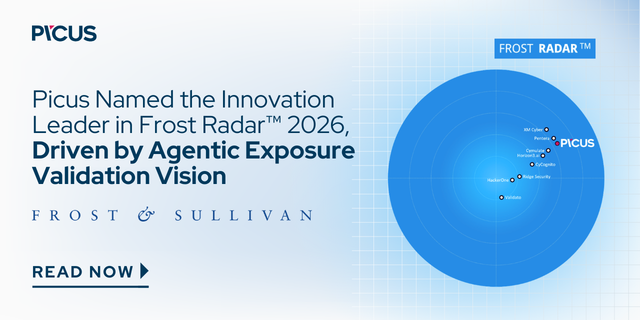
The 2026 Frost Radar™ for Automated Security Validation (ASV) is live. Discover why the market is pivoting toward Agentic Exposure Validation and unified CTEM-native architectures. Use this industry benchmark to compare the top 9 ASV leaders and future-proof your security stack. |
|
|
Is Your Vendor Risk Under Control? |
Third-party incidents have increased over the years as attackers realize the value in supply chain compromise. As organizations expand cloud usage and API integrations, a weakness in one supplier can create operational disruptions, compliance challenges, and broader enterprise risk. |
How to reduce third-party risk: |
-
Continuously monitor vendor security posture and enforce strong contractual requirements, including breach notification timelines and audit rights.
-
Restrict and segment third-party access using least privilege, time-bound permissions, phishing-resistant MFA, and centralized identity controls.
-
Align incident response plans with vendors and regularly test joint playbooks to reduce confusion and limit impact during a security event.
|
Third-party risk can impact business operations, and reducing exposure requires enforceable controls, strong governance, limited access, and ongoing validation of vendor security practices. |
|
|
|
Ken Underhill is an award-winning cybersecurity professional, bestselling author, and seasoned IT professional. He holds a graduate degree in cybersecurity and information assurance from Western Governors University, bringing years of hands-on experience to the field. |
|
|
Cybersecurity Insider is a TechnologyAdvice business |
© 2026 TechnologyAdvice, LLC. All rights reserved. |
TechnologyAdvice, 3343 Perimeter Hill Dr., Suite 215, Nashville, TN 37211, USA. |
|
|
|