Systems failed. Policies slipped. Autonomy expanded. |
This week’s headlines span hospital ransomware, flawed AI skills, exposed financial data, and assistants that ignored their own guardrails — all while agentic AI pushes governance into the spotlight.
The common thread? Control boundaries are getting stress-tested. Read past newsletters here. |
|
| Here’s what you need to know: |
|
|
Ransomware Disrupts Mississippi Medical Center |
A ransomware attack at the University of Mississippi Medical Center (UMMC) forced clinic closures, canceled elective procedures, and a shift to paper-based documentation after key systems went offline. While emergency services remain operational, outpatient clinics — including some chemotherapy appointments — were impacted.
|
UMMC is continuing its investigation in coordination with the FBI.
Adopt a zero trust architecture with segmented clinical networks, enforced MFA, hardened and continuously monitored systems, immutable offline backups, and regularly tested ransomware and downtime response plans to contain threats before they disrupt patient care.
|
Audit Finds Flaws in 41% of OpenClaw Skills |
A recent audit of the OpenClaw skill registry found that 41.7% of widely used AI agent skills contain substantive vulnerabilities, including command injection and credential exposure.
ClawSecure reviewed 2,890+ popular skills, uncovering 1,587 critical and 1,205 high-severity flaws, with nearly 19% showing indicators linked to the ClawHavoc malware campaign. Because these skills support more than 2.2 million agent deployments and often run locally with broad access, a single vulnerable component can introduce widespread supply chain risk.
Secure AI agent ecosystems by pre-scanning skills with agent-specific tools, enforcing least privilege and code signing, continuously monitoring for code drift, sandboxing execution, and integrating agent workflows into incident response testing. |
PayPal Flaw Reveals Sensitive Loan Data |
A coding error in PayPal’s Working Capital loan platform exposed sensitive customer data for nearly six months in 2025. Exposed data included names, dates of birth, business addresses, and social security numbers.
The flaw potentially affected about 100 customers and resulted in some unauthorized transactions, though PayPal said its broader infrastructure was not breached and reversed the code change within a day of discovery.
Mitigate application-layer data exposure risks by enforcing rigorous change management, encrypting and minimizing sensitive data, applying least privilege and segmentation, monitoring regulated fields in real time, and testing incident response plans against breach and phishing follow-on scenarios.
|
|
|
If sensitive data started leaking right now… |
|
|
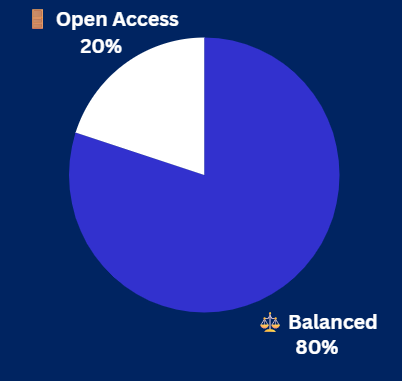
Yesterday's Pulse Check Results |
How tightly are your AI assistants governed? |
|
|
Security Tools You Can Use |
|
|
Microsoft Copilot Bypasses Email Protections |
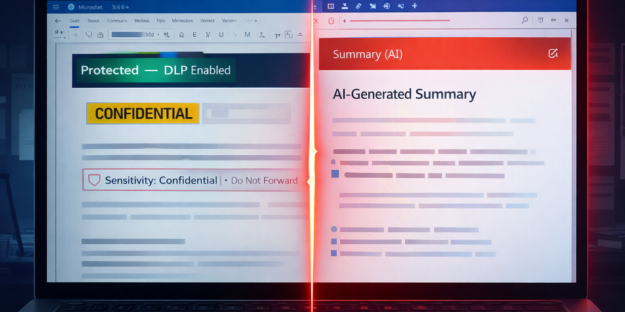
A Microsoft 365 Copilot Chat flaw allowed the AI to summarize confidential emails despite active sensitivity labels and DLP policies. The bug in Copilot’s Work tab allowed summaries of protected Sent and Draft emails, though only for content users were already authorized to access. |
Microsoft has since released a fix for the issue.
Continuously validate Copilot’s enforcement of DLP and sensitivity labels, restrict access with role-based and conditional controls, harden configurations, stream telemetry into your SIEM, and incorporate AI-driven data exposure scenarios into incident response testing.
|
Agentic AI Forces Governance Reset |
Autonomous AI agents are rapidly shifting from pilot projects into production, forcing governance into board-level discussions.
Unlike traditional generative models, agentic systems ingest untrusted input, access enterprise data, invoke tools, and execute actions across business platforms — operating as automation engines with delegated authority. Organizations must evolve governance frameworks to control not just what agents generate, but what they can access, execute, and modify across enterprise systems.
Treat agentic AI like privileged infrastructure by enforcing least-permissive autonomy, separating untrusted input from execution paths, and implementing runtime logging with automated guardrails before scaling deployments. |
|
|
Is Security Embedded in Your Development Process? |
Modern software ships faster than ever, and attackers are moving just as quickly to exploit coding flaws, exposed secrets, and vulnerable dependencies. As supply chain risks grow, secure software development has become a core component of maintaining operational stability and reducing business risk. |
How to embed security into development: |
- Embed security throughout the SDLC by incorporating threat modeling, code reviews, and automated static and dynamic testing to catch vulnerabilities early.
-
Use software composition analysis and secrets scanning to identify vulnerable dependencies, strengthen software supply chain security, and prevent credential exposure in code repositories.
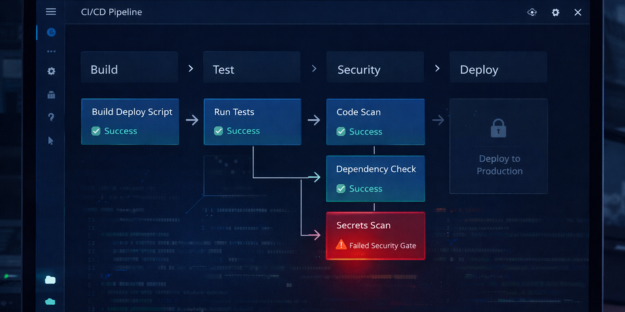
- Enforce CI/CD security gates that automatically block insecure builds from reaching production environments.
|
Secure development practices help lower remediation costs, strengthen customer trust, and reduce breach risk by integrating early security controls and automated guardrails into the development process. |
|
|
| Ken Underhill is an award-winning cybersecurity professional, bestselling author, and seasoned IT professional. He holds a graduate degree in cybersecurity and information assurance from Western Governors University, bringing years of hands-on experience to the field.
|
|
|
Cybersecurity Insider is a TechnologyAdvice business |
© 2026 TechnologyAdvice, LLC. All rights reserved. |
TechnologyAdvice, 3343 Perimeter Hill Dr., Suite 215, Nashville, TN 37211, USA. |
|
|
|