Your defenses may be in place… but where are the blind spots? |
Today’s roundup cuts across AI, enterprise infrastructure, mobile malware, and ransomware — where small gaps are creating outsized risk.
Read past newsletters here. |
|
| Here’s what you need to know: |
|
|
OpenClaw Secrets Exposed by Infostealers |
Commodity infostealer malware has begun exfiltrating AI assistant configuration files, including those tied to OpenClaw environments.
Hudson Rock identified an infection in which attackers stole authentication tokens, cryptographic keys, and memory files — enabling device impersonation, trust bypass, and follow-on social engineering or intrusion. |
The campaign is active in the wild.
Encrypt AI configuration files, replace long-lived local secrets with short-lived centralized credentials, enforce least-privilege access and network segmentation, and continuously monitor for anomalous file access or outbound exfiltration tied to AI workspaces.
|
Apache NiFi Flaw Bypasses RBAC Controls |
A vulnerability in Apache NiFi could let lower-privileged users modify restricted components within active data flows. CVE-2026-25903 arises from missing authorization checks that fail to revalidate permissions when restricted component settings are updated, allowing changes to bypass intended RBAC controls.
Apache has already released a patch for the issue. Patch to the latest NiFi version, enforce least-privilege RBAC with MFA, enable flow versioning and SIEM monitoring for configuration changes, and restrict network/API access to reduce the risk of unauthorized processor modifications.
|
OpenClaw Bug Opens Door to Log Poisoning |
A flaw in OpenClaw’s gateway server logged unsanitized WebSocket headers, introducing a potential log poisoning risk.
The vulnerability does not enable RCE but creates risk in AI-assisted environments where poisoned logs fed into LLMs could influence analysis, particularly in internet-facing deployments with automated log ingestion. OpenClaw has patched the issue in its latest version and no active exploitation has been reported.
Patch to the latest OpenClaw release, lock down gateway access, sanitize and segregate log data before AI ingestion, and monitor for abnormal WebSocket header activity that could signal log poisoning attempts. |
|
|
Where does OpenClaw stand in your environment? |
|
|
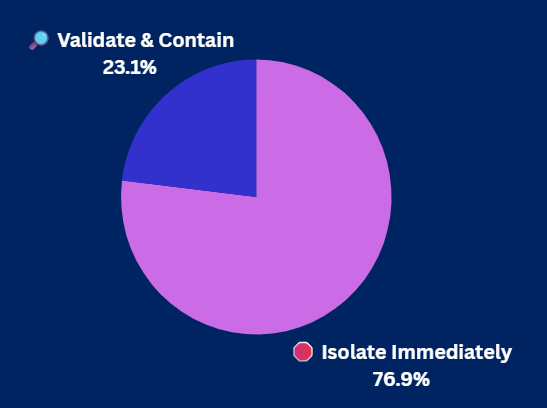
Yesterday's Pulse Check Results |
If your security platform got owned tomorrow… what’s your first move? |
|
|
Security Tools You Can Use |
|
|
Ransomware Hits Japan’s Washington Hotel |
Washington Hotel Corporation confirmed a ransomware attack after detecting unauthorized access to multiple internal servers, triggering containment measures and a data exposure investigation.
Although core guest services remained operational, some properties saw temporary credit card disruptions, and while the ransomware variant and entry point remain undisclosed, the third-party loyalty platform was not affected. |
The company has stated the investigation is ongoing.
Segment networks, enforce MFA and least privilege, continuously monitor with EDR and SIEM, maintain tested offline backups, and rigorously patch and rehearse ransomware response playbooks to minimize impact and recovery time.
|
Fake Antivirus App Drains Android Bank Accounts |
Researchers uncovered an Android malware campaign masquerading as a security app, TrustBastion, hosted on Hugging Face to appear legitimate.
Once installed, the app uses scare tactics to trigger a fake update that deploys spyware capable of capturing screenshots, stealing PINs, and overlaying fake banking logins to harvest credentials. The campaign shows how attackers exploit trusted developer platforms to lower user defenses, posing broader BYOD and corporate credential theft risks.
Enforce mobile device management (MDM) policies that restrict sideloading, require official app store installs, and monitor for overlay abuse or unauthorized screen-capture behavior on Android endpoints. |
|
|
Building Resilience Against Ransomware |
Ransomware continues to impact organizations of all sizes, with threat actors targeting backups, exploiting remote access pathways, and seeking ransom payments. As double-extortion tactics become more common, strengthening both prevention and recovery capabilities is essential to reducing operational disruption and financial risk. |
How to harden against ransomware: |
- Maintain regularly tested, immutable offline backups, deploy validated ransomware removal tools for containment, and rehearse ransomware-specific incident response playbooks.
-
Enforce MFA on remote and privileged accounts, apply timely patching, and prioritize remediation of internet-facing systems to reduce initial access risk.
-
Segment critical systems from user environments and deploy EDR with behavioral monitoring to detect lateral movement, privilege escalation, and early-stage encryption activity.
|
Ransomware resilience requires layered controls, strong visibility, and tested recovery plans to minimize downtime, protect data, and support an effective response to operational disruptions. |
|
|
| Ken Underhill is an award-winning cybersecurity professional, bestselling author, and seasoned IT professional. He holds a graduate degree in cybersecurity and information assurance from Western Governors University, bringing years of hands-on experience to the field.
|
|
|
Cybersecurity Insider is a TechnologyAdvice business |
© 2026 TechnologyAdvice, LLC. All rights reserved. |
TechnologyAdvice, 3343 Perimeter Hill Dr., Suite 215, Nashville, TN 37211, USA. |
|
|
|