Your tools may be trusted… but are they trustworthy? |
Today’s threats slip inside admin consoles, browser extensions, search results, and even CAPTCHA prompts. From domain-level compromise to scalable fraud infrastructure, attackers are embedding deeper into everyday workflows — and turning routine clicks into full-scale access.
Read past newsletters here. |
|
|
Here’s what you need to know: |
|
|
Actively Exploited BeyondTrust Flaw Enables Full Domain Takeover |
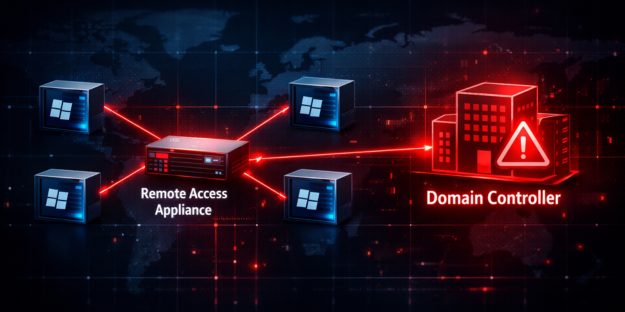
A vulnerability in BeyondTrust appliances is being actively exploited to seize full domain control.
CVE-2026-1731 is an unauthenticated OS command injection flaw that enables remote code execution against self-hosted BeyondTrust RS and PRA appliances via crafted HTTP requests. |
BeyondTrust has already patched cloud-hosted instances and released a patch for self-hosted clients to apply manually.
Patch self-hosted appliances, restrict management interfaces to trusted networks, conduct threat hunting for unauthorized RMM activity and privilege changes, enforce least privilege with phishing-resistant MFA, and centralize logs into your SIEM to detect lateral movement early.
|
Meta Business Admins Hit by Chrome Backdoor |
A rogue Chrome extension posing as a Meta Business productivity tool has been caught siphoning 2FA secrets and internal account data to attacker-controlled infrastructure.
Marketed as CL Suite in the Chrome Web Store, the extension harvested TOTP seeds, live codes, Business Manager data, and session details — enabling persistent Facebook and Instagram takeovers once passwords were obtained. This is an active campaign in the wild, but Socket researchers have notified Google to remove the extension.
Remove unapproved browser extensions from admin systems, enforce allow-listed and hardened browser environments, rotate credentials and re-enroll phishing-resistant MFA, and monitor for suspicious outbound traffic or unexpected account changes
|
Fake Olympic Stores Steal Fan Payment Data |
Cybercriminals have launched nearly 20 convincing lookalike domains impersonating the official Milano Cortina Olympic 2026 merchandise store to harvest fans’ payment and personal data.
Researchers found the fake sites clone shop[.]olympics[.]com’s design and product listings, using deep discounts on sold-out items to drive impulsive purchases. Victims worldwide are funneled through typosquatted and obscure domains where checkout pages harvest personal and payment data for fraud and follow-on phishing. This is an active campaign in the wild.
Continuously monitor and pre-register lookalike domains, enforce DMARC/DKIM/SPF, coordinate rapid takedowns during high-profile events, and remind users to purchase only from bookmarked official URLs while avoiding suspicious discounts and ads. |
|
|
If your security platform got owned tomorrow… what’s your first move? |
|
|
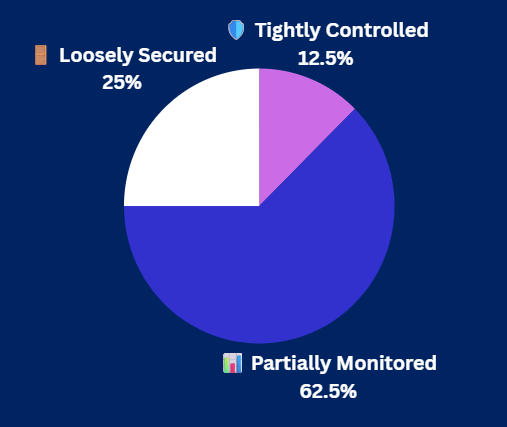
Yesterday's Pulse Check Results |
If attackers accessed your customer database today… |
|
|
Security Tools You Can Use |
|
|
Fake CAPTCHA Trick Delivers StealC Malware |
A new ClickFix campaign uses fake Cloudflare-style CAPTCHA pages to trick Windows users into running malicious PowerShell that deploys StealC information-stealing malware.
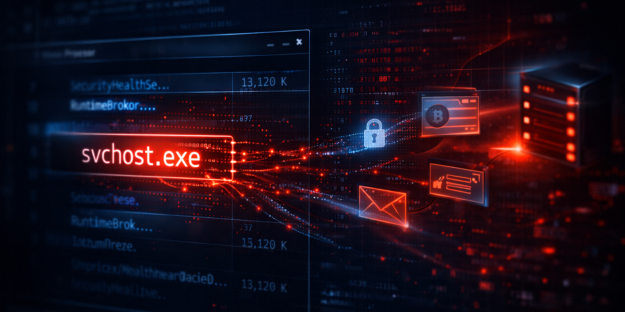
When victims paste attacker-supplied commands into the Run dialog, a fileless chain loads shellcode in memory, injects into svchost.exe, and exfiltrates credentials and system data over RC4-encrypted HTTP. |
The campaign remains active in the wild. Monitor for encoded PowerShell and svchost.exe injection activity, restrict interactive scripting with application control and enhanced logging, and reduce endpoint credential exposure while alerting on suspicious browser-initiated network traffic. |
Phishing Shifts to Cross-Platform Fraud Infrastructure |
Phishing has evolved into a scalable, multi-platform fraud system that hides inside search results, paid ads, SaaS logins, and document workflows.
Bolster AI identified more than 11.9 million malicious domains in 2025, showing how attackers now run scalable fraud operations that mimic marketing funnels using SEO poisoning, sponsored ads, and event-timed infrastructure.
Continuously monitor for brand impersonation across domains, search, ads, and marketplaces, enforce phishing-resistant MFA and least privilege, harden endpoints and browsers, and operationalize rapid takedowns with coordinated cross-team incident response testing.
|
|
|
AI-powered attacks and deepfakes are reshaping today’s threat landscape — is your workforce prepared? Our next-generation security awareness and phishing simulation platform helps organizations defend against modern AI-driven threats with interactive, role-based training and hyper-realistic simulations. Equip your team to recognize, report, and stop advanced threats before they cause damage.
|
|
|
How Secure Is Your Tech Stack? |
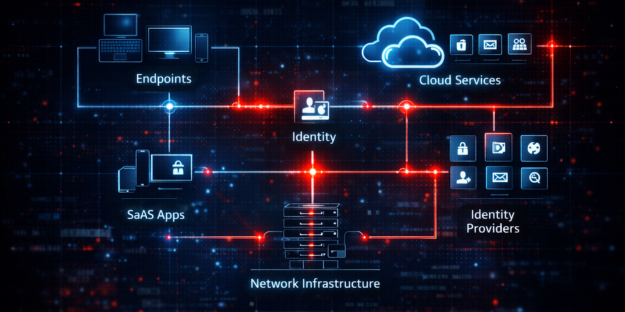
Modern attacks no longer target a single weak point — they exploit gaps between your tools, identities, cloud services, and endpoints. As environments grow more complex, misconfigurations, overprivileged accounts, and forgotten integrations create hidden risk that adversaries actively hunt. |
How to secure your tech stack: |
-
Maintain continuous visibility by tracking all assets, hardening configurations to secure baselines, and automating patching with validated remediation.
-
Strengthen identity security by enforcing least-privilege access and deploying phishing-resistant MFA to limit credential abuse and blast radius.
-
Centralize and correlate logs across endpoints, networks, and cloud systems in a SIEM or XDR to detect and respond to cross-environment threats early.
|
A resilient technology stack depends on continuous visibility, disciplined access management, and regular validation to minimize risk, control exposure, and keep security controls aligned and effective. |
|
|
|
Ken Underhill is an award-winning cybersecurity professional, bestselling author, and seasoned IT professional. He holds a graduate degree in cybersecurity and information assurance from Western Governors University, bringing years of hands-on experience to the field. |
|
|
Cybersecurity Insider is a TechnologyAdvice business |
© 2026 TechnologyAdvice, LLC. All rights reserved. |
TechnologyAdvice, 3343 Perimeter Hill Dr., Suite 215, Nashville, TN 37211, USA. |
|
|
|