The attack surface keeps getting wider. |
Today brings silent pre-auth takeovers, rogue AI skills hiding in plain sight, supply-chain bugs unearthed by AI, payment systems knocked offline, and nation-state espionage still lurking in the background. Read past newsletters here. |
|
|
Here’s what you need to know: |
|
|
BeyondTrust Flaw Opens Door to Unauthenticated Attacks |
A vulnerability in BeyondTrust’s remote access products exposes enterprises to full system compromise without any authentication. The flaw affects BeyondTrust Remote Support and Privileged Remote Access and could enable persistence and lateral movement across systems. |
BeyondTrust has released a patch for the issue.
Apply patches, restrict appliance access to trusted networks, and actively monitor logs and command activity to detect and contain pre-auth compromise quickly. |
OpenClaw Adds VirusTotal to Block Malicious AI Skills |
A surge of malicious AI agent skills prompted OpenClaw to add VirusTotal scanning to its ClawHub marketplace in an effort to reduce supply-chain risk.
Researchers have found hundreds of skills abusing that access for data exfiltration, prompt-injection backdoors, and staged malware. OpenClaw acknowledges that static scanning alone cannot detect language-based prompt attacks that manipulate agent behavior.
Inventory and explicitly approve agent skills, sandbox their execution, restrict network and credential access, and continuously monitor behavior to quickly contain malicious or abused agents. |
Claude Opus Uncovers Hundreds of Open-Source Flaws |
Anthropic said Claude Opus 4.6 identified more than 500 previously unknown high-severity flaws in widely used open-source libraries. Because libraries like Ghostscript, OpenSC, and CGIF are deeply embedded across enterprise stacks, a single flaw can cascade across many downstream products.
Claude analyzed code and commit histories to uncover logic and memory flaws missed by traditional testing, with findings validated by Anthropic’s Frontier Red Team.
Use SBOMs to track dependencies, prioritize fixes based on real exploitability, and sandbox high-risk components while monitoring runtime behavior for signs of supply-chain exploitation. |
|
|
How do you actually manage open-source risk today? |
|
|
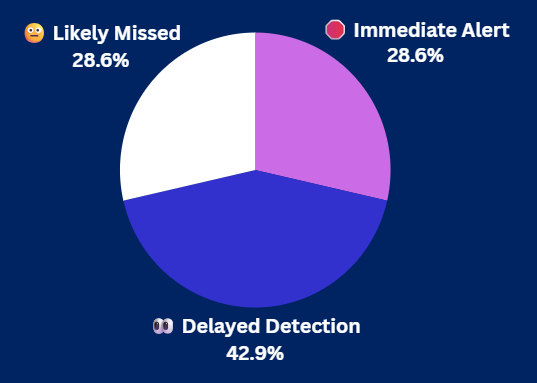
Yesterday's Pulse Check Results |
A user just ran a screensaver that installed an RMM agent — what happens next in your environment? |
|
|
Security Tools You Can Use |
|
|
Ransomware Hit Forces BridgePay Payment Outage |
A ransomware attack on BridgePay Network Solutions disrupted payment services nationwide, forcing some organizations to go cash-only. Because BridgePay supports thousands of merchants and municipal entities, a single outage quickly cascaded into business and public-sector disruptions as payment APIs, terminals, and billing portals went offline.
|
BridgePay stated that no payment card data was exfiltrated and that affected files were encrypted. They are continuing to investigate the incident.
Plan and rehearse payment outages by securing immutable backups, segmenting payment systems, tightening admin access, and validating third-party recovery and notification readiness. |
Palo Alto Networks Flags Massive State-Backed Espionage Campaign |
A large-scale cyber espionage campaign tied to an Asian state-aligned group compromised government and critical infrastructure organizations worldwide.
Palo Alto Networks said the campaign hit at least 70 organizations across 37 countries, including key energy, trade, finance, and diplomatic agencies, making it one of the largest since SolarWinds. The campaign remains active in the wild.
Prioritize patching internet-facing systems, monitor for lateral movement and kernel-level anomalies, and assume long-dwell espionage actors may already be inside sensitive networks.
|
|
|
Are Your Open-Source Dependencies Increasing Your Risk? |
Open-source software powers modern applications, but a single flaw in a widely used library can silently cascade risk across entire environments. As AI accelerates vulnerability discovery and exploitation, organizations need stronger controls to prevent supply-chain risks from turning into incidents with material impact. |
How to reduce risk from open-source dependencies: |
- Maintain visibility and prioritization by using SBOMs and automated dependency scanning to identify vulnerable libraries and focus remediation on flaws that are truly exploitable.
-
Reduce blast radius by enforcing secure defaults, preferring memory-safe technologies, and sandboxing high-risk libraries that process untrusted input.
-
Detect active exploitation by monitoring runtime behavior for anomalous crashes, file access, and unexpected outbound connections.
|
Reducing open-source risk comes down to deliberate use — better visibility, smarter prioritization, and runtime controls that limit exposure without slowing teams down. |
|
|
|
Ken Underhill is an award-winning cybersecurity professional, bestselling author, and seasoned IT professional. He holds a graduate degree in cybersecurity and information assurance from Western Governors University, bringing years of hands-on experience to the field. |
|
|
Cybersecurity Insider is a TechnologyAdvice business |
© 2026 TechnologyAdvice, LLC. All rights reserved. |
TechnologyAdvice, 3343 Perimeter Hill Dr., Suite 215, Nashville, TN 37211, USA. |
|
|
|