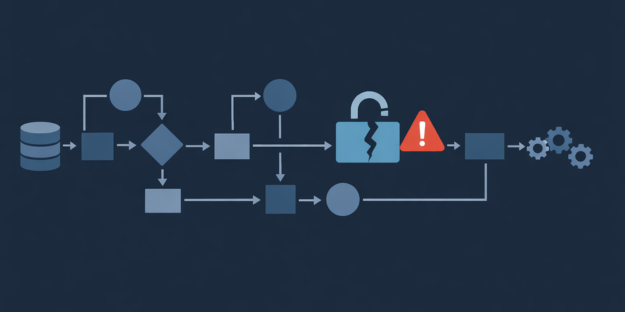
Automation is quietly becoming an attack surface. |
This week’s stories trace how trusted workflows, cloud platforms, and AI agents can be turned against the enterprise — sometimes without breaking a single rule.
The signals are subtle, the impact isn’t, and your defenses may need a rethink. Read past newsletters here. |
|
| Here’s what you need to know: |
|
|
n8n Flaw Exposes Hundreds of Thousands of AI Workflows |
A vulnerability in the n8n automation platform lets any authenticated user seize server control, putting hundreds of thousands of enterprise AI workflows and their credentials at risk.
Rated CVSS 10.0, the flaw allows attackers to escape n8n’s JavaScript sandbox and execute arbitrary commands, turning routine workflows into a gateway for exposing cloud credentials, databases, and AI pipelines at scale. |
A patch has been released for the vulnerability.
Patch n8n to version 2.4.0 or later, rotate all stored credentials, restrict workflow changes to trusted users, and harden network, access, and monitoring controls. |
10,000+ Systems Linked to SystemBC Botnet |
Researchers identified over 10,000 active infections linked to the SystemBC botnet, a proxy malware commonly used to establish early access in ransomware campaigns.
Using a custom fingerprint, Silent Push mapped the global SystemBC botnet, which affected systems including critical government infrastructure. The botnet remains active in the wild.
Treat SystemBC detections as high-severity incidents by isolating affected systems, restricting outbound proxy traffic, monitoring for backconnect behavior, and investigating for follow-on compromise before ransomware activity occurs.
|
OpenClaw Raises New Security Risks for AI Agents |
Security teams are taking a closer look at OpenClaw as its rapid adoption exposes new risks tied to autonomous AI agents operating with broad access. Unlike response-only AI tools, OpenClaw can call APIs and execute actions autonomously, so a single compromise can cascade across connected systems. CrowdStrike researchers warn attackers can leak data or hijack agents for reconnaissance and lateral movement, especially where OpenClaw runs locally with broad privileges and is exposed to prompt injection.
Secure AI agents by inventorying all deployments, isolating them with least-privilege access, restricting outbound connectivity, monitoring behavior for anomalies, and testing incident response plans for agent compromise scenarios.
|
|
|
If your network became part of a botnet today… |
|
|
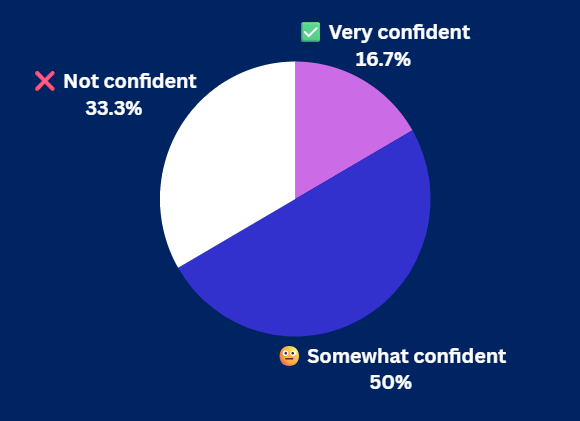
Yesterday's Pulse Check Results |
How confident are you in your cloud security posture right now? |
|
|
Security Tools You Can Use |
|
|
Phishing Attacks Hide Inside Trusted Cloud Platforms |
Enterprise phishing campaigns are increasingly hiding in plain sight by operating from trusted cloud platforms instead of suspicious domains. Attackers are hosting phishing pages on trusted cloud services like Azure, Firebase, and CloudFront to evade reputation-based defenses. |
AiTM kits such as Tycoon2FA, Sneaky2FA, and EvilProxy can intercept credentials and session tokens in real time, even when MFA is enabled, according to Any.Run researchers.
Monitor for anomalous authentication activity, inspect redirect chains beyond domain reputation, adopt phishing-resistant MFA, tighten session controls, and test incident response for AiTM scenarios. |
Microsoft Reshuffles Security Leadership Amid AI Risk |
Microsoft is restructuring security leadership to place both security execution and engineering quality under direct CEO oversight as AI adoption increases platform complexity. Microsoft said Hayete Gallot will return as executive vice president of security, while Charlie Bell moves into an engineering quality role. Both leaders will report to CEO Satya Nadella, signaling tighter accountability for security and reliability across Microsoft’s cloud and AI platforms as autonomy and interconnectedness increase. Organizations should mirror a similar approach by clearly assigning ownership for both security outcomes and engineering quality as AI capabilities expand internally. |
|
|
How Exposed Are You to Botnet Activity? |
Botnets remain a persistent threat because compromised systems often operate silently while attackers use them for ransomware delivery, data theft, or large-scale abuse. As attackers increasingly rely on proxy malware and cloud infrastructure, organizations need stronger visibility and controls to prevent systems from becoming unwilling participants.
|
How to reduce your risk from botnets: |
- Monitor and restrict outbound communications: Watch for suspicious DNS and network traffic while enforcing egress controls to disrupt botnet C2 channels.
-
Reduce attack surface and abuse potential: Patch and harden endpoints and apply least-privilege access to limit how compromised systems can be used.
-
Prepare to contain infections quickly: Test incident response procedures to rapidly isolate affected hosts and prevent botnet spread.
|
Effective botnet protection focuses on improving visibility, strengthening network controls, and preparing response actions to limit attacker persistence and reduce overall exposure. |
|
|
|
Ken Underhill is an award-winning cybersecurity professional, bestselling author, and seasoned IT professional. He holds a graduate degree in cybersecurity and information assurance from Western Governors University, bringing years of hands-on experience to the field. |
|
|
Cybersecurity Insider is a TechnologyAdvice business |
© 2026 TechnologyAdvice, LLC. All rights reserved. |
TechnologyAdvice, 3343 Perimeter Hill Dr., Suite 215, Nashville, TN 37211, USA. |
|
|
|