Attackers don’t need new tricks — just old doors left open. |
This week: a proxy layer with takeover potential, a legacy service that skips the password step, “maintenance” emails built to steal vault keys, and EU vendor risk reshaping procurement.
Read past newsletters here. |
|
| Here’s what you need to know: |
|
|
Oracle WebLogic Proxy Flaw Opens Door to Remote Takeover |
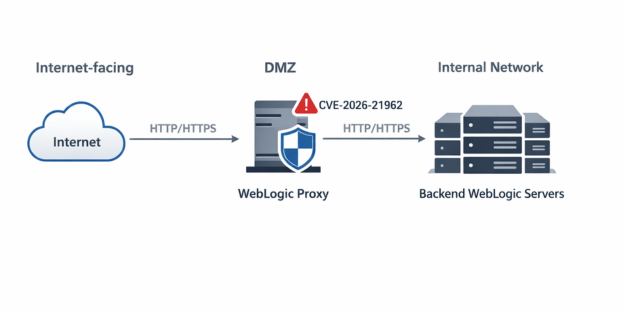
Oracle is recommending customers patch a Fusion Middleware vulnerability that allows remote compromise via the WebLogic proxy layer. Tracked as CVE-2026-21962, the flaw impacts Oracle HTTP Server and WebLogic proxy plug-ins commonly deployed internet-facing or in DMZs |
There are no reports yet of exploitation in the wild.
Patch affected Oracle HTTP Server/WebLogic proxy components immediately, then reduce exposure by placing them behind a WAF, locking down HTTP access, and tightening segmentation and monitoring to limit blast radius.
|
GNU Telnetd Bug Hands Attackers Passwordless Root Access |
A recently disclosed GNU InetUtils telnetd flaw enables passwordless root logins, making any exposed Telnet service an immediate path to full system takeover.
Affecting InetUtils versions 1.9.3 – 2.7, the bug is remotely exploitable with a crafted login and no user interaction, posing the greatest risk to legacy Linux/Unix systems, embedded devices, and segmented networks where Telnet still runs. There are no reports of exploitation in the wild.
Disable telnetd and move to SSH, and if Telnet must remain, patch InetUtils immediately and lock access behind VPN/jump hosts with strict firewall allowlisting and monitoring. |
LastPass Warns of Urgent “Backup Now” Phishing Lures |
Threat actors are impersonating LastPass support with urgent “maintenance” and “backup your vault” emails to steal users’ master passwords. The lures use a fake 24-hour deadline and lookalike infrastructure with redirects to evade detection.
LastPass reminded users they will not request master passwords via email links, and urged reporting of suspicious messages.
Treat urgent LastPass “maintenance/backup” emails as phishing — train users to never enter master passwords from links, verify alerts only in the official app/site, and report suspicious messages immediately. |
|
|
If you sent a fake “IT password reset” email today… |
|
|
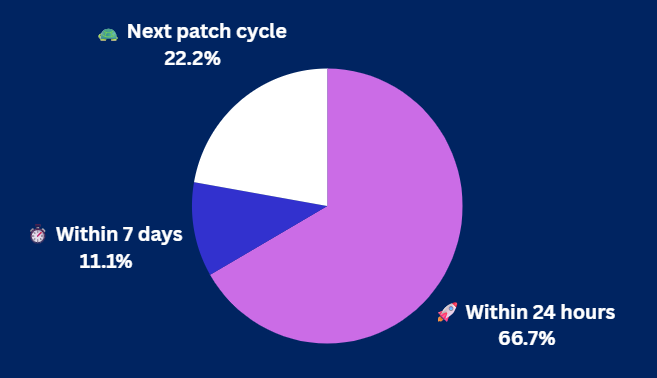
Yesterday's Pulse Check Results |
When a mobile vulnerability drops… how fast are you patching? |
|
|
Security Tools You Can Use |
-
Quick poll: What’s the top cybersecurity threat to autonomous vehicles right now?
- Level up your AD automation with PowerShell training — save 74% today.
- Check out the security tools high-performing teams are adopting now.
|
|
|
EU Cybersecurity Act Targets “High-Risk” Tech Suppliers |
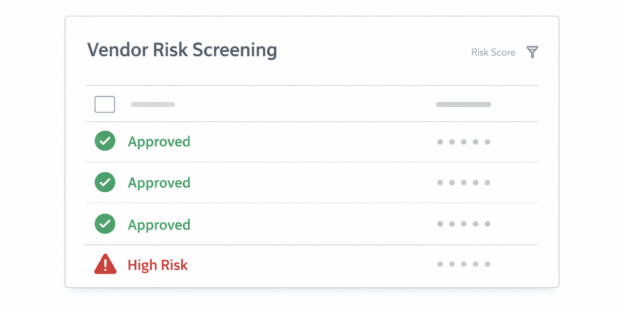
The European Commission has proposed updates to the EU Cybersecurity Act that could identify and potentially exclude “high-risk” third-country suppliers from critical infrastructure across 18 sectors, including energy.
The proposal reframes cybersecurity as a third-party geopolitical risk, potentially forcing rapid vendor reassessments, procurement shifts, and even retroactive phase-outs of already-deployed tech. |
Treat this as third-party risk management — map critical vendor dependencies, prioritize alternate suppliers, and incorporate geopolitical exposure into vendor selection and contract renewals. |
AI-Powered Phishing Accelerates the Need for Human Risk Management |
AI is making phishing and impersonation attacks faster, more convincing, and harder to stop before a user clicks.
Verizon’s 2025 DBIR still links the human element (“Layer 8”) to roughly 60% of breaches, driving momentum for Human Risk Management as a way to quantify risky behavior and intervene early with targeted controls and coaching before compromise.
Enforce phishing-resistant MFA, lock down OAuth/AI-agent permissions, and pair hardened messaging controls with real-time, role-based coaching and guardrails to stop risky actions before they become breaches. |
|
|
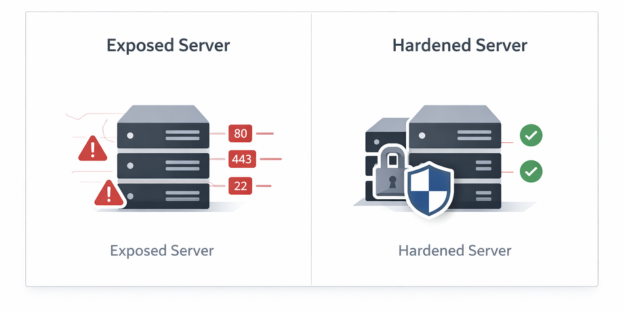
How Hardened Are Your Internet-facing Web Servers? |
Internet-facing web servers are a common target for automated scanning and exploitation attempts. Misconfigurations, outdated modules, and weak access controls can turn a simple service into an entry point for ransomware, data theft, or credential harvesting. |
How to harden your web servers: |
-
Patch and slim down your web stack by keeping the OS/server/modules updated and disabling or removing unused services, modules, and default content.
- Lock down access and reduce blast radius by restricting admin interfaces to trusted networks, enforcing MFA, and running services with least privilege and isolation.
-
Harden traffic and improve detection by enforcing strong TLS and security headers, deploying a WAF, and monitoring logs for exploit attempts and suspicious request patterns.
|
Strong web server hardening reduces exposure, limits blast radius if something breaks through, and strengthens cyber resilience. |
|
|
|
Ken Underhill is an award-winning cybersecurity professional, bestselling author, and seasoned IT professional. He holds a graduate degree in cybersecurity and information assurance from Western Governors University, bringing years of hands-on experience to the field. |
|
|
Cybersecurity Insider is a TechnologyAdvice business |
© 2026 TechnologyAdvice, LLC. All rights reserved. |
TechnologyAdvice, 3343 Perimeter Hill Dr., Suite 215, Nashville, TN 37211, USA. |
|
|
|