Trust is getting harder to verify. |
This week’s stories feature identity tricks, silent impersonation, “safe” guardrails that aren’t, and scams delivered through the channels users trust most. Read past newsletters here. |
|
|
Here’s what you need to know: |
|
|
ServiceNow AI Flaw Enables User Impersonation |
ServiceNow disclosed a vulnerability in its AI Platform that could let unauthenticated attackers impersonate legitimate users and operate with their full permissions.
Tracked as CVE-2025-12420, it affects Now Assist AI Agents (sn_aia) and the Virtual Agent API (sn_va_as_service), enabling data access, workflow abuse, and lateral movement via integrations. |
ServiceNow has released patches for the issue and no exploitation has been observed yet in the wild. Upgrade to the patched ServiceNow AI app versions, verify coverage across all instances, tighten privileges, and monitor for impersonation or role changes. |
Fortinet Bug Opens Door to Unauthenticated RCE |
Fortinet disclosed a FortiOS and FortiSwitchManager flaw that could allow unauthenticated remote code execution.
Fortinet warned the vulnerability could let unauthenticated attackers run code via crafted requests. The issue poses the greatest risk where Fortinet firewalls, SASE, or switch management interfaces are exposed to untrusted networks. Fortinet has patched the issue and there is no indication of exploitation in the wild.
Upgrade to the fixed Fortinet releases, restrict UDP 5246–5249 to trusted IPs, and harden management access while monitoring for cw_acd anomalies. |
AI Scams Drive $17B in Crypto Fraud |
Crypto scammers stole an estimated $17 billion in 2025, and Chainalysis says AI is now doing much of the heavy lifting. The firm reported AI-driven impersonation tactics jumped 1,400% year over year, helping fraud operations scale faster and appear more legitimate to victims. For defenders, the new baseline is assuming identity signals can be convincingly faked.
Add step-up verification for high-risk crypto actions, train staff to treat deepfake calls as suspicious, and use blockchain analytics to flag scam-linked wallets and transactions early. |
|
|
What’s your biggest privilege escalation gap right now? |
|
|
Yesterday's Pulse Check Results |
When attackers target each other, what’s your move? |
|
|
Security Tools You Can Use |
|
|
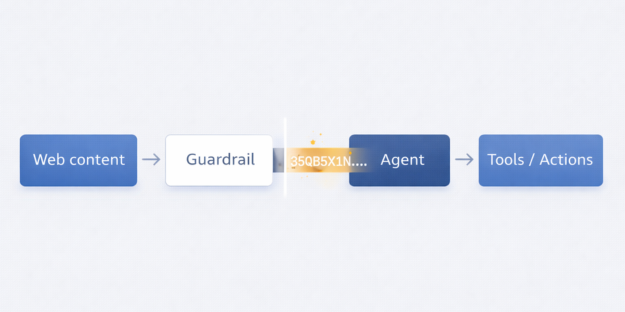
BrowseSafe Fails Encoded Prompt Injection Tests |
Recent red-team testing suggests Perplexity’s open-source BrowseSafe guardrail can be bypassed with encoded prompt injections, limiting its effectiveness as a standalone control.
Lasso researchers reported a 36% bypass rate using common obfuscation techniques and warned that motivated attackers with more time will do better. |
The risk is highest for autonomous web agents — especially in AI browsers like Comet — because a single miss can expose downstream models to malicious instructions, data leakage, or unsafe actions.
Red-team the entire agent pipeline, normalize and decode inputs before screening, and enforce layered guardrails with least-privilege and runtime controls to limit impact if a prompt slips through. |
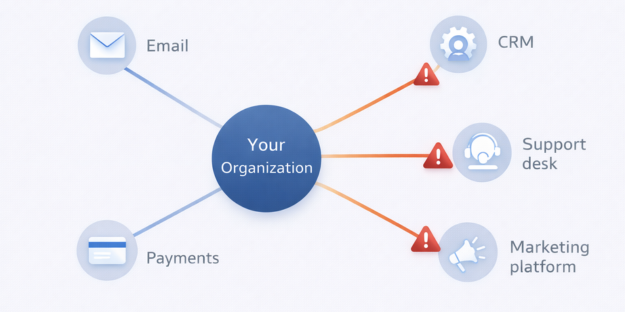
Attackers Hijack Betterment Marketing Platform |
Attackers compromised a third-party marketing platform to send Betterment customers convincing crypto scam messages through legitimate channels. The scam promised to triple crypto deposits and urged victims to send up to $10,000 to attacker wallets using Betterment-branded messaging. Betterment said accounts and credentials were not compromised, but warned attackers may have accessed customer data such as names, emails, phone numbers, addresses, and birthdates.
Require MFA and least-privilege access for all marketing tools, and implement outbound message monitoring to detect abnormal campaign activity fast. |
|
|
Don’t worry, this isn't your HR department. When we say "sensitive," we mean something that keeps CISOs up at night: risks to their organizations' data.
Fortra DSPM helps you discover, classify, and protect your sensitive data across your cloud and SaaS apps before a security incident becomes tomorrow’s headline.
Read more about how our solution's capabilities go beyond those of other DSPM vendors and enjoy a 30-day risk assessment to learn how we can improve your security posture. |
|
|
Lock Down Third-Party Risk |
Third-party platforms expand the attack surface because they’re embedded in trusted workflows but often receive less security oversight than core systems. If a vendor is compromised, attackers can misuse trusted access to bypass controls and act on their objectives before detection. |
How to reduce third-party risk: |
-
Maintain a complete inventory of vendor integrations and regularly review access, permissions, and business necessity.
- Enforce strong access controls by requiring MFA, least privilege, and secure API token management with routine rotation.
-
Reduce abuse risk by monitoring outbound communications for anomalies and embedding security requirements into vendor contracts.
|
Third-party risk can be managed with strong visibility, least-privilege access, and continuous monitoring, paired with regular reviews to validate permissions and limit impact. |
|
|
|
Ken Underhill is an award-winning cybersecurity professional, bestselling author, and seasoned IT professional. He holds a graduate degree in cybersecurity and information assurance from Western Governors University, bringing years of hands-on experience to the field. |
|
|
Cybersecurity Insider is a TechnologyAdvice business |
© 2026 TechnologyAdvice, LLC. All rights reserved. |
TechnologyAdvice, 3343 Perimeter Hill Dr., Suite 215, Nashville, TN 37211, USA. |
|
|
|