The overlooked edges are drawing attention. |
From botnets exploiting forgotten credentials to security tools becoming the weak link. Today’s threats hide in plain sight. Some move fast, others wait patiently. All are worth a closer look.
Read past newsletters here. |
|
| Here’s what you need to know: |
|
|
GoBruteforcer Botnet Targets 50,000 Servers |
The GoBruteforcer botnet is increasingly compromising internet-facing Linux servers by exploiting weak and reused credentials.
Check Point estimates over 50,000 servers are at risk due to exposed services and reused credentials, with newer GoBruteforcer variants adding stealthy obfuscation, resilient C2, and cryptocurrency theft capabilities. |
The botnet is still active in the wild.
Reduce brute-force risk by locking down internet-facing services, enforcing strong unique credentials with MFA, and monitoring for abnormal login and scanning behavior. |
Cisco Snort 3 Bugs Threaten Packet Inspection |
Two newly disclosed Snort 3 flaws allow unauthenticated attackers to disrupt inspection or leak sensitive network data.
The risk is amplified by Snort 3’s broad deployment across Cisco firewalls, IOS XE, open-source Snort, and Meraki appliances, where the flaws could leak data or crash inspection engines, according to Cisco. Cisco has released a patch for the vulnerabilities.
Patch Snort 3 immediately, restrict unnecessary DCE/RPC traffic, and add segmentation, rate limiting, and monitoring to maintain visibility if inspection engines fail. |
Cisco ISE Flaw Exposes System Files |
Cisco patched a high-severity ISE vulnerability that lets authenticated admins access restricted system files. The risk is heightened by ISE’s widespread use for network access control, where exploitation could expose configuration data, credentials, and secrets.
There is proof-of-concept code available, but no confirmed exploitation yet in the wild. Patch ISE immediately, lock down admin access with MFA and least privilege, and audit logs and system integrity for suspicious file access. |
|
|
If a botnet scanned your environment today, what would it find? |
|
|
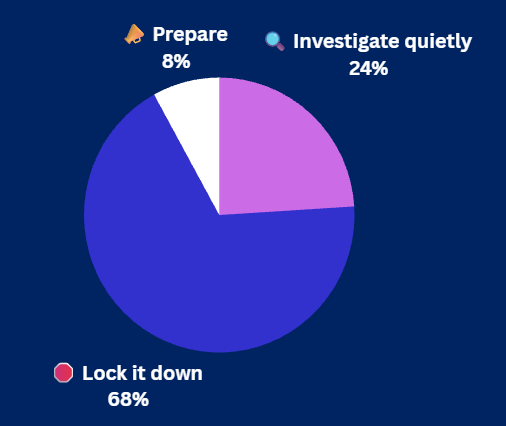
Yesterday's Pulse Check Results |
Hackers claim they breached your company — what’s your first move? |
|
|
Security Tools You Can Use |
-
Identify exposure early — see which vulnerability tools lead the field.
- Level up your IT career with end-to-end certification prep, from A+ to CySA+.
-
Help shape the future of autonomous vehicle security by weighing in on AI safety.
|
|
|
GenDigital Uncovers AuraStealer Evasion Tactics |
GenDigital research highlights AuraStealer, a rapidly evolving MaaS infostealer that uses social engineering and advanced obfuscation to steal data from Windows systems. AuraStealer steals credentials, tokens, and financial data via TikTok-driven scams and cracked software, targeting both consumers and enterprises. |
GenDigital notes its advanced evasion techniques and subscription model reflect the growing professionalism of commercially operated infostealer platforms.
Reduce infostealer risk by blocking untrusted executables, hardening endpoints with behavioral detection, and monitoring for credential misuse and suspicious process activity. |
Apple Trials Faster iOS Security Patch System |
Apple has begun testing a new iPhone security update model with the iOS 26.3 beta’s Background Security Improvements system.
The shift moves Apple away from all-or-nothing updates, enabling faster, targeted security fixes for components like Safari and WebKit that can be rolled back if needed. Replacing the troubled Rapid Security Response system, the approach could speed Apple’s response to critical vulnerabilities across iOS, iPadOS, and macOS.
Enable and test Background Security Improvements on beta devices to evaluate faster patch delivery and potential compatibility impacts ahead of wider rollout. |
|
|
Siloed service management limits growth. Join TechnologyAdvice in collaboration with Freshworks on January 21 at 1:00 PM ET to learn how teams are creating alignment across the enterprise with smarter service strategies. Get the insights you need to move from complexity to clarity. Join peers shaping the future of service management. |
|
|
Protect Your Systems from Botnets |
Botnets commonly exploit exposed servers, IoT devices, weak credentials, and poorly monitored endpoints to build large-scale attack infrastructure. Modern variants spread rapidly, blend into legitimate traffic, and support credential abuse, data theft, and follow-on attacks — making early prevention and continuous detection essential. |
How to harden your environment against botnets: |
- Reduce exposure by locking down internet-facing services, enforcing strong unique credentials with MFA, and applying rate limiting and login protections.
-
Harden systems through regular patching, secure configurations, network segmentation, and least-privilege access to limit blast radius.
-
Detect botnet activity early by monitoring for anomalous logins, scanning behavior, suspicious outbound traffic, and process masquerading.
|
Botnets are more effective in environments with unnecessary exposure and weak controls, but targeted hardening can meaningfully reduce their impact. |
|
|
|
Ken Underhill is an award-winning cybersecurity professional, bestselling author, and seasoned IT professional. He holds a graduate degree in cybersecurity and information assurance from Western Governors University, bringing years of hands-on experience to the field. |
|
|
Cybersecurity Insider is a TechnologyAdvice business |
© 2026 TechnologyAdvice, LLC. All rights reserved. |
TechnologyAdvice, 3343 Perimeter Hill Dr., Suite 215, Nashville, TN 37211, USA. |
|
|
|