Millions exposed, billion-dollar responses, AI agents adapting, and trusted systems behaving badly… all in a day’s work. Read past newsletters here.
👉 Tell us how we can make the newsletter better for you. Click Here |
|
| Here’s what you need to know: |
|
|
2.3M WIRED Records Exposed in API Scraping Breach |
A breach tied to WIRED has exposed over 2.3 million subscriber records after attackers leaked data allegedly scraped from Condé Nast systems. Researchers confirmed the breach by matching WIRED data with infostealer logs, exposing long-lived PII that raises phishing and takeover risk due to IDOR and broken API controls. |
The company has not commented on the reported breach at the time of publication.
Treat identity APIs as high-risk assets by enforcing object-level authorization, non-guessable IDs, rate limiting, MFA, and continuous monitoring. |
Aflac Breach Exposes Data of 22M People |
Aflac recently confirmed a breach that exposed sensitive personal and medical data tied to roughly 22 million people across the United States. The breach exposed personal and medical data across customers and affiliates.
Aflac is continuing its investigation into the breach. Review incident response plans to ensure rapid containment, identity protection enrollment, and litigation readiness are built in. |
Coupang Commits $1.1B to Breach Fallout |
Coupang announced it will spend more than $1.1 billion to compensate users after a personal data breach exposed information tied to tens of millions of accounts. The decision to compensate 33.7 million users highlights how breach response has become a long-term trust and reputation issue, not just a technical fix.
Consider building customer communication and compensation strategies directly into breach response plans alongside technical containment. |
|
|
Should breach compensation be planned in advance? |
|
|
Yesterday's Pulse Check Results |
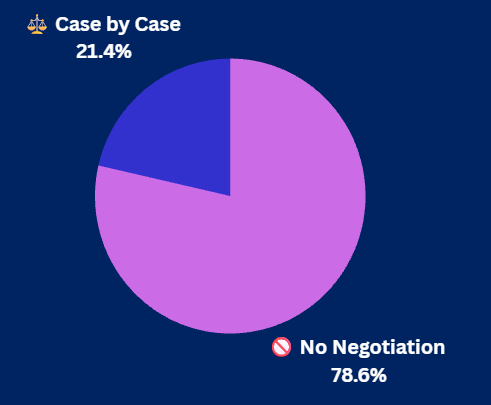
If attackers demand ransomware payment, what’s your approach? |
|
|
Security Tools You Can Use |
-
Share your take on how AI-powered security will shape the next generation of connected and autonomous vehicles.
- Stay ahead of evolving threats with security solutions designed for today’s attack landscape.
- Create your own AI-powered bot with ChatGPT, Python, and Django — and save 42% for a limited time.
|
|
|
OpenAI Hardens ChatGPT Atlas Against Prompt Attacks |
OpenAI released a security update for ChatGPT Atlas to defend against prompt injection attacks. As AI agents take on sensitive tasks, prompt injection poses growing risk, prompting OpenAI to pair model hardening with automated red teaming to stop complex attacks earlier. |
Treat AI agents as semi-trusted users by enforcing least privilege, tightly scoped prompts, step-up approvals, constrained access, and continuous monitoring. |
TeamViewer DEX Bugs Open Door to DoS Attacks |
TeamViewer disclosed DEX vulnerabilities that allow adjacent network attackers to disrupt services or abuse trusted components. The flaws include a high-severity code execution issue and DoS risks that, while not actively exploited, could enable lateral movement or disruption in enterprise DEX environments. Patches have been released for the vulnerabilities. Immediately patch TeamViewer DEX, disable unnecessary NomadBranch services, restrict internal access, and monitor endpoints to reduce lateral movement and post-compromise risk. |
|
|
Could a DDoS Take You Offline Today? |
Denial-of-service (DoS) and distributed denial-of-service (DDoS) attacks continue to disrupt organizations by overwhelming applications, networks, and APIs with malicious traffic. With increasing exposure and automation, even short service disruptions can carry significant operational, financial, and reputational impact. |
How to strengthen defenses against DoS and DDoS attacks: |
- Use rate limiting, WAFs, and DDoS mitigation services to detect, filter, and block malicious traffic.
- Design resilient infrastructure with network segmentation, autoscaling, and redundancy to limit blast radius and maintain availability during traffic surges.
-
Implement continuous monitoring and alerting to quickly identify abnormal traffic patterns and enable faster response to DoS and DDoS activity.
|
Layered DoS and DDoS defenses paired with real-time monitoring help minimize downtime, limit blast radius, and maintain service availability during traffic floods. |
|
|
| Ken Underhill is an award-winning cybersecurity professional, bestselling author, and seasoned IT professional. He holds a graduate degree in cybersecurity and information assurance from Western Governors University, bringing years of hands-on experience to the field.
|
|
|
Cybersecurity Insider is a TechnologyAdvice business |
© 2025 TechnologyAdvice, LLC. All rights reserved. |
TechnologyAdvice, 3343 Perimeter Hill Dr., Suite 215, Nashville, TN 37211, USA. |
|
|
|