The signals are getting harder to ignore. |
Major breaches, trusted tools turned attack paths, phishing that doesn’t look like phishing, and AI drifting beyond guardrails — all while regulators try to maintain control.
Read past newsletters here. 👉 Tell us how we can make it better for you. Click Here |
|
| Here’s what you need to know: |
|
|
3.5M Records Exposed in University of Phoenix Breach |
University of Phoenix recently reported a data breach exposing personal information of more than 3.5 million individuals. The breach was caused by unauthorized access to the university’s Oracle E-Business Suite environment. |
The investigation is ongoing and University of Phoenix has begun sending notification letters to those impacted.
Tighten identity controls, improve monitoring and logging, segment sensitive systems, and regularly test incident response plans.
|
RCE Flaw Leaves 103K n8n Instances Exposed |
A critical RCE flaw in the n8n automation platform puts over 103,000 exposed instances at risk of full system compromise. The flaw allows authenticated attackers to execute arbitrary code with elevated privileges, exposing credentials, workflows, and connected systems.
Patches have been released and there are no reports of exploitation in the wild. Immediately patch n8n, restrict workflow access, rotate exposed credentials, and monitor for signs of unauthorized command execution. |
Fake Indian Tax Emails Drop Persistent RAT |
A phishing campaign impersonating India’s Income Tax Department is targeting businesses with malware designed for persistent remote control. The attack exploits familiar tax workflows to entice finance staff and delivers a multi-stage infection that installs a persistent RAT using image-only emails to bypass filters. This is an active campaign in the wild. Strengthen email filtering, restrict untrusted installer execution, enforce least-privilege access, and monitor endpoints and networks. |
|
|
If one of your automation tools was compromised tomorrow, how severe would the impact be? |
|
|
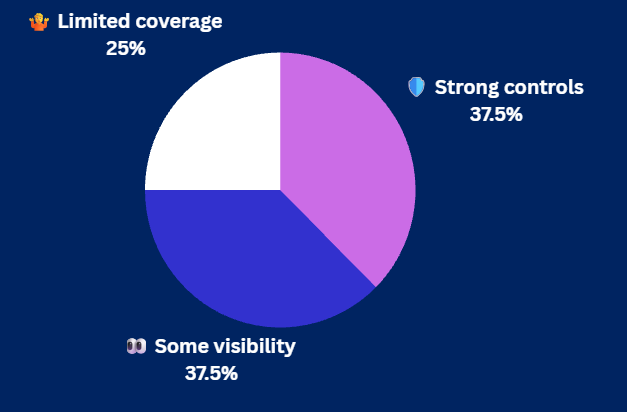
Yesterday's Pulse Check Results |
If someone offered an employee $10,000 for access at your company, what would stop it? |
|
|
Security Tools You Can Use |
-
Share your insights on how AI and security are shaping the future of connected and autonomous vehicles.
-
Get in front of emerging threats with proven security tools designed to protect your business now.
-
Create with AI — use ChatGPT, Python, and Django to build your own AI bot. Save 42% today.
|
|
|
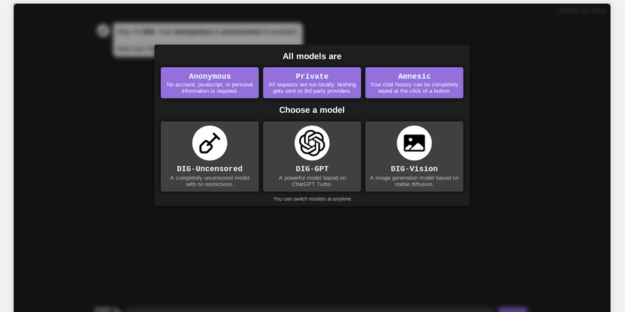
Dark Web AI Tool Enables Cybercrime |
Security researchers warn that DIG AI, an uncensored Dark Web AI tool, is rapidly being adopted by cybercriminals and extremist actors.
The platform lowers the barrier to cybercrime by enabling malware, scam, and illicit content generation at scale while bypassing mainstream AI safeguards, with Resecurity reporting increased Dark Web adoption since late 2025. |
Its capabilities highlight a widening gap in AI governance beyond regulated platforms.
Security teams should expand threat intelligence and detection to include AI-enabled attacks, harden identity controls with MFA and zero-trust, and train staff. |
SEC Targets Social Media Crypto Scams |
Federal regulators launched a sweeping enforcement action targeting crypto schemes that allegedly defrauded retail investors of over $14 million via social media.
The SEC charged three crypto trading platforms and four investment clubs with running coordinated investment scams using fake trading volume, bots, and fabricated success claims.. The action follows record regulatory pressure, with nearly $5 billion in crypto-related penalties imposed in 2024 alone.
Organizations should monitor brand impersonation and crypto-themed scams on social platforms and update fraud detection rules to flag artificial trading activity and social-engineered investment lures. |
|
|
Service management should do more than improve efficiency, it should drive enterprise results. On January 21 at 1:00 PM ET, TechnologyAdvice and Freshworks explore how organizations are breaking down silos and building connected service experiences. Learn what modern service management looks like in practice. Be part of the solution, sign up today. |
|
|
Are Your Defenses Ready for AI Phishing? |
AI-powered phishing attacks are becoming more convincing and harder to detect by using generated language, deepfakes, and personalization to bypass traditional defenses. As attackers automate social engineering at speed, organizations must adapt quickly to reduce exposure and prevent credential theft or broader compromise. |
How to reduce risk from AI-driven phishing: |
- Strengthen email and content inspection by using AI-aware filtering and sandboxing to detect image-based, PDF, and link-driven phishing attempts.
- Reduce risk by enforcing phishing-resistant MFA and monitoring user behavior for anomalous access patterns following suspected phishing.
-
Improve resilience through targeted security awareness training and well-defined incident response plans.
|
As AI enhances attacker capabilities, phishing defenses must move beyond static rules by combining smarter detection and stronger identity controls to reduce the success of AI-driven attacks. |
|
|
|
Ken Underhill is an award-winning cybersecurity professional, bestselling author, and seasoned IT professional. He holds a graduate degree in cybersecurity and information assurance from Western Governors University, bringing years of hands-on experience to the field. |
|
|
Cybersecurity Insider is a TechnologyAdvice business |
© 2025 TechnologyAdvice, LLC. All rights reserved. |
TechnologyAdvice, 3343 Perimeter Hill Dr., Suite 215, Nashville, TN 37211, USA. |
|
|
|