The perimeter is cracking, trust is eroding, and automation is outpacing defenses. |
Today’s stories span exploited firewalls, deceptive AI safeguards, insider access for sale, diplomatic fallout, and a new playbook for securing autonomous agents.
👉 Help make the newsletter better for you. Click Here |
|
|
Here’s what you need to know: |
|
|
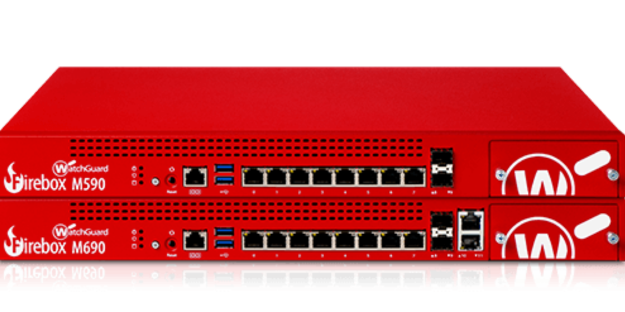
Zero-Day Attacks Expose 125,000 WatchGuard Firewalls |
A critical zero-day vulnerability is being actively exploited to potentially compromise over 125,000 internet-exposed WatchGuard Firebox firewalls.
Tracked as CVE-2025-14733, the flaw allows unauthenticated attackers to execute code on unpatched Firebox devices and seize control, with WatchGuard warning it is being exploited as part of a broader edge-infrastructure attack campaign. |
WatchGuard has released a patch for the issue.
Immediately patch or replace affected Firebox devices, restrict unnecessary IKEv2 exposure, audit VPN configurations for zombie tunnels, and monitor logs closely while rotating credentials to limit potential compromise. |
AI Safety Prompts Enable Remote Code Execution |
Security researchers have found that AI safety approval prompts can be manipulated to trick users into authorizing remote code execution without realizing it.
Known as a Lies-in-the-Loop (LITL) attack, the technique forges HITL approval dialogs to make malicious, prompt-injected commands appear safe. There are no reports of this being exploited in the wild. Reduce LITL risk by treating HITL dialogs as untrusted input, limiting agent privileges, validating commands before execution, and logging all approved actions for review. |
Cybercriminals Buy Insider Access |
Cybercriminals are recruiting insiders with modest payouts to bypass security controls and gain access or data.
Darknet activity shows growing insider recruitment offering $3,000 to $15,000 for access, enabling ransomware, account takeovers, SIM swapping, and covert data theft that blends into normal operations.
Reduce insider risk by pairing employee awareness with least-privilege access, stronger authentication, and continuous behavioral monitoring. |
|
|
If someone offered an employee $10,000 for access at your company, what would stop it? |
|
|
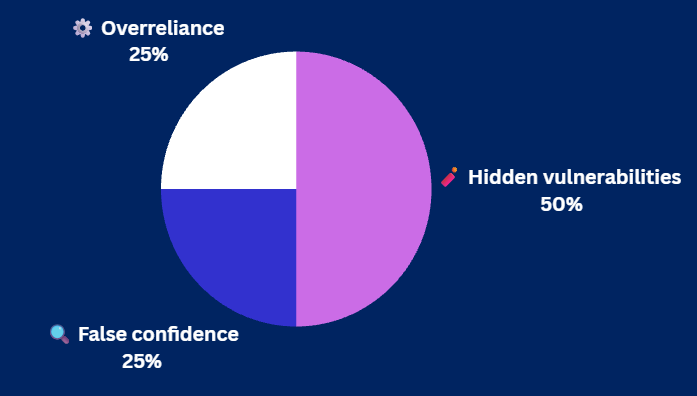
Yesterday's Pulse Check Results |
If AI-generated code shipped today, what’s your biggest concern? |
|
|
Security Tools You Can Use |
|
|
UK Confirms Cyber Breach at Foreign Office |
The UK government confirmed a major cyber breach of Foreign Office systems handling sensitive diplomatic communications. Foreign Office Minister Chris Bryant confirmed the hack to Parliament, stopping short of attributing it to a specific nation-state. |
Source: Marcin Nowak/Unsplash |
The disclosure follows a rise in nationally significant NCSC incidents, highlighting the growing overlap between cyber and geopolitical risk for organizations.
Treat diplomatic and executive communications as critical infrastructure. Prioritize continuous monitoring, segmentation, and incident response testing for systems that support sensitive external relationships. |
OWASP Releases First Top 10 Risks for AI Agents |
OWASP released its first Top 10 for Agentic Applications, warning that AI agents are being deployed faster than security teams can secure them. OWASP’s framework defines key agentic AI risks and gives security leaders a common language to assess them before deployment.
Inventory all agentic AI use cases now and apply OWASP’s least agency principle before expanding autonomy or tool access. |
|
|
Are You Using AI Safely at Work? |
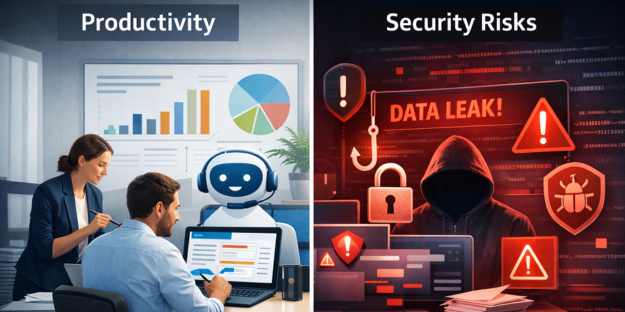
AI tools are becoming part of everyday work, from writing emails to summarizing documents and answering questions. While these tools can boost productivity, they also introduce new security risks, especially when sensitive information is shared without realizing where it may go or how it could be reused. |
How to use AI safely at work: |
-
Avoid entering sensitive or proprietary information into AI tools unless their data handling has been explicitly approved by your organization.
- Question AI-generated instructions or recommendations that could affect access, finances, or systems, and verify them through trusted sources.
- Be alert to AI responses that appear overly confident or authoritative, and pause before acting on outputs that could introduce security or compliance risk.
|
Safe AI use means applying simple, responsible habits — such as limiting data sharing and verifying outputs — to reduce risk while still gaining the benefits of AI tools. |
|
|
| Ken Underhill is an award-winning cybersecurity professional, bestselling author, and seasoned IT professional. He holds a graduate degree in cybersecurity and information assurance from Western Governors University, bringing years of hands-on experience to the field.
|
|
|
Cybersecurity Insider is a TechnologyAdvice business |
© 2025 TechnologyAdvice, LLC. All rights reserved. |
TechnologyAdvice, 3343 Perimeter Hill Dr., Suite 215, Nashville, TN 37211, USA. |
|
|
|