The threat landscape is shifting again, Digital Defenders. |
This week brings silent cloud risks, AI systems pushed to the edge, identity safeguards undone, and global adversaries moving in unexpected sync. And that’s only the beginning… |
|
|
Here’s what you need to know: |
|
|
Critical Fluent Bit Bugs Enable Log Tampering and Cloud Compromise |
Recently discovered Fluent Bit vulnerabilities allow attackers to hijack logs, crash agents, and potentially execute code across Kubernetes and cloud environments.
Any environment using Fluent Bit for log ingestion or forwarding is at risk of log corruption, falsified telemetry, or even host compromise, especially when dynamic tags or exposed inputs are enabled. |
Source: engin akyurt/Unsplash |
There are no reports yet of the vulnerabilities being exploited in the wild.
Upgrade Fluent Bit, restrict input access, harden configurations, and monitor for anomalies to prevent log tampering and reduce the risk of cloud compromise. |
Critical vLLM Bug Enables Remote Code Execution in AI Systems |
A newly uncovered flaw in vLLM allows attackers to crash servers or execute arbitrary code simply by sending malicious prompt embeddings to the Completions API.
Impacting vLLM versions 0.10.2 and later, the vulnerability exposes production AI deployments to denial-of-service, lateral movement, and potential full system compromise. No exploitation has been reported yet.
Patch vLLM, lock down and filter API access, isolate the service, and monitor for malformed embeddings to prevent exploitation of the deserialization flaw. |
HashiCorp Vault Bug Allows Credential-Free Logins |
A misconfiguration in HashiCorp’s Vault Terraform Provider can allow attackers to authenticate to Vault without valid credentials, putting secrets, encryption keys, and critical infrastructure data at risk.
CVE-2025-13357 arises from the provider’s default setting of deny_null_bind = false, enabling anonymous LDAP binds wherever the directory server allows them. There are no reports yet of exploitation in the wild.
Patch Vault and its Terraform Provider, enforce secure LDAP settings, lock down network access, audit configurations, and monitor authentication activity to prevent unauthorized access. |
|
|
How confident are you in your org’s credential hygiene right now? |
|
|
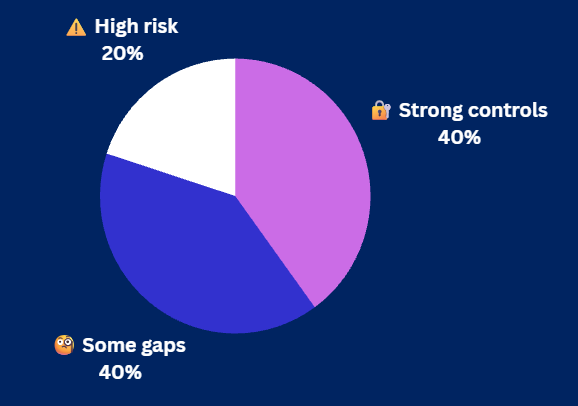
Yesterday's Pulse Check Results |
How confident are you in your third-party data controls? |
|
|
Security Tools You Can Use |
|
|
Delta Dental Breach Exposes Data of 145,000 Customers |
A months-long attack at Delta Dental of Virginia exposed the personal data of over 145,900 customers after attackers compromised an employee email account and silently exfiltrated sensitive information.
The breach went unnoticed for more than five months, increasing the risk that personal and health data could be used for identity fraud. |
The investigation into the incident and its full impact is ongoing.
Enforce strong identity controls, enhance monitoring, regularly test security posture, train employees, apply zero-trust, deploy data-protection tools, and strengthen incident response plans. |
Russia and North Korea APTs Linked by Shared Infrastructure |
Gen Threat Labs researchers found indications that Russia’s Gamaredon and North Korea’s Lazarus may be using overlapping infrastructure — a rare and troubling convergence between two nation-state threat groups.
Both groups appeared active on the same server within four days — a coincidence the researchers called “too close to ignore” and potentially signaling new cross-nation APT alignment.
Correlate shared infrastructure, adopt behavior-based detection, harden identity and systems with zero-trust, expand threat hunting for overlapping indicators, share intelligence broadly, and routinely test defenses to prepare for blended APT activity. |
|
|
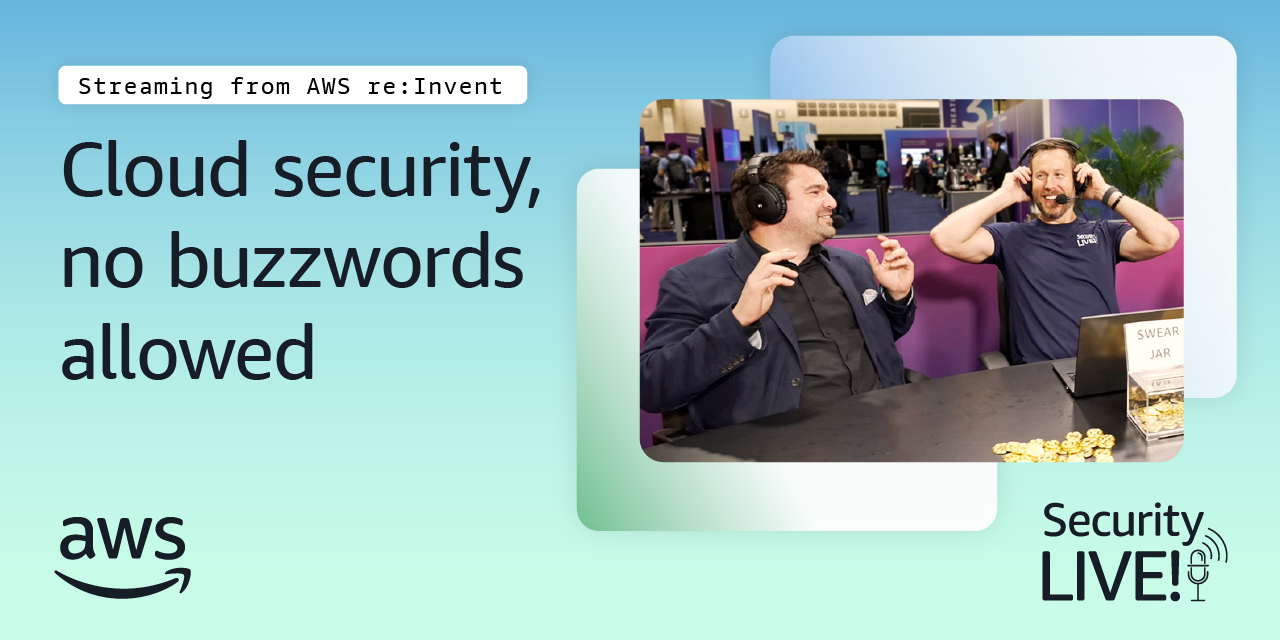
From threat detection to compliance, our hosts skip the jargon and dig into real AWS security trends—live from AWS re:Invent. |
|
|
How Secure Is Your Organization’s Sensitive Data? |
Data loss is increasingly common as organizations expand cloud usage, AI tools, and leverage geographically distributed teams. Attackers now target the data flowing between systems, making strong data loss prevention (DLP) practices essential for protecting sensitive information and ensuring compliance. |
Source: Carlos Muza/Unsplash |
How to strengthen your data loss prevention posture: |
-
Classify sensitive data and enforce least-privilege access to ensure only the right users can reach critical information.
- Use DLP monitoring across endpoints and cloud apps to detect and block risky data transfers or unauthorized sharing.
-
Encrypt data in transit and at rest to keep sensitive files unreadable even if intercepted or exfiltrated.
|
When smart tools work alongside strong data-handling habits, organizations can better prevent accidental leaks and malicious theft of data. | |
|
|
Ken Underhill is an award-winning cybersecurity professional, bestselling author, and seasoned IT professional. He holds a graduate degree in cybersecurity and information assurance from Western Governors University, bringing years of hands-on experience to the field. |
|
|
Cybersecurity Insider is a TechnologyAdvice business |
© 2025 TechnologyAdvice, LLC. All rights reserved. |
TechnologyAdvice, 3343 Perimeter Hill Dr., Suite 215, Nashville, TN 37211, USA. |
|
|
|