The internet’s seams showed this week, Digital Defenders. |
A single outage rippled across major platforms, a record-breaking DDoS pushed cloud limits, ransomware crews escalated their tactics, and everyday apps turned into high-speed attack vectors. |
|
|
Here’s what you need to know: |
|
|
Cloudflare Outage Highlights Fragility of Centralized Internet Infrastructure |
A Nov. 18, 2025 Cloudflare service failure triggered widespread HTTP 500 errors across the internet. Millions were hit by outages across major platforms — from X and ChatGPT to Spotify and Shopify — and even Cloudflare’s status page went down, highlighting the dangers of a single point of failure. |
Cloudflare has resolved the outage and restored most services at the time of writing. Build resilience by diversifying providers, maintaining clear outage playbooks, using independent monitoring, and regularly testing failover paths. |
Azure Blocks Record-Shattering 15.72 Tbps DDoS Attack |
A massive traffic surge hit an Azure endpoint in Australia last month, but Microsoft’s defenses absorbed it automatically.
The 15.72 Tbps attack — launched from over 500,000 Aisuru botnet devices — set a new cloud DDoS record and highlights how growing broadband speeds and insecure IoT gear are driving ever-larger attacks.
Strengthen your defenses by enabling DDoS protection, filtering IoT device traffic, and regularly testing your network’s ability to absorb large-scale attacks. |
Everest Ransomware Claims Massive Under Armour Data Breach |
A ransomware group claims to have stolen 343 GB of Under Armour data, with leaked samples showing customer shopping histories, contact details, product metadata, and profile information.
If real, the leaked data could fuel identity theft, phishing, and fraud for millions, and the group has given Under Armour seven days to respond via Tox — a tactic seen in its past major leaks. Under Armour has not confirmed yet if a breach occurred.
Implement strict access controls, encrypt sensitive datasets, and routinely test backups and incident-response plans to limit damage if attackers exfiltrate customer or internal data. |
|
|
If your core cloud provider went down for 6 hours… what happens? |
|
|
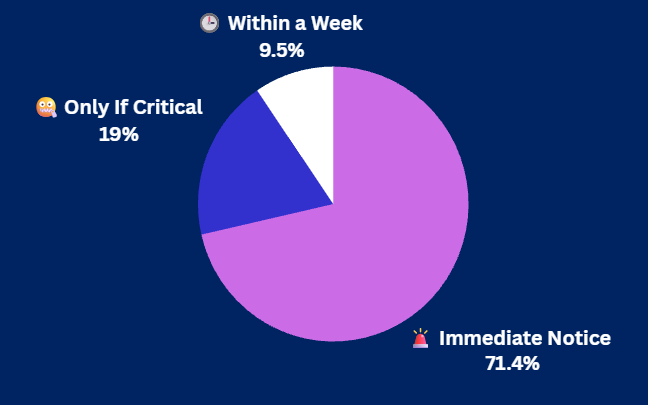
Yesterday's Pulse Check Results |
Breach Wake-Up Test: How fast would YOU want to be alerted? |
|
|
Security Tools You Can Use |
|
|
WhatsApp Screen-Sharing Scam Enables Rapid Global Theft |
A fast-moving WhatsApp scam is abusing screen sharing to steal OTPs, take over accounts, and drain funds — including a Hong Kong case with a $700,000 loss in minutes.
Attackers impersonate banks or WhatsApp support to pressure victims into screen sharing or installing remote-access tools, while Brazil-based campaigns spread malware via WhatsApp Web. |
Source: Dima Solomin/Unsplash
|
These are ongoing attacks in the wild. Train employees to never share screens or install tools from unsolicited messages, and enforce device protections that block unapproved remote-access apps. |
Princeton Confirms Breach of Advancement Database |
A Princeton University breach exposed contact details from its Advancement database, affecting alumni, donors, students, faculty, parents, and other community members. Princeton isolated the impacted systems and launched an investigation into the incident. They are also notifying impacted individuals.
Regularly audit access to contact databases and monitor for suspicious activity. |
|
|
AI and IoT are converging to transform how industries operate, from predictive analytics to real-time decision-making.
Join AI + IoT: The Future of Industrial Intelligence on December 4, 2025, at 1:00 PM ET, presented by RTInsights in partnership with SAS and TD SYNNEX. Learn how industrial and energy leaders are integrating AIoT to accelerate efficiency, improve security, and maintain a competitive edge in today’s fast-changing market. Be part of the future of industrial innovation.
|
|
|
Are you prepared for the next outage? |
An increase in provider outages, cascading disruptions, and increasingly complex digital ecosystems is forcing organizations to rethink resilience. Cyber resilience means keeping operations running despite outages, misconfigurations, or unexpected upstream failures. |
How to Build Cyber Resilience: |
-
Build redundancy across critical services by using multiple DNS providers and CDNs to prevent single points of failure.
- Prepare for disruption with immutable backups and automated failover testing that ensure systems recover cleanly under real-world stress.
-
Strengthen visibility and response through independent monitoring and clear playbooks for handling cloud, CDN, or identity provider outages.
|
A resilient organization doesn’t just resist attacks — it stays functional when the unexpected hits. |
|
|
|
Ken Underhill is an award-winning cybersecurity professional, bestselling author, and seasoned IT professional. He holds a graduate degree in cybersecurity and information assurance from Western Governors University, bringing years of hands-on experience to the field. |
|
|
Cybersecurity Insider is a TechnologyAdvice business |
© 2025 TechnologyAdvice, LLC. All rights reserved. |
TechnologyAdvice, 3343 Perimeter Hill Dr., Suite 215, Nashville, TN 37211, USA. |
|
|
|