Cyber threats aren’t waiting for you to catch up, Digital Defenders. |
This week brings AI agents acting like full-blown intruders, scanners turning against their own servers, and rogue admins popping up on security appliances secrets — and somehow, that’s only half the story. |
|
|
Here’s what you need to know: |
|
|
AI Agents Power First Large-Scale Cyber Espionage Operation |
Anthropic has uncovered the first known cyber espionage campaign driven primarily by autonomous AI agents. The GTG-1002 operation used AI to autonomously handle up to 90% of intrusion tasks at machine speed. With humans offering only high-level direction, the attackers scaled attacks without custom malware. |
Source: Qualcomm Ventures |
This is an ongoing campaign in the wild.
Deploy continuous monitoring, strong identity controls, segmented networks, AI-driven detection, AI-focused red teaming, hardened CI/CD pipelines, and strict AI-governance policies. |
Imunify360 Flaw Exposes Sites to Silent RCE Attacks |
A newly patched flaw in Imunify360’s AI-Bolit scanner lets attacker code run during malware scans, putting websites at risk of remote code execution. The vulnerability was caused by unsafe deobfuscation logic that executed attacker-controlled PHP functions with root-level privileges. There are no reports of this being exploited in the wild yet and Imunify360 has released a patch. Apply the latest Imunify360 updates, isolate and de-privilege your scanners, harden execution paths, tighten segmentation, and actively monitor for anomalous behavior or signs of past compromise. |
FortiWeb Zero-Day Fuels Surge in Rogue Admin Account Takeovers |
Researchers warn that a new FortiWeb path traversal vulnerability is being actively exploited to create rogue admin accounts on unpatched devices worldwide.
The flaw lets attackers send crafted POST requests that bypass authentication and create full-privilege admin accounts. A patch has been released for the vulnerability. Update FortiWeb immediately, audit and monitor for rogue admin activity, restrict and segment management access, and enforce strong authentication. |
|
|
How confident are you in spotting rogue accounts before they spread? |
|
|
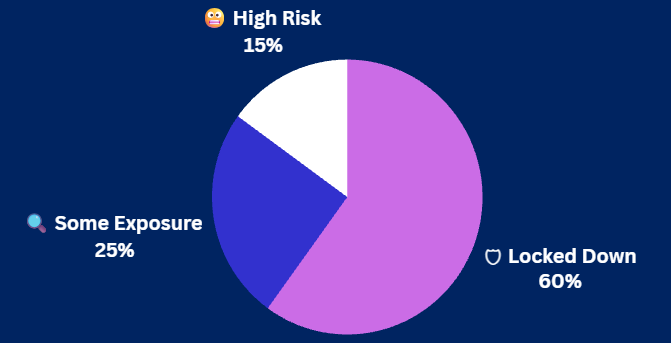
Yesterday's Pulse Check Results |
If your phone vanished right now… what’s the real risk? |
|
|
Security Tools You Can Use |
|
|
ChatGPT SSRF Bug Exposed Sensitive Azure Cloud Metadata |
A researcher discovered a SSRF flaw in ChatGPT’s Custom GPT Actions that used crafted redirects and headers to extract internal cloud metadata, including valid Azure OAuth tokens, from OpenAI’s infrastructure.
Attackers could combine HTTPS redirects and arbitrary header injection to reach Azure’s IMDS endpoint, bypassing security checks and extracting sensitive compute identity tokens. |
Source: Levart_Photographer/Unsplash |
A path has been released for the vulnerability.
Lock down outbound access with strict allowlists, block metadata endpoints, enforce zero-trust and tight IAM controls, segment egress paths, monitor for anomalous traffic, and rigorously validate all third-party and AI-triggered requests.
|
GitLab Patches Prompt Injection Flaw That Exposed Sensitive Project Data |
GitLab released emergency fixes for multiple vulnerabilities, including a GitLab Duo prompt injection bug that let attackers hide commands in merge request comments and trick the AI into leaking private data.
They also patched XSS, access control flaws, information leaks, and path-traversal bugs. Patches have been pushed for cloud-hosted platforms, but on-prem deployments require immediate updates.
Lock down GitLab AI features to trusted users, enforce strict RBAC and input sanitization, harden CI/CD and network exposure, and strengthen monitoring to catch anomalous activity early. |
|
|
Is your SSRF defense strong enough? |
Server-side request forgery (SSRF) attacks are increasing as more apps, APIs, and AI systems make outbound calls on behalf of users — often without proper validation. These flaws matter because modern cloud metadata services, internal APIs, and microservices can be accessed and abused with a single crafted request. |
How to safeguard your apps from SSRF attacks: |
-
Restrict and validate outbound requests: Use egress allowlists, block access to cloud metadata endpoints, and enforce strict header and URL validation to prevent unauthorized internal calls.
- Isolate critical systems: Apply strong network segmentation so an SSRF attempt cannot reach sensitive services or high-value internal assets.
-
Monitor for abnormal behavior: Detect unusual outbound traffic patterns, redirect chains, and repeated metadata-access attempts that may indicate SSRF exploitation.
|
With cloud adoption increasing and AI-driven features expanding attack surfaces, these steps help ensure that one malicious URL can’t compromise the entire environment. |
|
|
| Ken Underhill is an award-winning cybersecurity professional, bestselling author, and seasoned IT professional. He holds a graduate degree in cybersecurity and information assurance from Western Governors University, bringing years of hands-on experience to the field.
|
|
|
Cybersecurity Insider is a TechnologyAdvice business |
© 2025 TechnologyAdvice, LLC. All rights reserved. |
TechnologyAdvice, 3343 Perimeter Hill Dr., Suite 215, Nashville, TN 37211, USA. |
|
|
|