The cyber battlefield just got busier, Digital Defenders. |
This week’s intel uncovers insider theft at Intel, spyware hiding in Samsung photos, AI-fueled ransomware racing across Europe, and Google’s warning of what’s coming next. Buckle up… the line between innovation and exploitation is vanishing fast. |
|
|
Here’s what you need to know: |
|
|
18,000 Intel Files Stolen in Alleged Insider Breach |
Intel has filed a lawsuit against a former software engineer, accusing him of stealing around 18,000 confidential files just days before his termination. The stolen data included top-secret source code and product roadmaps, exposing the ongoing risk of insider threats during layoffs when oversight weakens. |
The outcome of the case is still pending and Intel has not been able to locate the former employee. Limit access, monitor behavior, and secure offboarding with coordinated audits and training to detect and prevent insider threats. |
LANDFALL Spyware Targets Samsung Devices via Zero-Day Exploit |
Palo Alto Networks’ Unit 42 discovered LANDFALL, a commercial-grade Android spyware exploiting a zero-day flaw (CVE-2025-21042) in Samsung’s image library.
Spread via malicious DNG images on messaging apps, the spyware silently infected Galaxy devices. The spyware is being actively used in the wild. Keep devices updated, enforce MDM policies, and combine threat detection with user training to block mobile malware and zero-click exploits. |
AI Supercharges Ransomware Surge Across Europe |
A new CrowdStrike report warns that cybercriminals are using artificial intelligence (AI) to dramatically speed up ransomware attacks across Europe.
CrowdStrike found that Europe now accounts for 22% of global ransomware victims, as AI helps accelerate attacks to under 24 hours and powers social engineering, deepfakes, and espionage campaigns.
Deploy AI-enhanced defense tools, conduct continuous threat hunting, and build layered defense to counter these emerging threats. |
|
|
If a departing engineer got flagged for suspicious activity, how fast can you cut their access? |
|
|
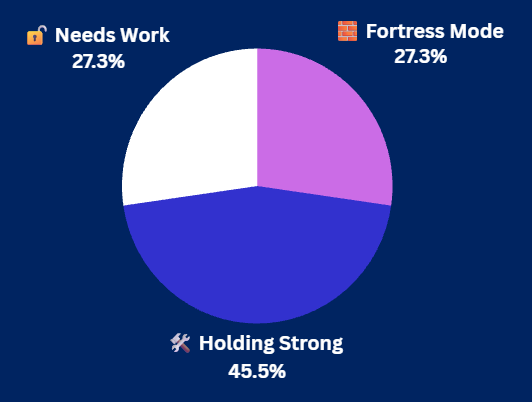
Yesterday's Pulse Check Results |
How secure are your network devices — really? |
|
|
Security Tools You Can Use |
|
|
OWASP Flags Supply Chain, Design Flaws in 2025 Update |
OWASP has released its draft list of the Top 10 Web Application Security Risks for 2025. The update introduces two new categories — Software Supply Chain Failures and Mishandling of Exceptional Conditions — while consolidating older ones to emphasize root causes over surface-level symptoms. |
The draft is currently open for community feedback.
Adopt secure-by-design principles, automate testing and configuration management, enforce strong authentication and encryption, and continuously monitor for vulnerabilities. |
Google Forecasts AI-Driven Cyber Threat Surge for 2026 |
Google Cloud’s latest Cybersecurity Forecast report warns that AI is transforming the cyber battlefield, as attackers now operationalize it to automate reconnaissance, create deepfakes, and launch breaches at machine speed.
This shift marks a turning point in cybersecurity, as the same AI driving innovation now powers ransomware, social engineering, and espionage — while AI-driven defenses like Google’s Agentic SOC transform how analysts detect and respond.
Treat AI systems as both assets and attack surfaces — apply identity management, monitoring, and red-team testing to your own machine learning models before adversaries do. |
|
|
Infoblox Threat Intel uncovered Detour Dog, a global malware network infecting tens of thousands of websites. By exploiting DNS to secretly redirect users and execute malicious code, Detour Dog delivers Strela Stealer and hides its activity inside normal web traffic.
|
| |
Are Your Web Apps Leaving the Door Open to Attack? |
Web applications are prime targets for attackers exploiting vulnerabilities like injection flaws, misconfigurations, and weak authentication. A single overlooked weakness can expose sensitive data, disrupt operations, or damage customer trust. |
How to lock down your web applications: |
-
Build security into development: Follow OWASP Top 10 guidelines, use secure coding practices, and integrate automated testing tools like SAST and DAST to detect vulnerabilities early.
-
Harden defenses and access controls: Deploy a web application firewall (WAF), enforce multi-factor authentication, and tightly manage user sessions to block unauthorized access.
- Protect and maintain your environment: Encrypt data in transit and at rest, keep all software patched, and continuously monitor logs for suspicious activity or anomalies.
|
Building cyber resilience means embedding security into every stage of development, enforcing strong controls, and maintaining constant vigilance to stay ahead of evolving threats. |
|
|
|
Ken Underhill is an award-winning cybersecurity professional, bestselling author, and seasoned IT professional. He holds a graduate degree in cybersecurity and information assurance from Western Governors University, bringing years of hands-on experience to the field. |
|
|
Cybersecurity Insider is a TechnologyAdvice business |
© 2025 TechnologyAdvice, LLC. All rights reserved. |
TechnologyAdvice, 3343 Perimeter Hill Dr., Suite 215, Nashville, TN 37211, USA. |
|
|
|