The cyber front is red hot, Digital Defenders. |
Firewalls breached, tokens stolen, and scams doubling down — today’s threats blur the line between cloud, edge, and trust. Even governments aren’t safe, proving downtime is the new danger zone. | |
|
Here’s what you need to know: |
| |
Amazon WorkSpaces Linux Flaw Enables Credential Theft |
A new Amazon WorkSpaces for Linux flaw lets local attackers steal authentication tokens and access corporate systems. Affecting client versions 2023.0 through 2024.8, the vulnerability stems from improper isolation between user sessions, creating opportunities for credential theft and lateral movement.
|
Source: Wiediger/Unsplash |
Amazon has patched the vulnerability.
Apply patches, implement least-privilege, enforce token hygiene, harden endpoints, and build automated patch management. |
Cisco ISE Flaw Enables Remote Restart Attacks |
A new Cisco ISE vulnerability lets remote attackers trigger system restarts by exploiting repeated RADIUS authentication failures.
Affecting versions 3.4.0 to 3.4 Patch 3, the flaw can cause network-wide authentication outages, disrupting access control, operations, and compliance. Cisco has released a patch. Apply the latest patch, disable the “Reject RADIUS requests from clients with repeated failures”, and audit configurations to eliminate other risky default configurations. |
Cisco 0-Day Exploit Targets ASA and FTD Firewalls |
Cisco confirmed active exploitation of a zero-day in its ASA and FTD firewalls, allowing VPN-authenticated attackers to execute code with root access.
Caused by improper input validation in the webvpn component, the flaw affects ASA 9.8.x–9.20.1 and FTD 6.2.2–7.4.1.1, putting SSL and IKEv2 VPN systems at risk of full compromise or denial of service. Cisco has released a patch for the vulnerability.
Apply the latest patch, reset all VPN credentials, and restrict remote access to trusted IPs. |
|
|
How secure are your network devices — really? |
|
|
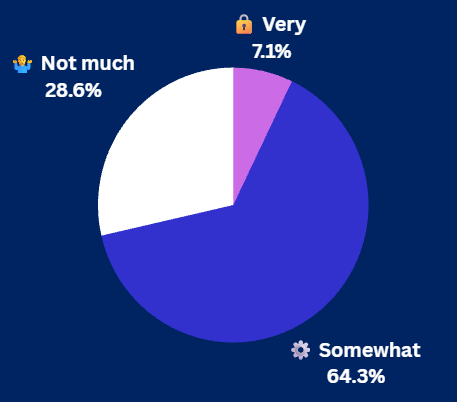
Yesterday's Pulse Check Results |
How confident are you in spotting AI security risks? |
|
|
Security Tools You Can Use |
|
|
“I Paid Twice” Phishing Scam Hits Booking.com Users Worldwide |
A new phishing campaign dubbed “I Paid Twice” is exploiting compromised hotel accounts on Booking.com to trick guests into paying for reservations twice.
Attackers using stolen hotel credentials have impersonated staff via email/WhatsApp to send guests to fake Russian-hosted payment portals, defrauding travelers across Europe, Asia, and North America and deploying PureRAT via malicious PowerShell. |
Source: Vojtech Bruzek/Unsplash |
Enforce multi-factor authentication on partner platforms, monitor for unauthorized logins, and educate staff to verify any “payment reconfirmation” requests through official Booking.com channels. |
CBO Cyberattack Exposes Shutdown-Era Weakness in Federal Security |
The US Congressional Budget Office confirmed a November 2025, breach amid a prolonged shutdown that has left federal networks understaffed and unpatched.
Attackers may have accessed internal communications and budget data via an outdated Cisco ASA firewall, as shutdown furloughs stalled security initiatives, leaving agencies exposed to attack.
Automate patching and leverage tools for continuous monitoring and response to sustain defenses through staffing or funding disruptions. |
|
|
Are Your Credentials the Next to Be Stolen? |
Credential theft remains a common and costly attack vector, fueling everything from phishing scams to full network breaches. With attackers now using automation and AI to steal and reuse credentials at scale, securing identity has become key for cyber defense. |
How to defend your accounts from credential theft: |
-
Strengthen authentication with MFA and password managers to prevent stolen or reused credentials from granting access.
- Monitor for leaks and limit privileged access to reduce the impact of compromised accounts.
-
Regularly rotate credentials and train employees to recognize and avoid credential theft attempts.
|
Credential theft prevention isn’t just about strong passwords and password managers — it’s about layered defenses and constant vigilance to build cyber resilience. |
|
|
| Ken Underhill is an award-winning cybersecurity professional, bestselling author, and seasoned IT professional. He holds a graduate degree in cybersecurity and information assurance from Western Governors University, bringing years of hands-on experience to the field.
|
|
|
Cybersecurity Insider is a TechnologyAdvice business |
© 2025 TechnologyAdvice, LLC. All rights reserved. |
TechnologyAdvice, 3343 Perimeter Hill Dr., Suite 215, Nashville, TN 37211, USA. |
|
|
|