The cyber frontlines are shifting fast, Digital Defenders. |
AI isn’t just assisting — it’s under attack. From hijacked plugins to zero-click exploits and stealthy malware, the tools built to empower us are becoming threat vectors. |
|
|
Here’s what you need to know: |
|
|
AI Engine Plugin Flaw Puts 100K WordPress Sites at Risk |
A vulnerability in the AI Engine plugin exposes 100,000+ WordPress sites to privilege escalation.
CVE-2025-11749, linked to the plugin’s No-Auth URL feature, leaks bearer tokens via the /wp-json/ API, letting attackers seize admin control. |
Source: Souvik Banerjee/Unsplash |
A patch has been released for vulnerability.
Update AI Engine to version 3.1.4 immediately, rotate all existing bearer tokens, disable unused API endpoints, and deploy a web application firewall to block unauthorized requests. |
Tenable Uncovers ChatGPT Data Leak Risk |
Tenable researchers found ChatGPT flaws enabling indirect prompt injection, data theft, and persistent cross-session attacks. Attackers can exploit weak isolation between ChatGPT and SearchGPT to inject hidden commands via web content, stealing data without user awareness. This turns browsing and memory features into exfiltration tools. Disable or strictly limit AI browsing and memory integrations, monitor for unusual output behaviors, and treat conversational context as sensitive data requiring zero-trust controls. |
Claude Desktop Exploit Enables Full System Takeover |
Koi researchers found RCE flaws in Claude Desktop extensions for Chrome, iMessage, and Notes, allowing simple prompts to trigger full system takeover.
Unsanitized input in AppleScript calls allowed crafted queries to run arbitrary code and exfiltrate SSH keys, credentials, or stored passwords. Patches have been released for the vulnerability. Update Claude Desktop extensions, isolate AI tools from sensitive files, and audit extension permissions. |
|
|
How confident are you in spotting AI security risks? |
|
|
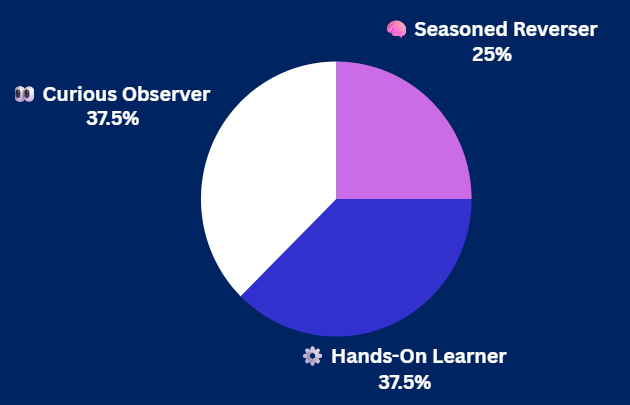
Yesterday's Pulse Check Results |
How would you rate your own reversing chops — honestly? |
|
|
Security Tools You Can Use |
|
|
Android Zero-Click Exploit Enables Silent Device Takeover |
A recently disclosed zero-click vulnerability in Android’s System component allows attackers to execute code and seize full device control.
CVE-2025-48593 affects multiple Android versions, potentially exposing billions to data theft and ransomware amid ongoing patch delays across the mobile provider. |
Source: Guido Coppa/Unsplash |
Google has already released a patch for the vulnerability.
Apply the latest patch, enable automatic system and Play Protect updates, and enforce enterprise patch compliance through MDM policies to prevent silent compromise. |
Malware Abuses OpenAI API for Covert Command Operations |
Microsoft researchers uncovered SesameOp, a stealthy espionage backdoor that exploits OpenAI’s Assistants API for covert C2 operations. The malware hides within legitimate OpenAI traffic, using its API for covert persistence and data theft. This backdoor is being actively used in the wild.
Restrict API usage to verified keys and approved domains, monitor outbound connections for anomalies, and enforce zero-trust controls around AI service integrations to detect misuse early. |
|
|
Could AI Tools Be Your Next Attack Vector? |
As AI tools become part of daily workflows, endpoints are becoming prime targets for data theft, prompt injection, and model manipulation. Attackers exploit AI integrations in apps and agents for system access — turning convenience into compromise. Strong endpoint defense is critical. |
Source: Steve Johnson/Unsplash |
How to secure endpoints running AI tools: |
-
Limit AI access and permissions: Restrict file, network, and credential access, and allow only approved AI tools or extensions to reduce exposure.
- Monitor and contain AI activity: Use EDR solutions to detect abnormal behavior and isolate AI workloads in sandboxes to prevent lateral movement.
-
Secure and educate: Enforce strict API management, revoke unused tokens, and train users to recognize AI-related threats like prompt injection or data leakage.
|
AI-driven productivity shouldn’t come at the cost of security. By hardening endpoints and managing AI access thoughtfully, organizations can harness innovation without exposing critical assets. |
|
|
|
Ken Underhill is an award-winning cybersecurity professional, bestselling author, and seasoned IT professional. He holds a graduate degree in cybersecurity and information assurance from Western Governors University, bringing years of hands-on experience to the field. |
|
|
Cybersecurity Insider is a TechnologyAdvice business |
© 2025 TechnologyAdvice, LLC. All rights reserved. |
TechnologyAdvice, 3343 Perimeter Hill Dr., Suite 215, Nashville, TN 37211, USA. |
|
|
|