The cyber frontlines are heating up, Digital Defenders. |
From leaked cloud keys to poisoned npm code and hijacked IoT fleets, this week’s news proves nowhere is safe. |
|
| Here’s what you need to know: |
|
|
Tata Motors Left 70TB of Data Wide Open Online |
A security researcher uncovered over 70 terabytes of sensitive data exposed at Tata Motors after discovering plaintext AWS keys embedded in the company’s online platforms.
The exposed credentials opened access to financial records, customer data, and internal dashboards across E-Dukaan and FleetEdge. |
Source: Goutham Binuraj/Unsplash |
The researcher reports that Tata Motors has resolved the issues.
Regularly audit your code repositories and client-side scripts for embedded secrets, and deploy automated key rotation policies to prevent similar exposures before attackers exploit them. |
PhantomRaven Malware Hits 86,000 npm Downloads |
Koi Security researchers uncovered PhantomRaven, a stealthy malware campaign that hid malicious code in invisible dependencies across more than 86,000 npm downloads.
The attack evaded standard scanners and exploited trust in AI-suggested package names to steal credentials across global environments, exposing how automation and AI-driven coding create new blind spots in software supply chains. This is still an active campaign in the wild.
Secure your supply chain by isolating builds, blocking unverified dependencies, limiting privileges, and monitoring for abnormal installs or AI-suggested packages. |
Hacktivists Hit Canada’s Critical Infrastructure |
Canadian authorities issued a national cyber alert after attackers breached internet-connected industrial control systems managing critical infrastructure.
The attacks hit water, energy, and agricultural systems, showing how exposed OT can disrupt vital services, with hacktivists exploiting poorly secured internet-facing PLCs for disruption and attention. These are ongoing threats to Canada’s critical infrastructure.
Strengthen ICS security by segmenting networks, enforcing zero-trust, securing remote access, and continuously patching, monitoring, and testing incident response readiness. |
|
|
If hacktivists hit tomorrow, what’s your status? |
|
|
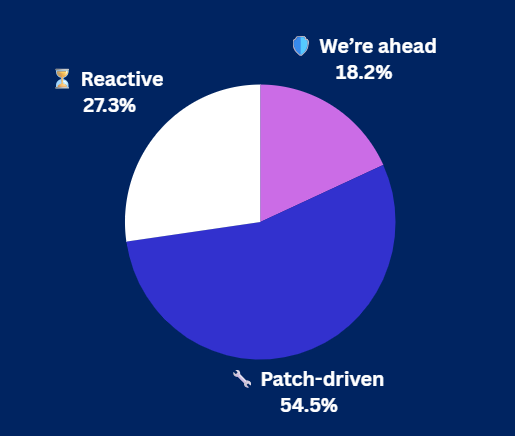
Yesterday's Pulse Check Results |
How ready is your team for relic exploits? |
|
|
Security Tools You Can Use |
|
|
PolarEdge Botnet Freezes 25,000 IoT Devices |
Researchers discovered the PolarEdge botnet that has hijacked over 25,000 IoT devices and launched 140 command servers across 40 countries.
The malware was traced to a multi-hop architecture that hides traffic and provides infrastructure-as-a-service for attackers, targeting routers, DVRs, and CCTV systems in Asia via weak IoT firmware and using compromised devices as proxies. |
This is an ongoing campaign in the wild. Harden IoT devices by disabling remote management interfaces, enforcing firmware updates, and monitoring outbound traffic for anomalies. |
Sandworm Hackers Hit Ukraine With Stealth Attacks |
Security researchers uncovered ongoing Sandworm-led intrusions targeting Ukrainian business and government networks. The campaigns used Living-off-the-Land tactics with legitimate Windows tools and custom webshells like Localolive to gain persistence, steal credentials, and disable defenses while evading detection. These are ongoing attacks.
Strengthen defenses by patching promptly, limiting admin rights, monitoring native tool misuse, enforcing allowlisting, securing remote access, and continuously testing incident response plans. |
|
|
Could One Weak IoT Device Bring Down Your Network? |
Billions of IoT devices now power homes and businesses — but poor security, outdated firmware, and weak passwords make them prime targets for botnets. Hardening them is important for protecting your entire network. |
Source: Jakub Żerdzicki/Unsplash |
How to lock down your IoT devices: |
-
Harden device access: Change default credentials, disable unused services, and enforce strong authentication to block brute-force and unauthorized access.
-
Keep systems updated: Regularly patch firmware and software to close vulnerabilities and prevent exploitation of outdated components.
-
Secure and monitor networks: Segment IoT devices from core systems, use encrypted connections, and continuously monitor traffic for suspicious activity.
|
Every unsecured IoT device is a potential foothold for attackers, putting your broader network and data at risk. |
|
|
| Ken Underhill is an award-winning cybersecurity professional, bestselling author, and seasoned IT professional. He holds a graduate degree in cybersecurity and information assurance from Western Governors University, bringing years of hands-on experience to the field.
|
|
|
Cybersecurity Insider is a TechnologyAdvice business |
© 2025 TechnologyAdvice, LLC. All rights reserved. |
TechnologyAdvice, 3343 Perimeter Hill Dr., Suite 215, Nashville, TN 37211, USA. |
|
|
|