New week, new weapons, Digital Defenders. |
AI tops the threat charts, firewalls crumble under remote exploits, and even IDEs leak danger through outdated code. Add a wave of romance scams to the mix, and no sector looks safe this week. |
|
| Here’s what you need to know: |
|
|
AI Becomes Cybersecurity’s Top Threat for 2026, ISACA Warns |
AI is no longer just a tool for defenders — it’s becoming attackers’ sharpest weapon.
According to ISACA’s 2026 Tech Trends & Priorities Pulse Poll, 59% of cybersecurity professionals now see AI-driven attacks and deepfakes as their greatest threat heading into next year, overtaking ransomware and insider risks. |
Nearly 3,000 experts worldwide cited AI-powered social engineering, including algorithmically generated phishing, impersonations, and synthetic media, as the most dangerous evolution of cybercrime. However, only 13% of organizations say they are “very prepared” to manage those risks. Treat AI risk as an enterprise governance issue. Build policies, red-team exercises, and executive training around AI misuse before attackers exploit the gap. |
WatchGuard VPN Flaw Lets Hackers Take Over Firewalls |
A newly disclosed vulnerability in WatchGuard’s Fireware OS (CVE-2025-9242) allows remote attackers to execute arbitrary code without authentication, giving them complete control over affected firewalls. Given the bug’s CVSS score of 9.3, the risk is both severe and immediate.
The flaw lies in the IKEv2 VPN handshake process, where an unchecked buffer in the ike2_ProcessPayload_CERT function can be exploited for remote code execution. Affected systems include Fireware versions 11.10.2 through 2025.1, impacting both mobile and branch office VPNs.
Patches are already available — apply them immediately to prevent attackers from walking through your network’s front door. |
Oracle’s October Update Fixes 374 Security Flaws |
Oracle’s October 2025 Critical Patch Update delivers 374 new fixes, including more than 230 that address remotely exploitable vulnerabilities requiring no authentication.
Roughly 260 unique CVEs are covered, with a dozen rated critical. The patch cycle follows recent disclosures affecting Oracle’s E-Business Suite, including a zero-day exploited by an extortion group. This month’s biggest recipient is Oracle Communications, which received 73 fixes, 47 of them remotely exploitable, alongside updates for Fusion Middleware, MySQL, and Java SE.
Visit Oracle’s Critical Patch Update page to review affected products and apply necessary patches. |
|
|
AI Threat Check: How ready is your team for AI-powered attacks? |
|
|
Yesterday's Pulse Check Results |
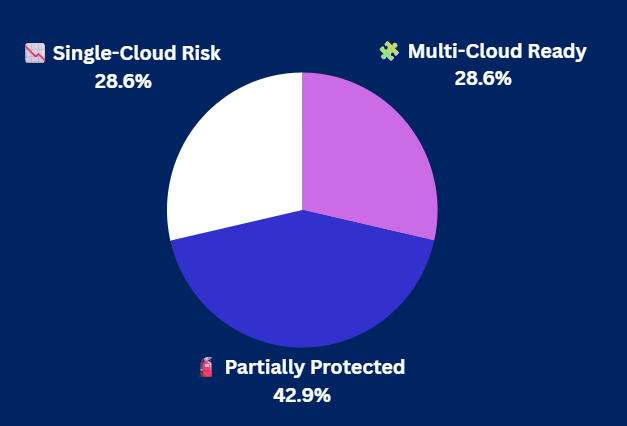
Cloud Dependency Reality Check: How long could your business stay online? |
|
|
Security Tools You Can Use |
-
What once slowed EquiTrust down now drives progress. Discover their IT governance breakthrough with Freshworks + TechnologyAdvice on October 29.
-
One wrong click could cost everything. The right software makes sure it doesn’t.
- Threat actors only need one weakness. The right tools make sure they never find it.
|
|
|
94+ Chromium Flaws Found in Cursor and Windsurf IDEs |
Researchers from Ox Security discovered that Cursor and Windsurf, two AI-assisted development environments with over 1.8 million users, rely on outdated Chromium and V8 components containing at least 94 known, previously patched vulnerabilities.
Since these IDEs are based on older Electron versions, they remain vulnerable to unpatched browser flaws that can be exploited through malicious extensions, links, or repository content. |
Source: Growtika/Unsplash |
Cursor has downplayed the issue, and Windsurf has yet to respond, leaving many developers potentially exposed.
Track vendor security advisories and apply updates promptly. If an IDE lags behind on critical patches, consider switching to a more actively maintained alternative to limit inherited risk. |
FCA Urges UK Banks to Strengthen Defenses Against Romance Fraud |
Romance scams are draining British bank accounts and trust alike. The UK’s Financial Conduct Authority (FCA) reports victims lost over £106 million to romance fraud in 2024–2025, a 9% increase from the previous year.
Investigators found that 85% of these crimes begin on social media or dating apps, where fraudsters exploit emotional attachment to manipulate victims into draining savings or taking out loans. The FCA said several banks missed clear red flags, such as repeated large transfers or emotionally distressed customers, highlighting gaps in staff training and fraud monitoring.
For banks and finance firms: Invest in staff training on social engineering and use behavioral analytics to flag emotional or unusual transfers. |
|
|
Why Elastio and AWS are Your Best Defense Against Hidden Ransomware |
Malware scanners alone can’t keep up. Today’s ransomware hides in backups, evades signatures, and turns your safety net into a liability. That’s why Elastio partnered with AWS to deliver Ransomware Recovery Assurance. AWS provides unmatched scale and secure storage—but even the strongest vaults are at risk when backups are infected. Elastio adds behavior-based detection, continuous validation, and provable recovery on top of AWS snapshots and backups, ensuring you always have a clean point to restore from.
With Elastio and AWS: |
• Backups are actively monitored for ransomware that scanners miss. • Every snapshot is validated, so corruption is caught before recovery.
• Clean, audit-ready recovery paths are guaranteed for compliance and speed. |
Don’t just assume your data is safe—prove it. Together, Elastio and AWS ensure confidence that their data is both secure and resilient. |
|
|
Train Teams to Spot Emotional Manipulation Online |
Romance scams and emotionally driven frauds are on the rise, targeting both individuals and organizations.
Attackers use urgency, empathy, or fear to trick victims into acting quickly, often leading to financial losses or data exposure. Teaching employees to recognize and question emotional cues can stop these schemes before they succeed. |
Source: Campaign Creators/Unsplash |
How to defend against emotional manipulation: |
-
Pause and verify: Slow down on urgent or emotional messages — confirm money or data requests through trusted channels.
- Train and test: Use simulated phishing and social engineering drills to build real-world awareness.
-
Detect and defend: Leverage behavioral analytics, MFA, and strong access controls to spot and stop manipulation early.
|
Social engineering succeeds when people act on emotion instead of evidence. Training teams to slow down, verify, and communicate can turn human vulnerability into organizational strength. |
|
|
| Senior Staff Writer at TechnologyAdvice |
Luis Millares is a seasoned tech writer with broad experience reviewing consumer gadgets and enterprise software, offering clear, reliable insights across the latest in technology. |
|
|
Cybersecurity Insider is a TechnologyAdvice business |
© 2025 TechnologyAdvice, LLC. All rights reserved. |
TechnologyAdvice, 3343 Perimeter Hill Dr., Suite 215, Nashville, TN 37211, USA. |
|
|
|