The cyber front lines are heating up, Digital Defenders. |
From weaponized chatbots and invisible exploits to AI that patches its own code, this week’s intel blurs the line between attacker and ally… and reminds us that vigilance is still humanity’s best defense. |
|
|
Here’s what you need to know: |
|
|
OpenAI Blocks Nation-State Hackers Abusing ChatGPT |
OpenAI disrupted cyber operations by threat actors in Russia, North Korea, and China that were exploiting ChatGPT. Attackers used ChatGPT to craft phishing lures, refine malware, and support C2 systems, which showcases how generative AI’s dual-use power fuels modern cyberattacks. |
OpenAI responded by banning the threat actor accounts and tightening monitoring.
Organizations should establish internal AI-use policies, monitor for AI-assisted attack patterns in EDR and SIEM systems, and conduct AI-specific red team simulations to assess risk exposure. |
Critical Redis Bug Threatens Cloud Networks |
A newly discovered vulnerability potentially compromises up to 75% of cloud environments that rely on Redis for caching and session management.
The Redis flaw (CVE-2025-49844) enables remote code execution, earning a CVSS 10.0 due to misconfigurations, exposed instances, and legacy code still embedded in modern systems.
Redis has released an automated patch for the vulnerability.
Verify that your Redis instance is patched, enforce authentication and TLS, restrict network access, harden configurations, monitor activity, and implement the principle of least privilege. |
AI Steps In: Google’s CodeMender Fixes Bugs on Its Own |
Google recently introduced CodeMender, an AI agent that detects, rewrites, and secures vulnerable open-source code.
Powered by Gemini Deep Think, CodeMender finds root causes, self-validates fixes, and rewrites code to prevent exploits—delivering 72 verified patches in six months and redefining how AI accelerates vulnerability remediation. Google is still in the early stages of testing the tool.
Integrate AI-driven patching into development workflows, validate automated fixes, and train teams to oversee and refine AI-assisted remediation. |
|
|
Cloud Confidence Check: How secure is your infrastructure, really? |
|
|
Yesterday's Pulse Check Results |
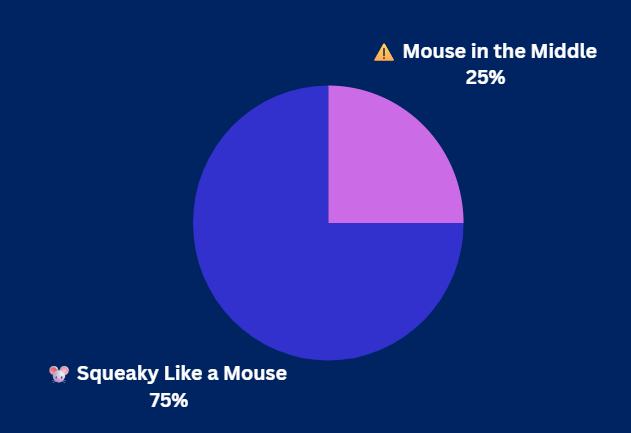
High-DPI mice can pick up desk vibrations to capture speech — how secure are your peripherals? |
|
|
Security Tools You Can Use |
|
|
Google Gemini Hit by Invisible Data Smuggling Bug |
FireTail researchers found a critical Gemini flaw exploiting a long-standing Unicode weakness called ASCII Smuggling. Threat actors embed invisible Unicode tags to slip hidden commands into Gemini, enabling identity spoofing, malicious links, and data poisoning across Google Workspace. |
Firetail researchers report that Google’s team has declined to take action on this vulnerability. Deploy log monitoring and input validation tools that inspect raw Unicode streams for hidden characters, and flag anomalous LLM behavior before malicious instructions execute. |
Cybersecurity Starts with People, Not Just Technology |
A frontline lesson in cybersecurity awareness shows that true defense begins with people, not just technology.
By linking cybersecurity to patient safety and the daily priorities of nursing staff, training transformed nurses from passive users into proactive defenders. This demonstrates that when employees understand the impact of security on their daily responsibilities, they take ownership of it. How are you connecting the security dots for your end users?
Personalize cybersecurity training across departments and reinforce it with tools like email filtering, MFA, and endpoint protection. |
|
|
AI-driven attacks are increasing, highlighting the need for stronger identity security. Learn how Duo’s security-first IAM protects against evolving threats. |
|
|
Is Weak Code the Backdoor into Your Business? |
As software supply chain attacks and AI-powered attacks increase, insecure code has become an even greater threat. Flaws can spread through dependencies, pipelines, or AI code before detection, making strong software security essential to prevent minor bugs from becoming major breaches. |
How to build security into every line of code: |
-
Integrate security early in development by following secure coding standards (e.g., OWASP ASVS) and embedding automated code scanning and dependency monitoring to detect flaws before release.
-
Secure and monitor the CI/CD pipeline through built-in security checks, continuous testing, and least privilege access controls to prevent unauthorized changes.
- Empower developers with training and AI-driven tools to reinforce secure coding practices and continuously validate code integrity.
|
Integrating security throughout development enhances resilience and reduces rework, transforming reactive patching into proactive defense for software that’s fast, functional, and secure by design. |
|
|
|
Ken Underhill is an award-winning cybersecurity professional, bestselling author, and seasoned IT professional. He holds a graduate degree in cybersecurity and information assurance from Western Governors University, bringing years of hands-on experience to the field. |
|
|
Cybersecurity Insider is a TechnologyAdvice business |
© 2025 TechnologyAdvice, LLC. All rights reserved. |
TechnologyAdvice, 3343 Perimeter Hill Dr., Suite 215, Nashville, TN 37211, USA. |
|
|
|